

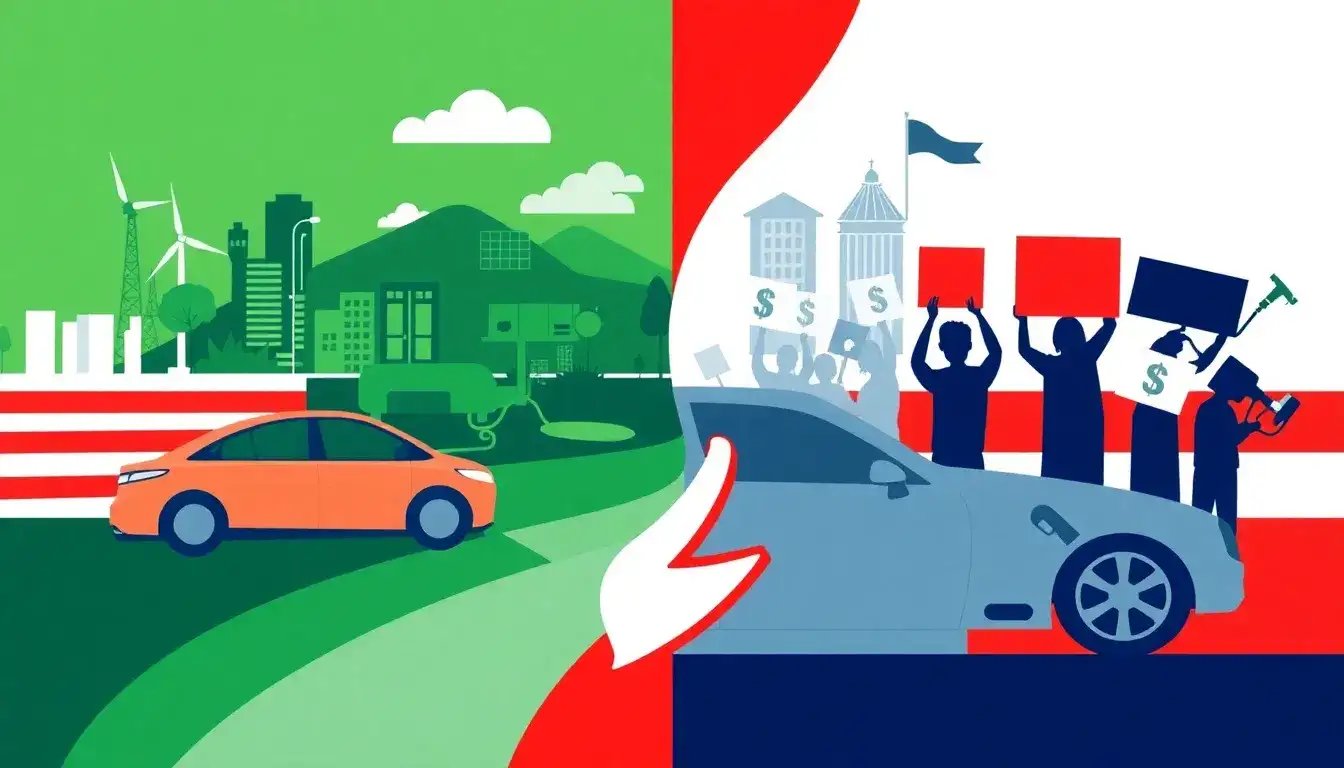
Political affiliations have a significant impact on attitudes towards electric vehicle (EV) subsidies in the United States. The debate over EV subsidies reflects broader ideological divisions and is influenced by various factors:
Impact of Political Affiliations on EV Subsidies
- Partisan Divide:
- Democratic Support: Democrats generally support EV subsidies as part of broader climate change mitigation strategies. These subsidies are seen as crucial for incentivizing consumers to switch to electric vehicles, thereby reducing greenhouse gas emissions.
- Republican Opposition: Republicans, on the other hand, often oppose these subsidies. They argue that such incentives are unnecessary and inefficient, and some even propose repealing them as part of budgetary measures.
- Regional Correlation:
Studies have shown a strong correlation between political ideology and EV adoption. For example, EVs are more commonly purchased in Democratic-leaning counties, which tend to be more affluent and densely populated. This correlation holds even when controlling for other factors like income and gasoline taxes. - Political Messaging and Misinformation:
Republicans have been using EV subsidies as a political issue, sometimes linking them to unrelated policies. For instance, some Republicans have misleadingly tied EV subsidies to Medicare reductions, aiming to deflect support for Democratic environmental policies. - Economic and Environmental Impact:
EV subsidies are also tied to economic interests, particularly in regions with significant automotive manufacturing. Politicians may use these subsidies as a tool to influence public perception about job creation and economic policies, further politicizing the issue. - Polarization and Public Perception:
The politicization of EV subsidies contributes to broader polarization in U.S. politics. This polarization affects public perception and adoption rates of electric vehicles, potentially impacting the country’s ability to meet climate goals.
In summary, political affiliations significantly shape attitudes toward EV subsidies, with Democrats generally supporting incentives for environmental reasons and Republicans opposing them on economic and ideological grounds.
Original article by NenPower, If reposted, please credit the source: https://nenpower.com/blog/how-do-political-affiliations-impact-attitudes-towards-ev-subsidies/

