

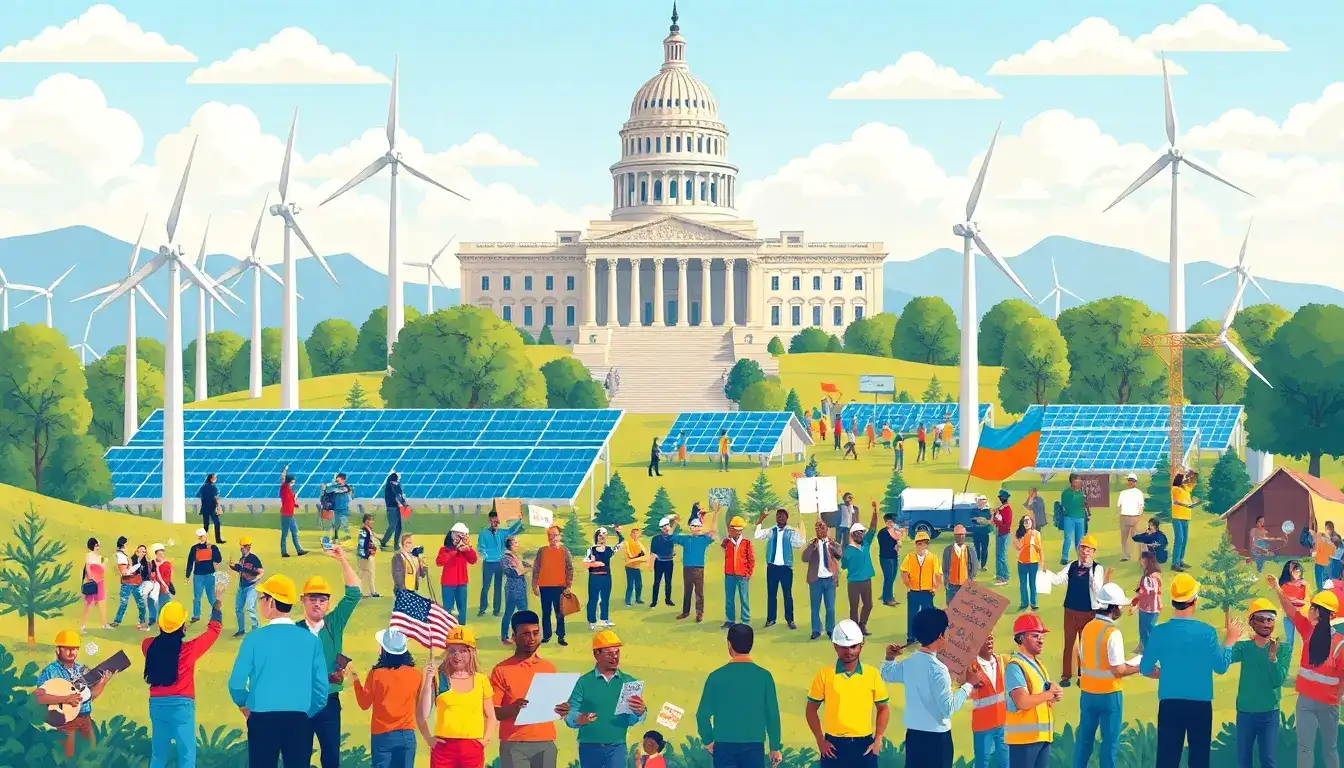
Policy changes have a significant and multifaceted impact on employment in the renewable energy sector. These effects can be summarized as follows:
Positive Employment Effects
- Job Creation in Renewable Energy: Policy shifts that favor renewable energy, such as subsidies, tax credits, and regulatory support, typically lead to the creation of new “green jobs.” These jobs arise along the entire renewable energy value chain—from manufacturing and installation to operations and maintenance. For example, worldwide renewable energy employment reached 13.7 million in 2022, driven by favorable policies and investments.
- Stimulating Investment and Growth: Financial incentives like Production Tax Credits (PTCs) and Investment Tax Credits (ITCs) reduce costs and enhance the economic viability of renewable projects. Such stable and well-designed incentives help attract private capital, fuel business expansion, and unlock substantial employment opportunities across the sector.
- Sectoral Employment Growth: In the United States, clean energy jobs grew by 4.2% in 2023, more than twice the growth rate of other parts of the energy sector and the overall economy. These jobs accounted for over half of all new energy sector jobs in that year, reflecting the powerful role of government investments and policy support.
- Environmental and Productivity Benefits: Beyond direct jobs, a shift to renewables improves environmental quality by reducing harmful emissions, which can enhance labor productivity and health outcomes, indirectly benefiting employment.
Potential Negative or Limiting Effects
- Crowding Out Non-Green Sector Jobs: While renewable policies create green jobs, they can also crowd out employment in fossil fuel or energy-intensive industries by redirecting investment away from these traditional sectors. This dynamic can limit the net employment gains from renewables.
- Higher Energy Prices: Subsidies for renewables sometimes increase energy costs for firms and households. Higher energy prices can reduce labor demand in energy-intensive industries and decrease household purchasing power, which may dampen overall employment growth.
- Market and Policy Uncertainty: Policy changes can also lead to employment fluctuations by creating uncertainty. Unstable or rapidly changing policies may cause investors to defer or reduce investments, leading to job losses or slower job creation.
Summary Table of Policy Effects on Renewable Energy Employment
| Policy Effect | Impact on Employment | Notes |
|---|---|---|
| Subsidies and Tax Credits | Increase green jobs, facilitate private investment | Examples: PTCs, ITCs boost project viability |
| Regulatory Support and Incentives | Encourage market growth and supply chain development | Promotes stable job creation |
| Energy Price Increases | Possibly reduce jobs in energy-intensive sectors | Could offset some green job gains |
| Investment Crowding Out | Employment losses in fossil-fuel sectors | Partially offsets renewable sector gains |
| Policy Uncertainty | Employment fluctuations, deferred investments | Job growth sensitive to policy stability |
In conclusion, policy changes strongly influence employment in the renewable energy sector by creating new jobs and stimulating investments, although they may simultaneously cause shifts and losses in traditional industries. The net employment impact depends on the balance between these factors and the design and stability of the policies implemented.
Original article by NenPower, If reposted, please credit the source: https://nenpower.com/blog/how-do-policy-changes-affect-employment-in-the-renewable-energy-sector/

