

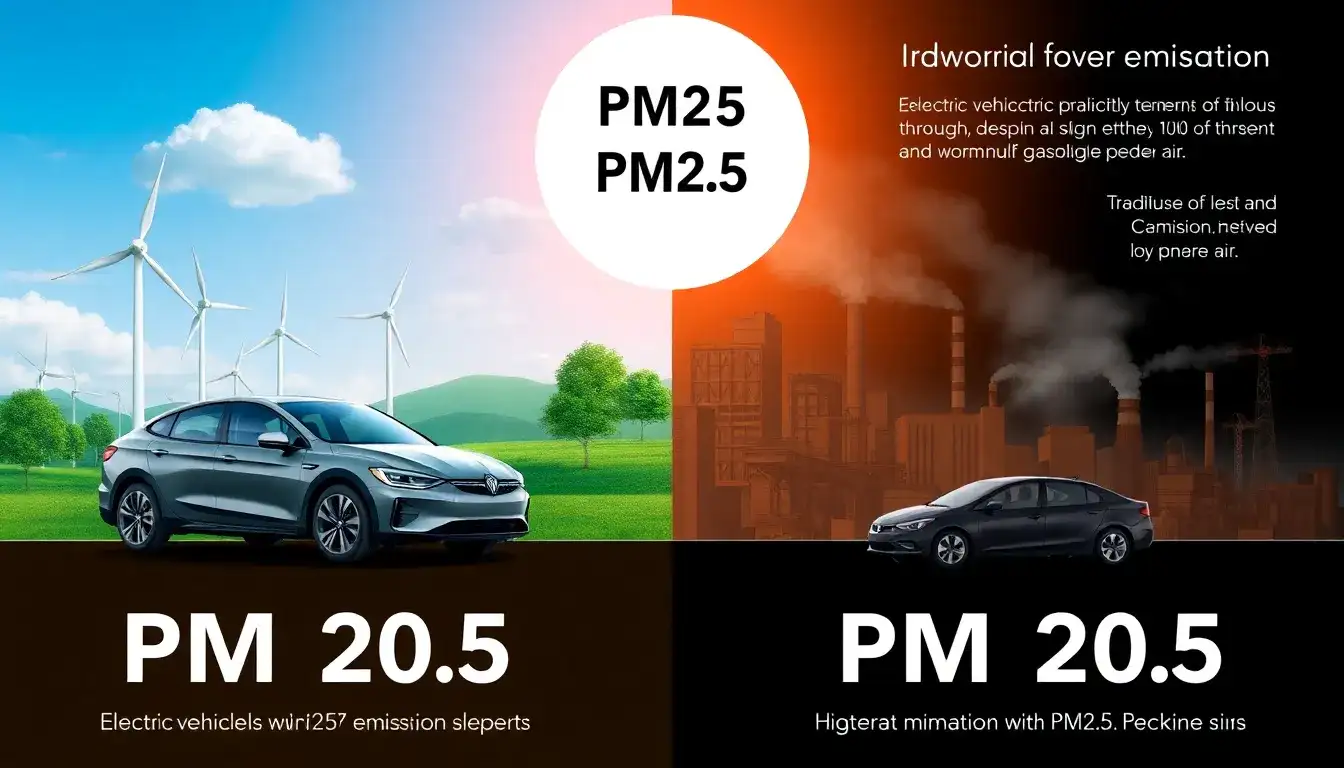
PM2.5 emissions from electric vehicles (EVs) compared to traditional gasoline vehicles generally show that EVs produce slightly less particulate matter overall, but the comparison involves nuances related to vehicle weight, braking systems, and sources of emissions.
Tailpipe vs Non-Exhaust Emissions
- Electric vehicles have zero tailpipe emissions, as they do not have internal combustion engines. This eliminates tailpipe PM2.5 emissions along with other harmful pollutants such as nitrogen oxides (NOx), carbon monoxide (CO), and hydrocarbons (HC).
- Traditional gasoline vehicles emit PM2.5 and other pollutants directly from their exhaust systems due to combustion processes.
Overall PM2.5 Emission Comparison
- When considering all sources of PM2.5, including non-exhaust emissions like brake wear, tire wear, and road dust resuspension, EVs tend to emit slightly less PM2.5 than gasoline cars despite usually being heavier.
- The heavier weight of EVs can cause increased resuspension of road dust and more brake and tire wear particulate emissions, which partially offsets the elimination of tailpipe emissions.
Impact of Vehicle Weight and Regenerative Braking
- EVs are often heavier than comparable gasoline vehicles by about 20%, which can increase non-exhaust PM2.5 emissions such as from road dust and tire wear.
- However, regenerative braking in EVs reduces brake wear significantly, thereby lowering PM2.5 emissions from this source compared to conventional braking in gasoline cars. Higher regenerative braking rates can bring EV PM2.5 emissions below those of gasoline vehicles despite the weight penalty.
Quantitative Findings
- Studies have found that PM2.5 emissions from EVs are reduced by 6-42% relative to conventional internal combustion engine (ICE) vehicles, depending on the size and type of vehicle being replaced.
- The total PM10 emission factors (which include PM2.5) for EVs have been measured lower than those for gasoline ICE vehicles, e.g., EVs exhibited PM10 emission factors of 47.7–57.7 mg/V·km, compared to 56.5–70.5 mg/V·km for gasoline vehicles.
- Even heavier EVs with longer battery ranges still contribute less PM2.5 than equivalent diesel or petrol cars, indicating a net positive impact on air quality despite their mass.
Summary
| Aspect | Electric Vehicles | Gasoline Vehicles |
|---|---|---|
| Tailpipe PM2.5 emissions | Essentially zero | Present due to combustion |
| Non-exhaust PM2.5 emissions | Slightly higher due to weight and road dust, but reduced by regenerative braking | Lower brake wear emissions but higher tailpipe emissions |
| Overall PM2.5 emissions | Slightly lower or comparable (6-42% reduction) | Higher overall due to tailpipe PM2.5 |
| Effect of regenerative braking | Significantly lowers brake wear PM2.5 | Not applicable |
In conclusion, electric vehicles produce less PM2.5 pollution overall than traditional gasoline vehicles, primarily due to the elimination of tailpipe emissions and the mitigating effects of regenerative braking on brake wear particulate emissions. Although the increased weight of EVs can raise non-exhaust emissions slightly, the net effect is still a notable reduction in PM2.5 emissions compared to gasoline cars.
Original article by NenPower, If reposted, please credit the source: https://nenpower.com/blog/how-do-pm2-5-emissions-from-electric-vehicles-compare-to-those-from-traditional-gasoline-vehicles/

