

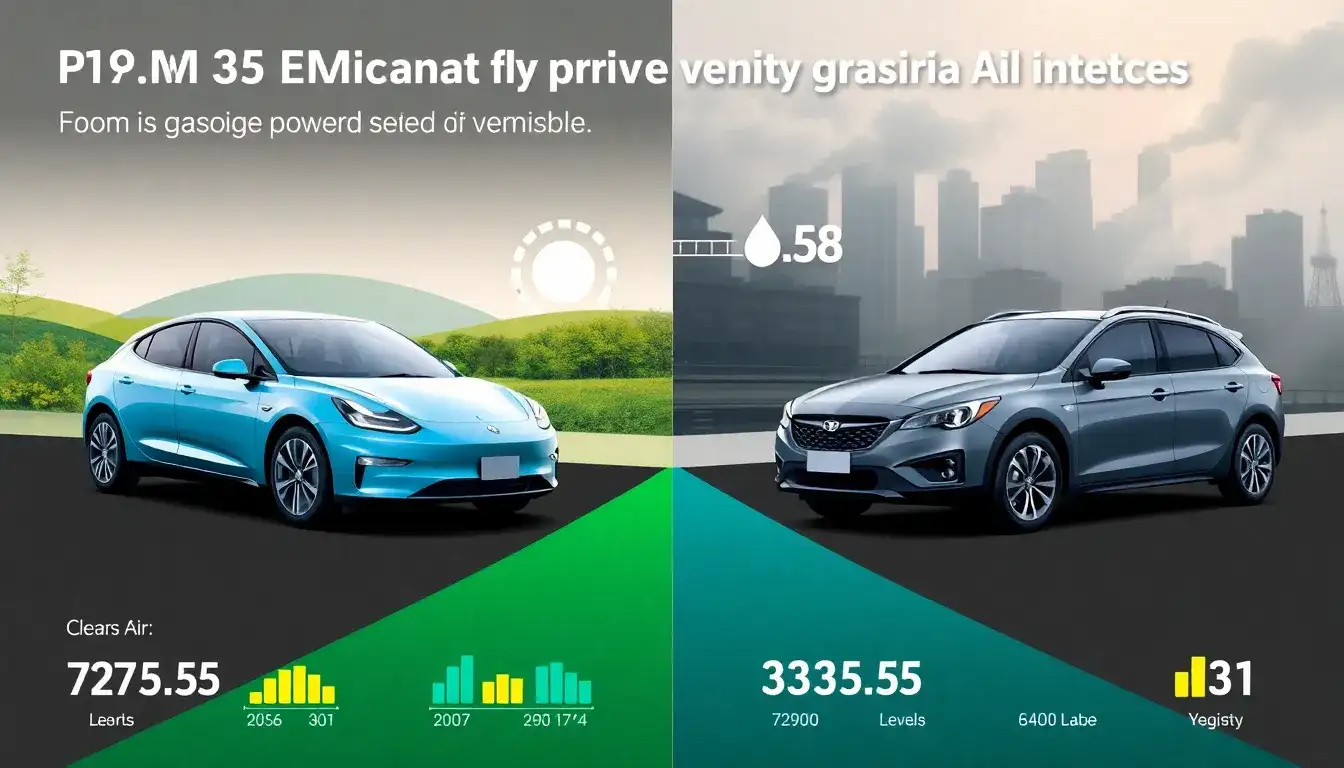
When comparing PM2.5 emissions from electric vehicles (EVs) to those from traditional gasoline-powered vehicles, several factors come into play:
Overview of PM2.5 Emissions
- Electric Vehicles: EVs do not have tailpipe emissions since they do not use a combustion engine. However, they can generate PM2.5 emissions from brake wear and tyre wear. Studies suggest that while EVs produce fewer overall particulate emissions, they may generate more nanoparticle pollution from brakes and tyres due to their heavier weight compared to traditional vehicles.
- Gasoline-Powered Vehicles: These vehicles produce PM2.5 emissions both from the tailpipe and from brake and tyre wear. The combustion process contributes significantly to PM2.5 emissions.
Emission Comparisons
- Reduction in PM Emissions: Switching to EVs generally reduces PM2.5 emissions by 6-42%, depending on the vehicle size and type being replaced. This reduction occurs despite potential increases in brake and tyre emissions due to the weight of EVs.
- Regenerative Braking: EVs often incorporate regenerative braking, which can reduce the frequency and intensity of mechanical braking, thereby reducing particulate emissions from brake wear.
Overall, while EVs may produce more brake and tyre emissions due to their weight, they eliminate tailpipe emissions, leading to a net reduction in overall PM2.5 emissions compared to traditional gasoline-powered vehicles.
Original article by NenPower, If reposted, please credit the source: https://nenpower.com/blog/how-do-pm2-5-emissions-from-electric-vehicles-compare-to-those-from-traditional-gasoline-powered-vehicles/

