

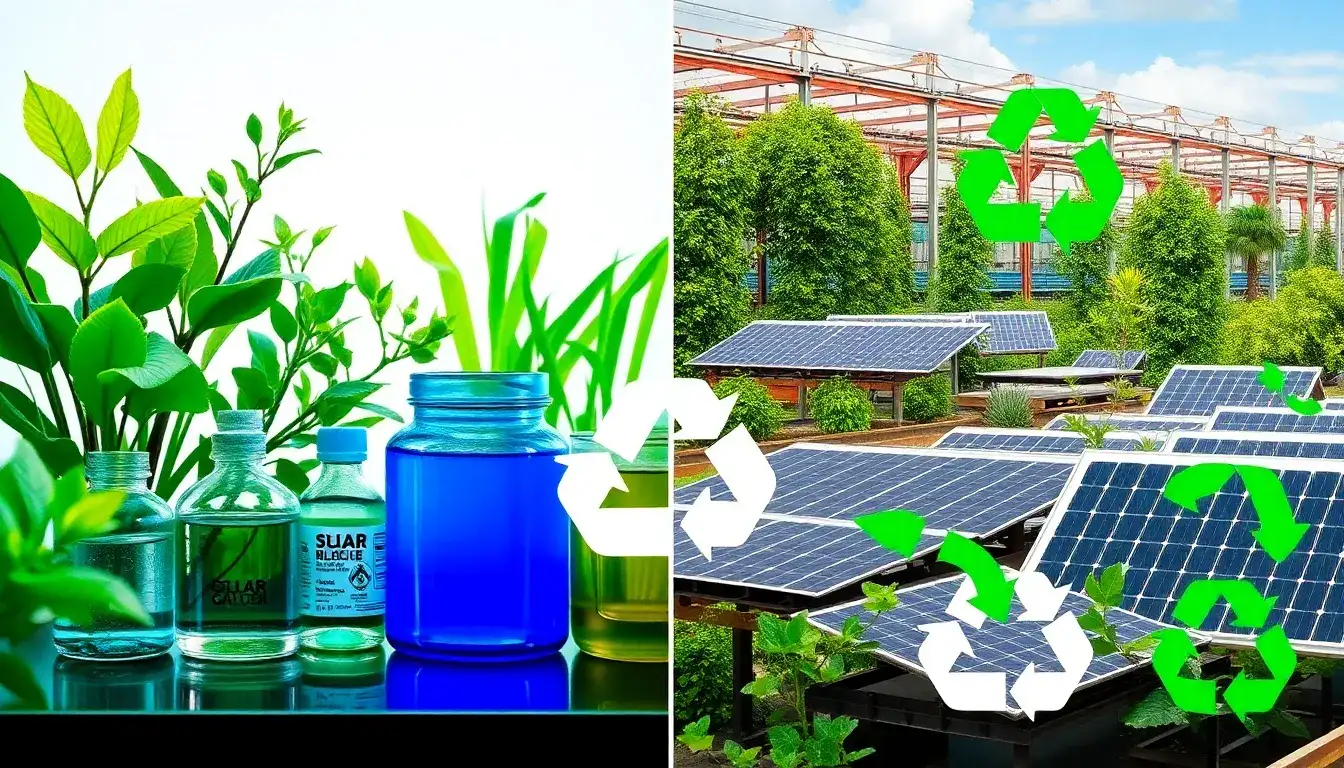
Plant-based alternatives in solar panel recycling are emerging as promising substitutes for traditional organic solvents by offering environmental and operational benefits over harsh industrial chemicals.
Comparison of Plant-Based Alternatives vs. Traditional Organic Solvents in Solar Panel Recycling
Environmental Impact
- Plant-based materials used in recycling, such as cellulose-based processing equipment and natural fibers, reduce the environmental footprint by lowering CO2 emissions and avoiding hazardous chemicals typically involved in traditional solvent use.
- Bio-based recycling processes leverage natural cooling mechanisms, such as honeycomb structures, which enhance temperature control and minimize energy consumption during recycling operations, unlike conventional solvent-heavy methods.
Efficiency and Purity
- Plant-based recycling technologies achieve high recovery rates: for instance, aluminum recovery can reach 99% with 98% purity, and copper extraction at 95% purity, demonstrating competitive or superior performance compared to traditional solvent-based recycling.
- Natural separation techniques using air pressure differentials (gas-solid fluidized bed) avoid chemicals altogether while maintaining effective material separation, improving sustainability and operational safety.
Process Advancements
- Organic polymers derived from plant-based sources have been integrated into solar panel manufacturing (e.g., perovskite solar cells combined with plant-based polymers), which simplifies end-of-life recycling and potentially lowers costs, contrasting with more complex and environmentally taxing silicon-based panels.
- Plant-based components used in thermoplastic processing machines reduce environmental impact by avoiding cross-linking and facilitating easier layer separation, which traditional solvents often complicate.
Scalability and Automation
- Modern bio-based recycling systems are being scaled up with automated, highly efficient machinery capable of processing large volumes of solar panels while keeping separation precision high, an advancement that rivals traditional solvent-based methods in throughput and consistency.
Summary Table
| Aspect | Plant-Based Alternatives | Traditional Organic Solvents |
|---|---|---|
| Environmental Impact | Lower CO2 emissions, non-toxic, natural cooling | Often toxic, higher environmental hazard |
| Recovery Efficiency | High purity recovery (Al 98%, Cu 95%) | Varies, often less environmentally friendly |
| Process | Uses natural fibers, cellulose, air-based separation | Relies on harsh chemicals for material separation |
| Energy Use | Reduced energy use due to natural temperature control | Higher energy consumption due to chemical processing |
| Scalability & Automation | Automated, large-scale bio-based machines | Established but environmentally burdensome |
Conclusion
Plant-based alternatives in solar panel recycling present a more environmentally friendly, efficient, and potentially cost-effective approach compared to traditional organic solvents. These alternatives reduce toxic emissions, improve recovery rates, simplify processing, and support sustainable scaling of solar panel recycling operations. This aligns with advances in sustainable solar technology such as organic polymer-based perovskite solar cells.
Original article by NenPower, If reposted, please credit the source: https://nenpower.com/blog/how-do-plant-based-alternatives-compare-to-traditional-organic-solvents-in-solar-panel-recycling/

