

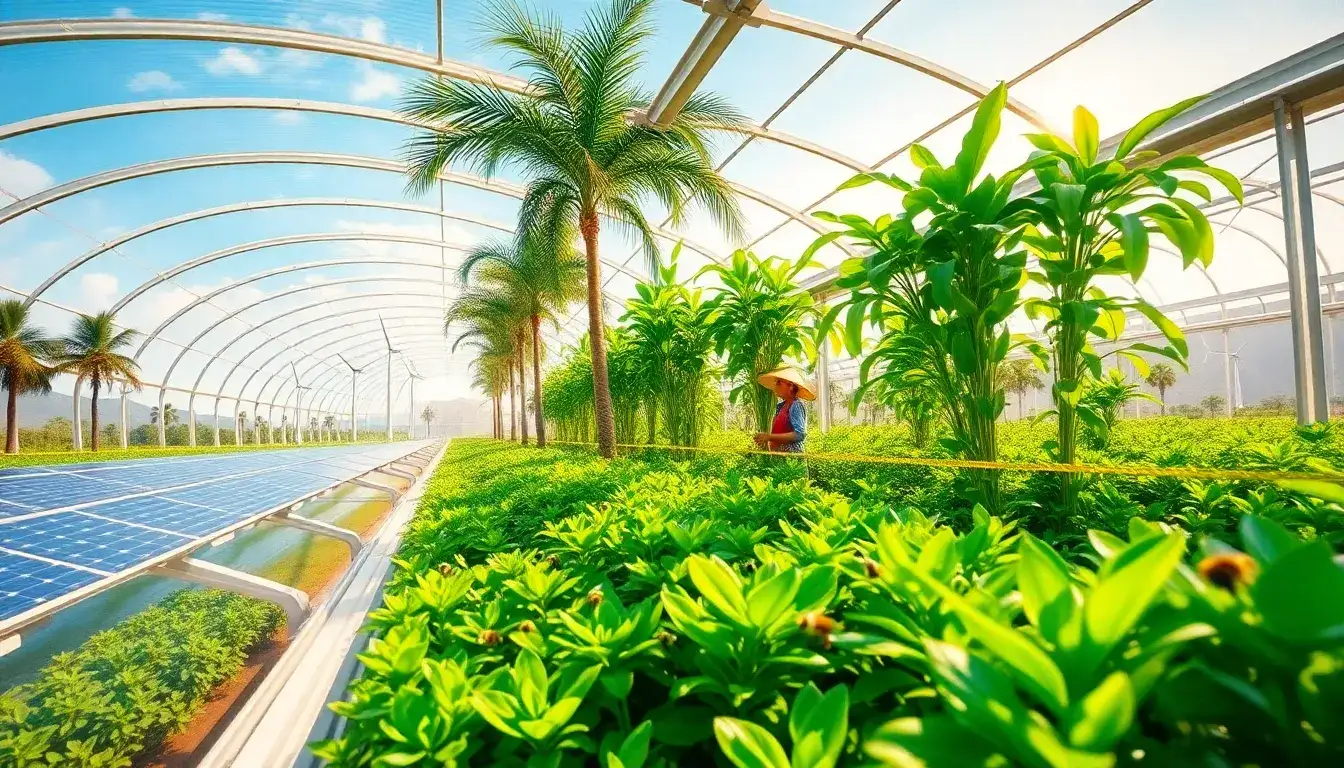
Photovoltaic greenhouses in Hainan contribute to sustainability through multiple interconnected benefits in energy, agriculture, environment, and rural development:
Combined Energy and Food Production
- These greenhouses integrate solar panels with vegetable farming, producing clean electricity for the power grid while simultaneously supporting year-round crop growth. This dual use boosts land efficiency by generating renewable energy without sacrificing agricultural output.
- The photovoltaic greenhouse projects in Hainan have a total capacity of about 2 GW, supplying leafy vegetables year-round to approximately 3 million people, covering around 30% of the province’s population. This demonstrates significant contributions to both food security and clean energy supply.
Environmental Impact
- By generating clean photovoltaic energy, these greenhouses reduce reliance on fossil fuels. They save about 8,200 tons of standard coal annually and reduce around 20,000 tons of CO2 emissions and 160 tons of sulfur dioxide emissions, contributing to carbon footprint reduction and air quality improvement.
- The projects align with national policies focused on energy conservation, emission reduction, and the promotion of clean energy development, enhancing Hainan’s environmental sustainability.
Land Reclamation and Efficient Land Use
- Formerly unproductive and sandy saline-alkali wasteland in villages like Wangtangnan has been reclaimed for greenhouse farming under photovoltaic panels. This reclamation transforms marginal land into productive agricultural and renewable energy zones, boosting local land-use efficiency and rural incomes.
Climate Adaptation and Crop Protection
- The photovoltaic panels provide partial shading that reduces damage from extreme weather events such as typhoons and rainstorms, protecting crops and ensuring stable year-round agricultural production despite Hainan’s tropical climate.
- However, the shading does reduce sunlight intensity inside the greenhouses, which suits shade-tolerant plants but may limit the growth of sun-loving crops. This factor is considered in crop selection and greenhouse design.
Socioeconomic Benefits
- The model promotes rural revitalization by increasing income for local villagers and creating sustainable employment opportunities in both agriculture and renewable energy sectors.
- It reduces land-leasing costs for agricultural companies by leasing land to solar companies that then provide the space for farming at no cost, supporting economic viability.
In summary, photovoltaic greenhouses in Hainan foster sustainability by integrating renewable energy generation with agriculture to optimize land use, cut greenhouse gas emissions, enable climate-resilient food production, reclaim degraded lands, and support rural economic development. This agrivoltaic approach exemplifies a multifunctional sustainable solution for energy, environmental, and social challenges in tropical regions.
Original article by NenPower, If reposted, please credit the source: https://nenpower.com/blog/how-do-photovoltaic-greenhouses-in-hainan-contribute-to-sustainability/

