

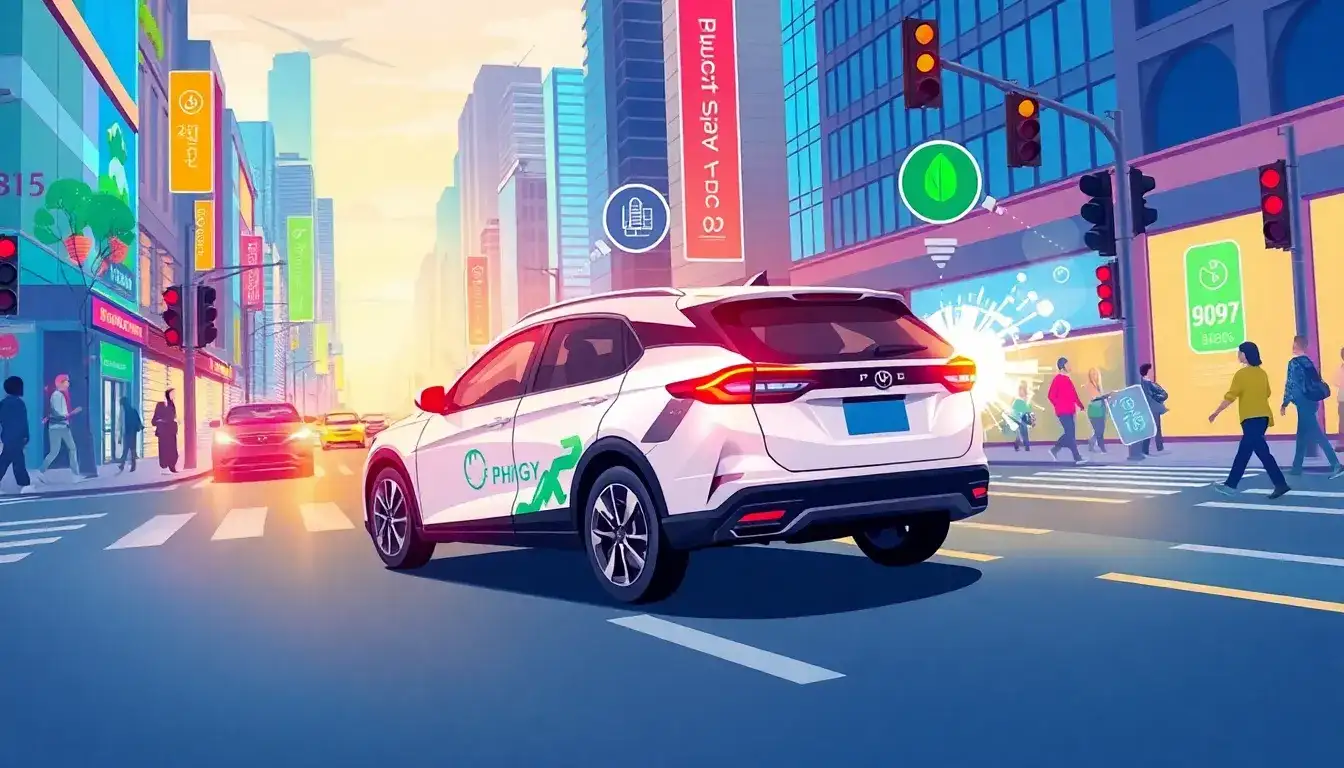
Plug-in Hybrid Electric Vehicles (PHEVs) are particularly efficient during short trips in city environments. Here are some reasons why:
Key Factors for Efficiency in City Trips:
- Battery-Only Operation: PHEVs operate primarily using their batteries for shorter trips, allowing them to achieve fuel efficiencies similar to those of electric vehicles if the journey doesn’t exceed their electric range.
- Regenerative Braking: City driving involves frequent stops, which provide opportunities for regenerative braking. This feature captures kinetic energy and converts it back into battery power, further improving efficiency.
- Lower Speeds: City traffic often involves slower speeds and more frequent starts and stops. This type of driving allows the vehicle to use its electric motor more extensively, reducing reliance on the internal combustion engine (ICE) and enhancing fuel efficiency.
- Typical Range and Efficiency: PHEVs typically can travel 10-40 miles using battery power alone, depending on the model. For short trips of 50 km or less, they exhibit much better fuel efficiencies compared to longer trips.
Performance Example:
- Trip Distance: For trips of 25 km, plug-in hybrids often achieve fuel efficiencies nearly as good as electric vehicles.
- City Driving Benefits: The frequent starts and stops in city driving leverage the efficiency of the electric motor and regenerative braking.
Overall, PHEVs are well-suited for short city trips, providing excellent fuel efficiency when operated within their electric range and benefiting from urban driving conditions.
Original article by NenPower, If reposted, please credit the source: https://nenpower.com/blog/how-do-phevs-perform-in-terms-of-fuel-efficiency-during-short-trips-in-cities/

