

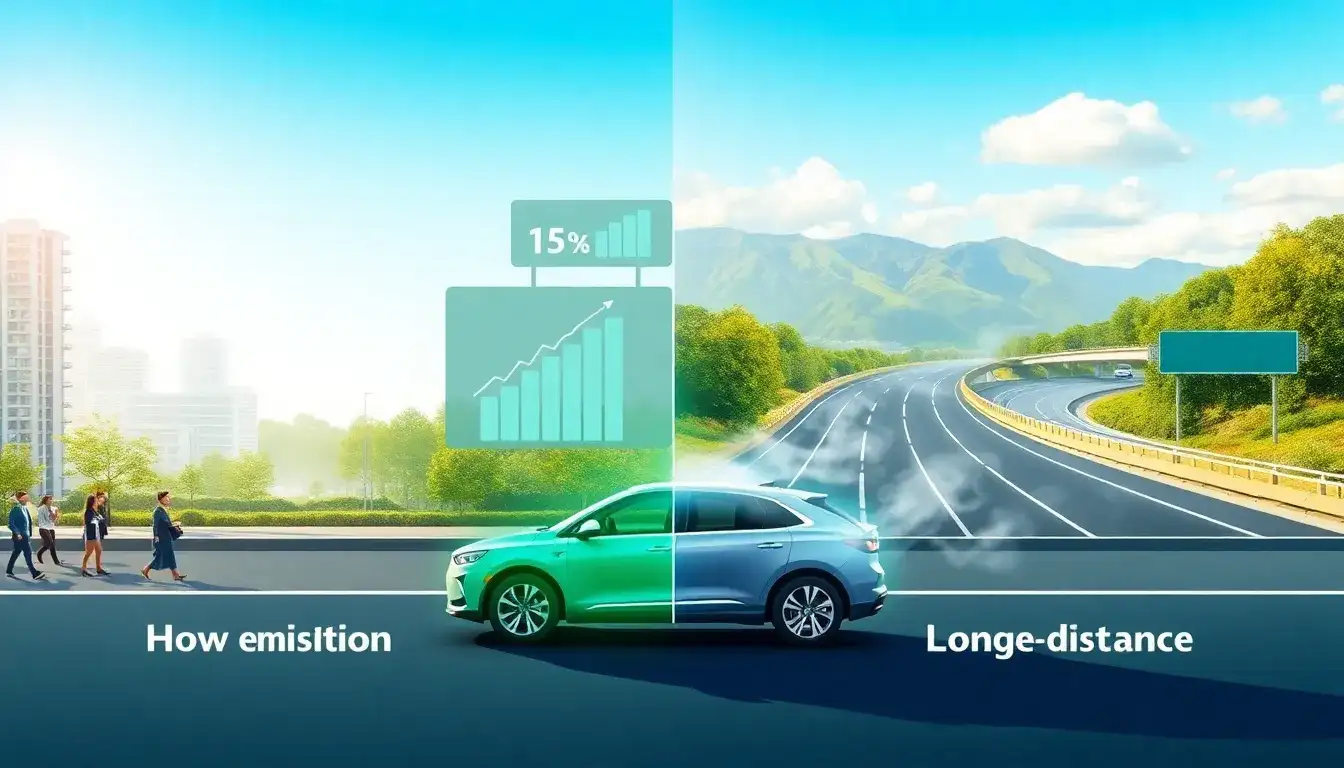
Emissions Performance of PHEVs on Shorter vs. Longer Routes
Performance Overview:
Plug-in Hybrid Electric Vehicles (PHEVs) offer a balance between electric driving and conventional engine use. Their emissions performance varies significantly depending on the route length and usage patterns.
Shorter Routes:
- Electric Mode Use: PHEVs typically use their electric mode for shorter trips, which can reduce emissions to zero from the tailpipe when running on battery power.
- Lower Emissions: For local driving or commuting, where the battery is not depleted, PHEVs can maintain lower emissions compared to longer routes where the engine must engage to recharge the battery or extend range.
Longer Routes:
- Engine Engagement: On longer routes, especially when the battery is depleted, the engine kicks in to provide additional power, leading to increased emissions.
- Higher Emissions: Studies have shown that PHEVs can emit significantly more CO2 when the engine is running, often five to seven times higher than official ratings suggest, especially in modes designed to conserve battery charge.
- Battery Conservation Mode: This mode, common in many PHEVs, allows drivers to manually switch to engine-only operation to save battery for later use, but it dramatically increases emissions.
Emissions Efficiency Trend:
Overall, real-world studies indicate that while PHEVs offer better emissions performance on shorter routes due to more frequent use of electric modes, their efficiency diminishes as routes lengthen and engine use becomes more prevalent. However, PHEVs still generally provide a moderate reduction in emissions compared to traditional internal combustion engine vehicles, especially when considering lifecycle emissions and dependence on critical minerals.
Original article by NenPower, If reposted, please credit the source: https://nenpower.com/blog/how-do-phevs-perform-in-terms-of-emissions-on-shorter-versus-longer-routes/

