

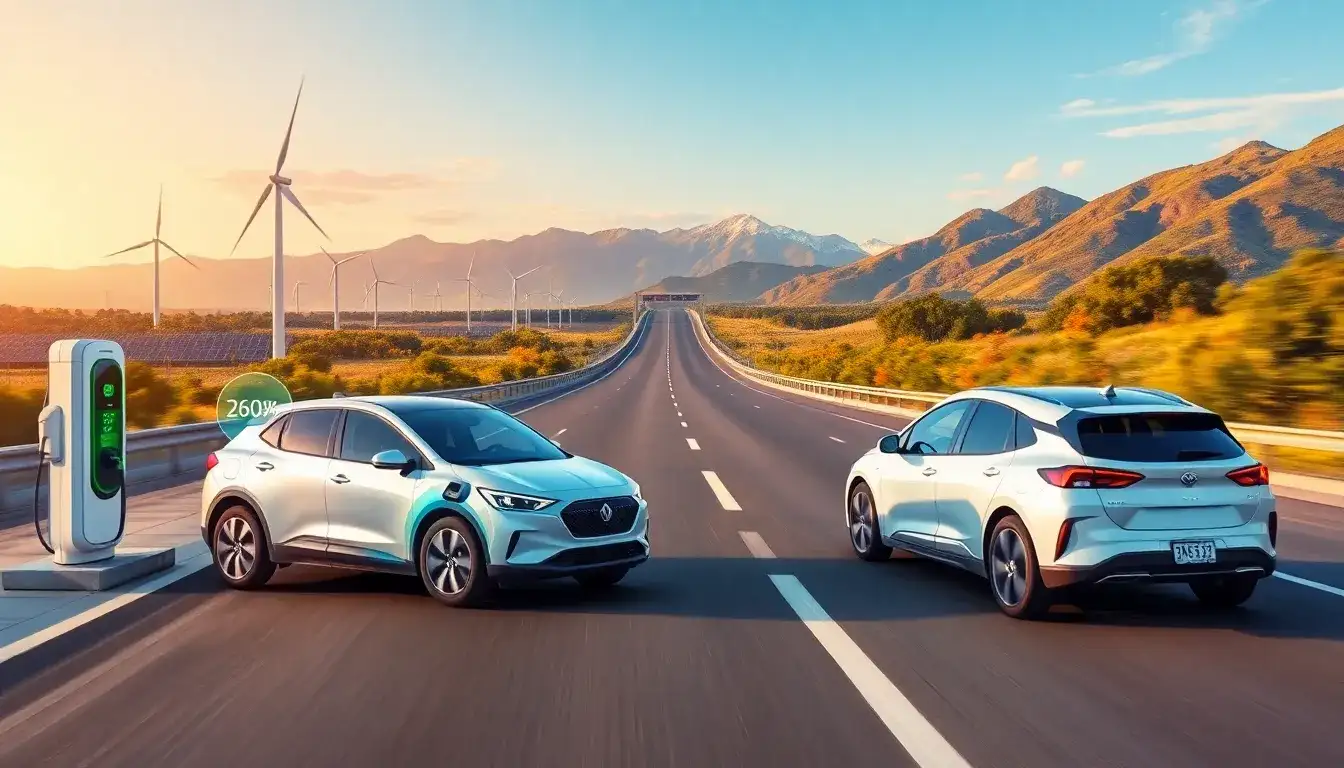
Plug-in hybrid electric vehicles (PHEVs) handle long-distance driving differently and often more flexibly compared to pure electric vehicles (EVs).
PHEVs vs Pure EVs for Long-Distance Driving
Range and Refueling/Recharging
- PHEVs combine an electric battery with a gasoline engine. Their electric-only range is generally limited, typically about 20 to 40 miles before the gasoline engine takes over. After the electric range is depleted, the gas engine allows the vehicle to keep going without needing to stop for a recharge.
- Pure EVs rely entirely on their battery, with ranges varying widely by model, from under 100 miles to around 350 miles per full charge for high-end models like the Tesla Model X.
Charging and Convenience
- PHEVs can be charged overnight from a regular household outlet and do not require special chargers for electric driving, providing convenience for daily use.
- For long trips, PHEVs avoid the “range anxiety” that pure EV drivers face, since they do not require frequent recharging stops on highways; instead, they switch seamlessly to gasoline power.
Driving Experience on Long Trips
- PHEVs act like traditional hybrids once their electric range is used up, offering gasoline-powered driving similar to conventional cars, enabling continuous travel over long distances without charging breaks.
- Pure EVs require planning for charging stops on long-distance trips, as highway driving and cold temperatures can reduce their effective range, sometimes necessitating longer or more frequent charging breaks.
Summary
- PHEVs provide a greater total driving range than most pure EVs by combining electric and gas power, often achieving around 300 to 400 miles on a full charge and a full gasoline tank, similar to many standard petrol cars but with lower emissions.
- Pure EVs offer all-electric driving but may require more frequent charging during long-distance travel, depending on battery capacity and charging infrastructure.
In conclusion, for long-distance driving, PHEVs offer the advantage of continuous travel with no need for extended charging stops, functioning effectively as electric vehicles for short trips and gasoline vehicles for longer ones. Pure EVs provide zero-emission driving but require planning for charging, especially on longer journeys.
Original article by NenPower, If reposted, please credit the source: https://nenpower.com/blog/how-do-phevs-handle-long-distance-driving-compared-to-pure-evs/

