

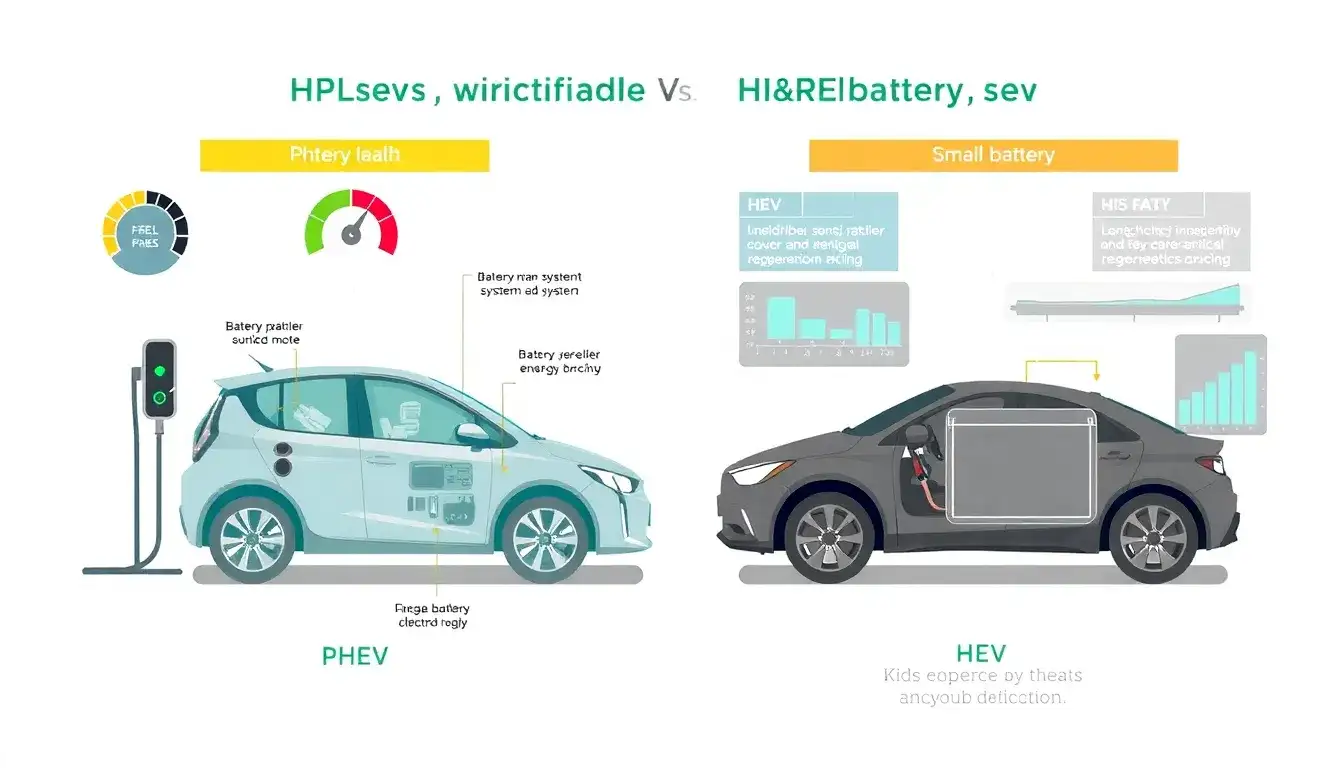
Battery Degradation in PHEVs vs. HEVs
Battery degradation is a critical factor for both Plug-in Hybrid Electric Vehicles (PHEVs) and Hybrid Electric Vehicles (HEVs), but they handle it differently due to their distinct operational modes.
PHEVs:
- Operation in Charge Depletion Mode: PHEV batteries are designed to run in charge depletion mode, meaning they are used more extensively than HEV batteries. This mode requires the battery to work harder, leading to increased stress and potential faster degradation.
- Higher Capacity and Usage: PHEVs have higher battery capacities than HEVs to accommodate extended electric-only driving ranges. This increased usage can result in more significant degradation over time if not managed properly.
- Warranty and Degradation Protection: Many PHEVs come with warranties ensuring that the battery retains a certain percentage of its original capacity over a specified period, similar to HEVs. For example, warranties may guarantee that the battery retains at least 70% of its capacity for a certain number of years or miles.
HEVs:
- Brief Power Bursts: HEV batteries are used in short bursts to assist the engine during acceleration and to capture regenerative braking energy. This intermittent use tends to result in less strain on the battery compared to PHEVs.
- Lower Capacity Requirements: HEVs require smaller batteries since they primarily support the engine rather than serving as the main power source. This lower demand contributes to slower degradation rates.
- Impact of Capacity Loss: While significant capacity loss in PHEVs can drastically reduce their electric range, a similar loss in HEVs has a minimal effect on overall performance.
Common Factors Affecting Battery Degradation:
Both PHEVs and HEVs are influenced by similar factors that affect battery lifespan, including:
- Temperature: High temperatures accelerate degradation, while cooler ones help preserve battery health.
- State of Charge (SOC): Keeping the SOC between 20% and 80% can reduce strain.
- Charging Methods: Frequent DC fast charging may degrade batteries faster than AC charging.
- Battery Chemistry and Design: Different chemistries like NMC or LFP have varying durability characteristics.
In summary, PHEVs experience more battery degradation due to their extensive use of charge depletion mode and higher capacity utilization. However, both types of vehicles can benefit from proper management strategies such as maintaining optimal SOC levels and using suitable charging methods to prolong battery life.
Original article by NenPower, If reposted, please credit the source: https://nenpower.com/blog/how-do-phevs-handle-battery-degradation-compared-to-hevs/

