

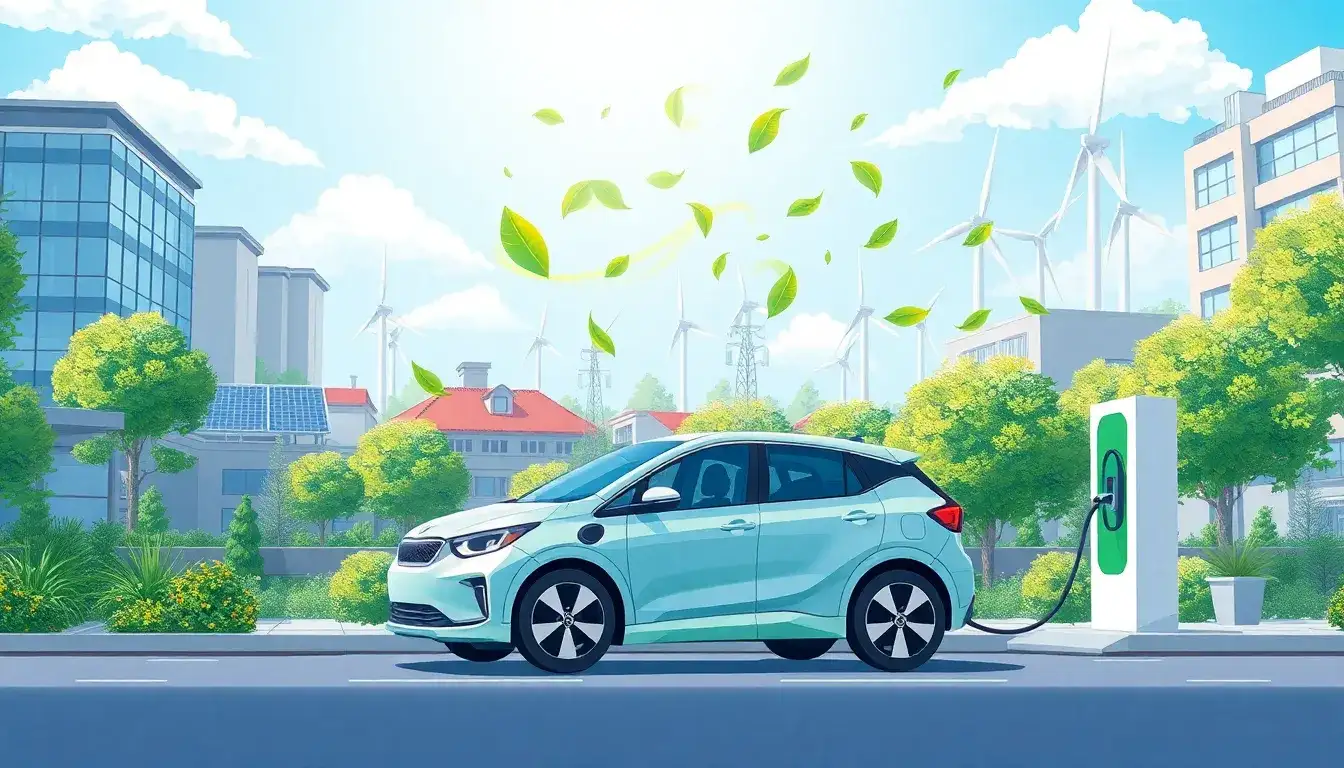
Plug-in Hybrid Electric Vehicles (PHEVs) contribute to reducing greenhouse gas emissions in the transportation sector through several mechanisms:
Lower Direct Tailpipe Emissions Compared to Conventional Vehicles
PHEVs operate using both an internal combustion engine (ICE) and an electric motor powered by a rechargeable battery. When running in electric mode, PHEVs produce no tailpipe emissions. Even when the gasoline engine is engaged, their overall direct emissions are typically lower than those of comparable conventional vehicles because they rely partially on cleaner electric power.
Reduced Lifetime Emissions via Partial Electrification
Studies show that PHEVs purchased recently produce around 30-35% less emissions over their lifetime compared to internal combustion engine vehicles (ICEVs). This reduction reflects the combined benefits of electric driving and the partial replacement of gasoline fuel with electricity, which generally has a lower carbon intensity, especially as grids decarbonize.
Benefits from Using Cleaner Energy Grids
The environmental advantage of PHEVs increases as the electricity used to charge them becomes cleaner. Grid decarbonization efforts worldwide help decrease “well-to-tank” emissions (emissions from fuel production and delivery). Improvements in electricity generation from renewable and low-carbon sources reduce the effective carbon footprint of PHEV electricity use, increasing their emissions savings versus conventional vehicles.
Enabling Smarter Energy Use via Vehicle-to-Grid (V2G) Services
PHEVs can help reduce emissions indirectly by participating in vehicle-to-grid (V2G) services. Their batteries can store electricity when demand and generation costs are low (typically associated with cleaner generation) and supply energy back to the grid when demand is high, thus avoiding the need for inefficient and high-emission peaking power plants. Additionally, PHEVs can help provide ancillary services that improve overall grid stability and efficiency, further lowering emissions associated with power generation.
Role as a Transition Technology
While fully battery electric vehicles (BEVs) eliminate tailpipe emissions entirely, PHEVs serve as an important transitional technology by displacing higher-emission gasoline-only vehicles during the shift toward full electrification. They reduce gasoline use and emissions in the near term, especially if used primarily in electric mode and charged from cleaner grids.
In summary, PHEVs reduce greenhouse gas emissions by partially replacing gasoline with electricity, lowering direct tailpipe emissions, benefiting from cleaner electricity grids, and optimizing grid operations through V2G capabilities. Their emissions reductions are significant though generally less than those of fully electric vehicles, but they can play a crucial bridging role in the decarbonization of the transportation sector until BEVs become dominant.
Original article by NenPower, If reposted, please credit the source: https://nenpower.com/blog/how-do-phevs-contribute-to-reducing-greenhouse-gas-emissions-in-the-transportation-sector/

