

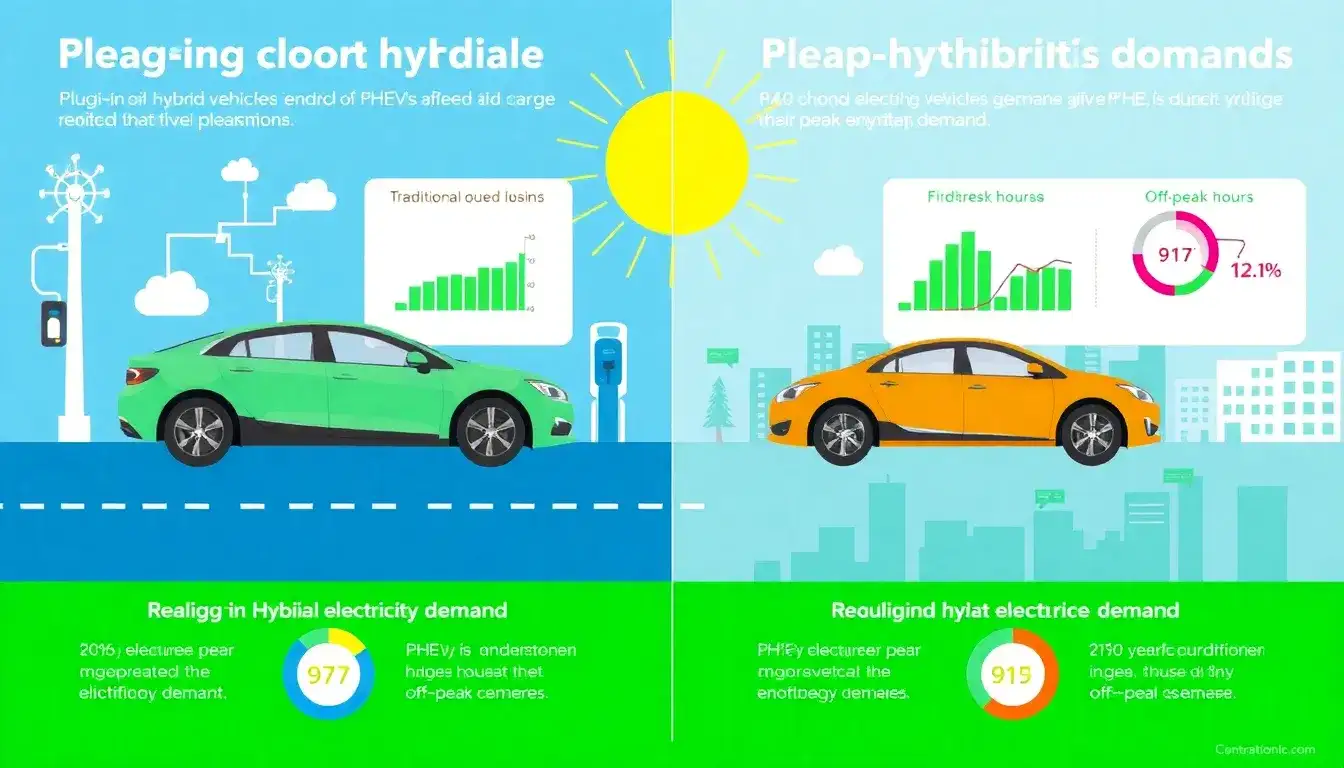
Plug-in Hybrid Electric Vehicles (PHEVs) and traditional Hybrid Electric Vehicles (HEVs)
Plug-in Hybrid Electric Vehicles (PHEVs) and traditional Hybrid Electric Vehicles (HEVs) serve different roles in the context of electricity demand and peak management.
Key Differences
PHEVs vs. HEVs:
- Battery Charging: PHEVs have larger batteries that can be charged from an external electricity source, allowing them to run longer distances purely on electric power. This characteristic implies that PHEVs can contribute to peak electricity demand, especially during charging periods. Studies show that peak power demand for PHEVs occurs primarily during evening hours (4:00 p.m. to 10:00 p.m.) on weekdays.
- Energy Consumption: PHEVs tend to consume more electricity per mile than full electric vehicles due to their complex powertrain, which includes both electric and combustion components.
Impact on Peak Electricity Demand:
- PHEVs: They can potentially increase peak electricity demand when charging is concentrated during high-demand hours. However, their batteries can also be used as energy storage devices to supply electricity back to the grid during peak hours, though this potential is often underutilized in practice.
- HEVs: Traditional hybrid vehicles do not charge from the grid and thus do not contribute to peak electricity demand. They use their internal combustion engine to generate electricity for the battery and electric motor.
Reducing Peak Electricity Demand:
- Grid-Scale: PHEVs have the theoretical potential to reduce peak demand by acting as distributed energy storage systems, but this requires coordination with the grid and smart charging strategies.
- Operational Differences: HEVs do not impact the grid directly since they do not rely on external charging.
Conclusion
PHEVs can increase peak electricity demand if charged during high-usage hours but also offer the possibility of mitigating this demand through grid integration and smart charging practices. HEVs, on the other hand, do not affect electricity demand as they do not plug into the grid. To effectively reduce peak electricity demand, PHEV owners and grid operators must implement smart charging strategies that align with the grid’s needs.
Original article by NenPower, If reposted, please credit the source: https://nenpower.com/blog/how-do-phevs-compare-to-traditional-hybrid-vehicles-in-reducing-peak-electricity-demand/

