

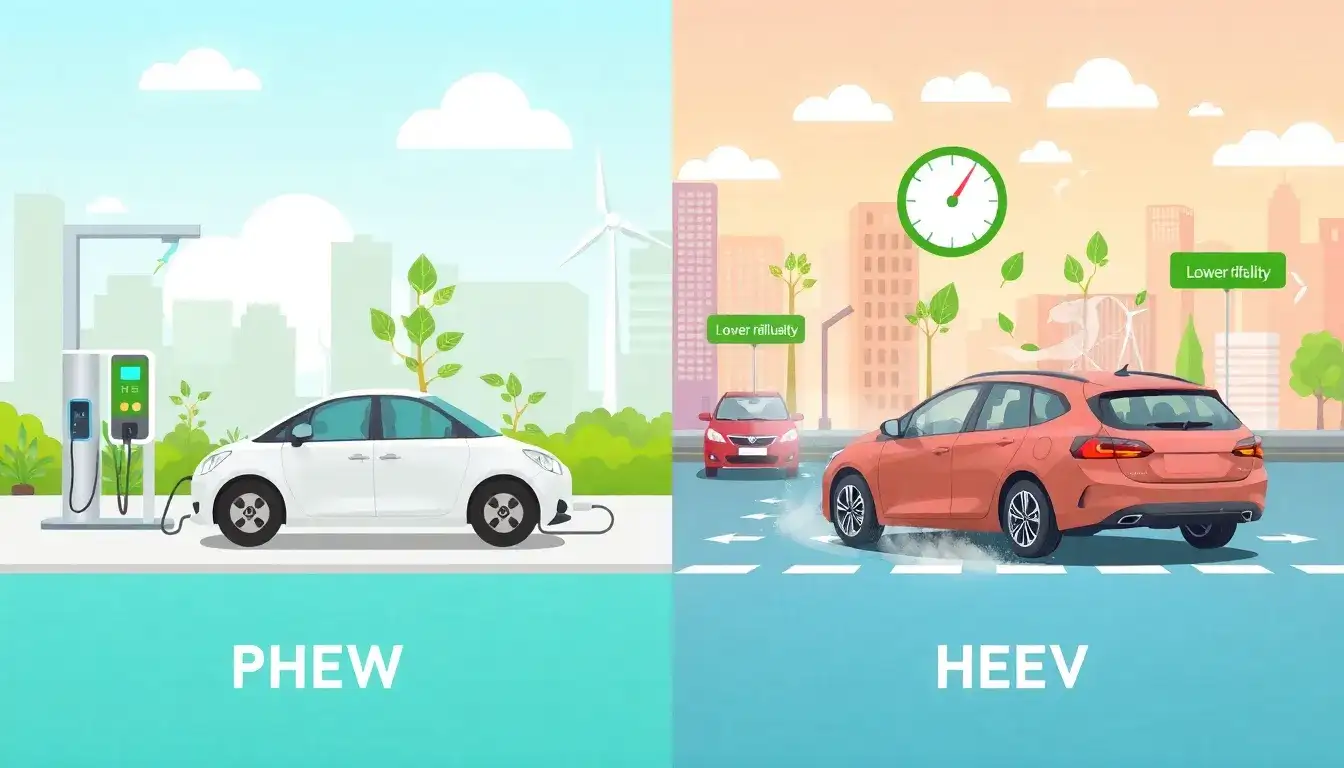
Plug-in Hybrid Electric Vehicles (PHEVs) and Hybrid Electric Vehicles (HEVs) both contribute to reducing greenhouse gas (GHG) emissions compared to conventional internal combustion engine vehicles (ICEVs), but they differ notably in their effectiveness.
PHEVs vs HEVs in Reducing Greenhouse Gas Emissions:
- PHEVs generally achieve greater GHG reductions than HEVs. PHEVs combine an internal combustion engine with a larger battery that can be charged from the grid, allowing them to operate solely on electric power for a certain range before switching to gasoline. This capability leads to lower tailpipe emissions during electric-only operation, and their direct emissions are typically lower than those of conventional vehicles and HEVs.
- Lifecycle GHG emissions of PHEVs are significantly lower than HEVs. Studies show PHEVs reduce lifecycle GHG emissions by about 30-35% compared to ICE vehicles, while HEVs achieve roughly 20-25% reductions depending on usage patterns and geographic region. One analysis found that PHEVs reduce lifetime emissions by approximately 46% on average in the U.S., outperforming HEVs and even some BEVs under certain grid emission scenarios.
- Electric driving share (utility factor) impacts emissions reductions. PHEVs’ effectiveness hinges on how often they run in electric mode versus gasoline mode. The assumed utility factor (percentage of kilometers driven on electricity) is often around 40% on average, but actual usage may be lower, which reduces GHG benefits. HEVs, which cannot be charged externally, rely more on fuel efficiency improvements rather than electric driving, yielding more modest emissions savings.
- Battery size and production emissions trade-offs. PHEVs have smaller batteries than full BEVs, leading to lower emissions from battery manufacturing, while providing significant electric driving capability that HEVs lack. This balance makes PHEVs more climate-effective than HEVs, especially when the electricity grid has moderate to low emissions.
- Grid emissions factor matters. PHEVs outperform HEVs across a range of grid carbon intensities but approach parity with HEVs in regions with very high grid emissions where electric driving is powered mostly by fossil fuels.
In summary, PHEVs typically reduce greenhouse gas emissions more than HEVs primarily due to their ability to run on grid electricity for a portion of their driving, thereby lowering combustion engine use and emissions. The extent of this advantage depends on real-world electric driving share and the carbon intensity of grid electricity. PHEVs strike a balance with smaller batteries and meaningful emissions reductions, offering a better climate outcome than HEVs in many contexts.
Original article by NenPower, If reposted, please credit the source: https://nenpower.com/blog/how-do-phevs-compare-to-hevs-in-terms-of-reducing-greenhouse-gas-emissions/

