

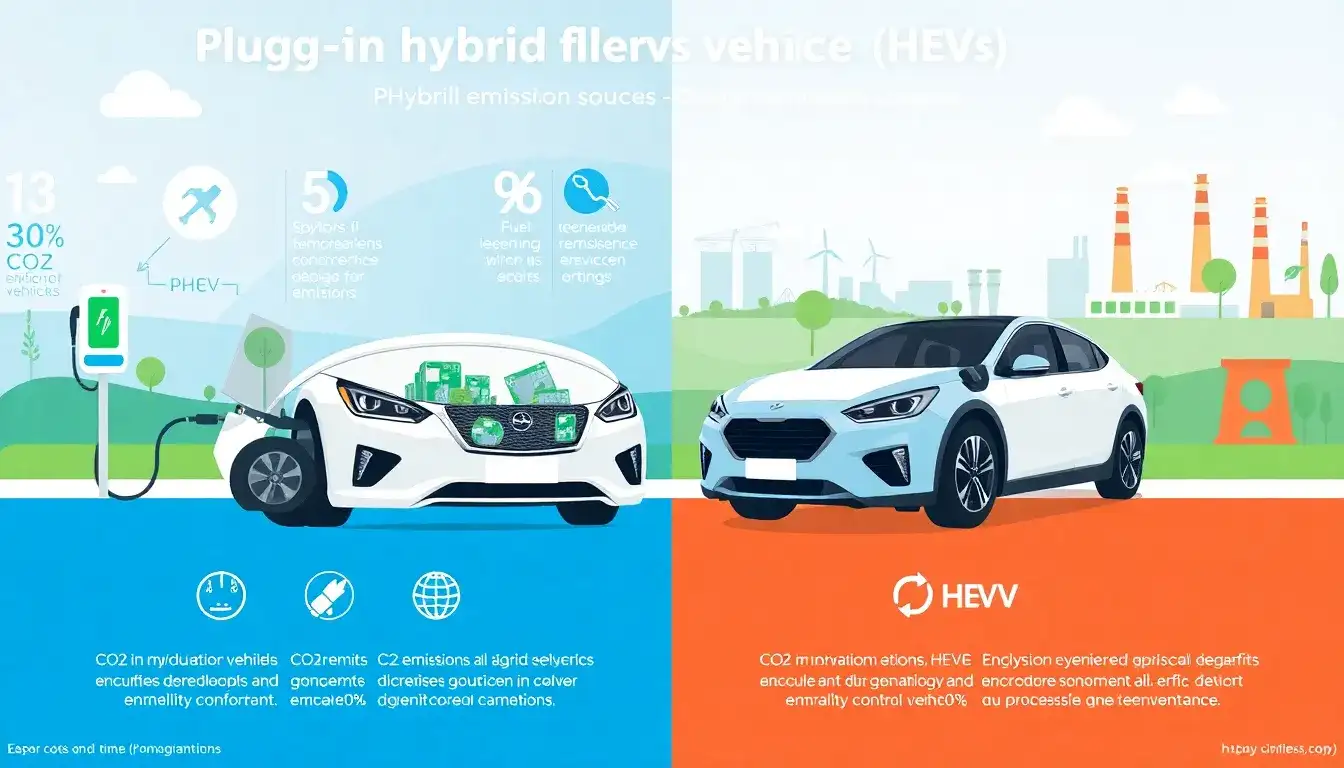
Plug-in Hybrid Electric Vehicles (PHEVs) generally offer better emissions reduction compared to Hybrid Electric Vehicles (HEVs) due to their ability to run on electricity for a portion of their operation. Here are some key points highlighting their differences:
-
Emissions During Operation:
- PHEVs have zero tailpipe emissions when running in electric mode. They can use cleaner grid electricity for part of their operation, reducing overall emissions compared to HEVs.
- HEVs always rely on a combination of gasoline and electricity generated by the vehicle itself, so they cannot achieve the same level of emissions reduction as PHEVs when in electric-only mode.
-
Overall Emissions Reduction:
- Studies have shown that PHEVs tend to reduce lifecycle emissions more than HEVs because they can run on cleaner electricity from the grid for part of their operation.
- PHEVs typically have a smaller battery than battery electric vehicles (BEVs), which results in lower emissions from battery production. However, they still use fossil fuels more than BEVs.
-
Fuel Cycle Emissions:
- Over their entire lifecycle (including production and disposal), PHEVs are generally more effective at reducing emissions than HEVs, particularly when they are charged from a cleaner grid.
In summary, PHEVs offer greater overall emissions reduction compared to HEVs due to their ability to utilize grid electricity and their typically lower production emissions. However, the effectiveness of emissions reduction for PHEVs can vary based on factors like the cleanliness of the grid and actual usage patterns.
Original article by NenPower, If reposted, please credit the source: https://nenpower.com/blog/how-do-phevs-compare-to-hevs-in-terms-of-overall-emissions-reduction/

