

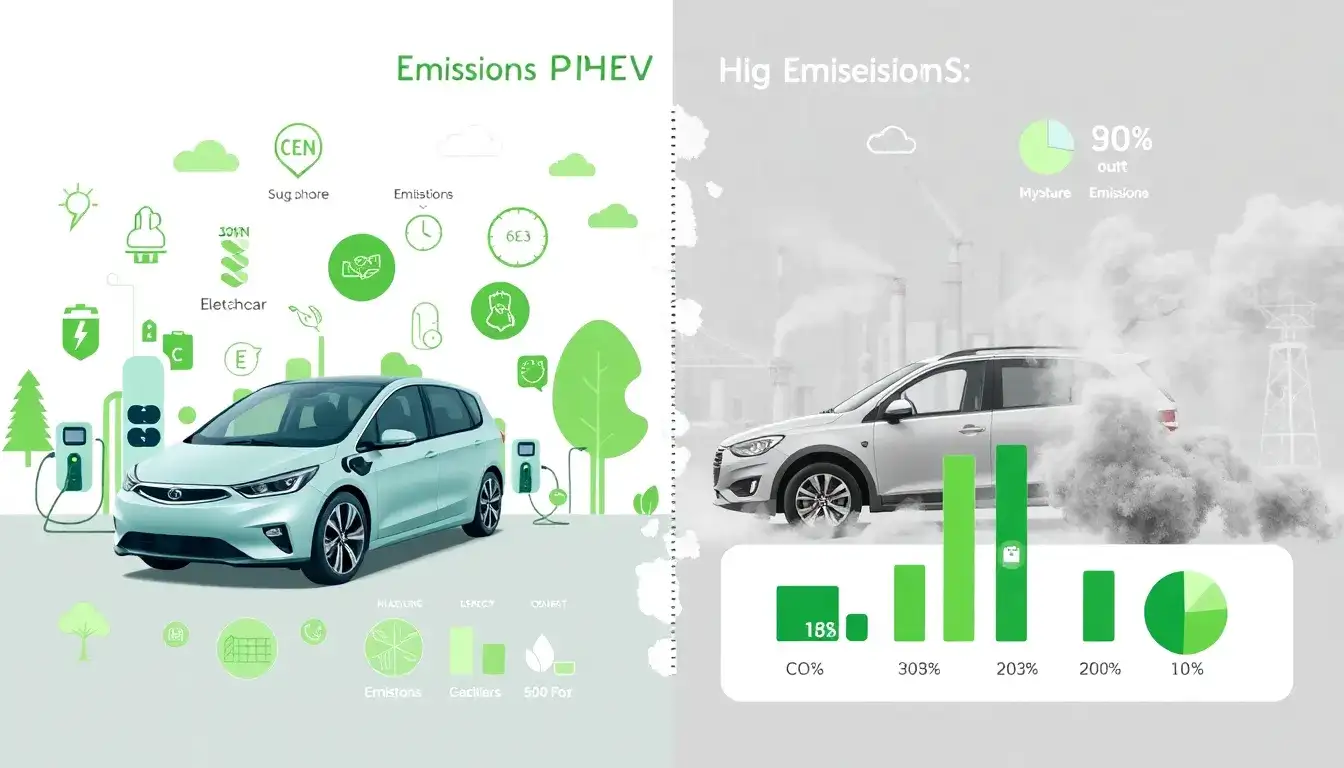
Plug-in Hybrid Electric Vehicles (PHEVs) typically offer a reduction in overall emissions compared to conventional vehicles, though the extent of this reduction depends on several factors, including usage patterns and the source of the electricity used for charging.
Key Comparison Points
- Tailpipe Emissions: PHEVs produce zero tailpipe emissions when operating in electric mode. However, when they switch to gasoline, they emit pollutants similar to conventional vehicles, though generally at a lower rate due to their hybrid design.
- CO2 Emissions: Studies have shown that PHEVs can reduce tailpipe CO2 emissions by 15% to 55% compared to conventional cars, depending on how much they are driven in electric mode.
- Total Emissions: When considering lifecycle emissions, which include both tailpipe and well-to-wheel emissions, PHEVs generally have higher total emissions than Battery Electric Vehicles (BEVs) but lower than conventional Internal Combustion Engine Vehicles (ICEVs). Globally, lifecycle emissions of PHEVs are about 30% lower than those of ICEVs over their lifetimes.
- Energy Source: The overall emissions savings of PHEVs also depend on the carbon intensity of the electricity grid used for charging. In regions with low-carbon electricity sources, PHEVs can offer more significant emissions reductions compared to areas with predominantly fossil-fuel-based grids.
Overall, PHEVs provide a bridge towards cleaner transportation by offering a compromise between the efficiency of electric vehicles and the range flexibility of conventional cars, though they do not match the emissions reductions achieved by BEVs when the grid is highly decarbonized.
Original article by NenPower, If reposted, please credit the source: https://nenpower.com/blog/how-do-phevs-compare-to-conventional-vehicles-in-terms-of-overall-emissions/

