

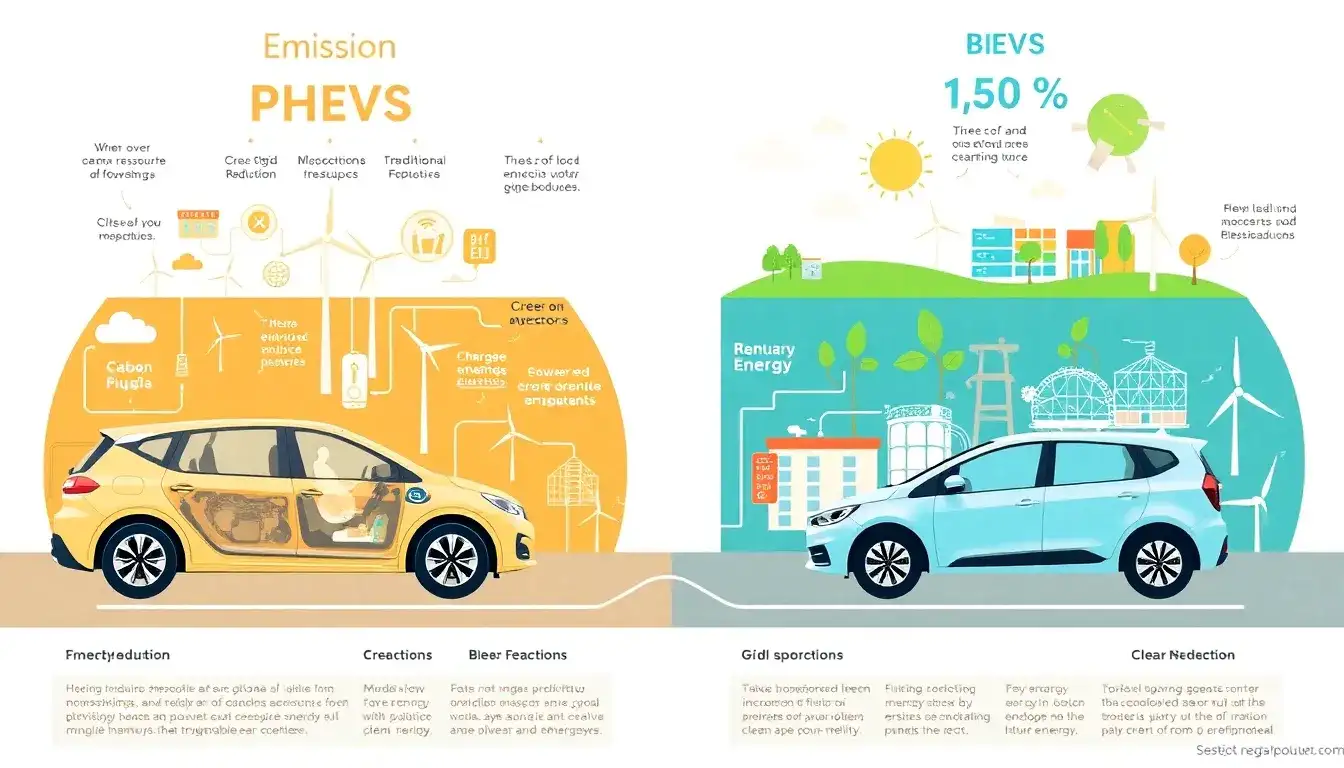
Comparing PHEVs and BEVs in Terms of Emissions Reduction with Grid Decarbonization
When considering the impact of grid decarbonization on emissions from plug-in hybrid electric vehicles (PHEVs) and battery electric vehicles (BEVs), several factors come into play:
Emissions and Grid Decarbonization
- BEVs: These vehicles produce zero direct emissions but depend on the grid’s energy mix for their emissions profile. As the grid decarbonizes, the overall lifecycle emissions of BEVs decrease significantly. In fact, BEVs can achieve emissions reductions of around 45% to 65% compared to PHEVs, HEVs, and ICEVs, depending on the grid’s carbon intensity. With rapid grid decarbonization, BEVs are expected to become even cleaner, with well-to-tank emissions potentially decreasing by 75% by 2035.
- PHEVs: PHEVs reduce emissions compared to traditional gasoline cars by up to 46% in the U.S. However, they still use fossil fuels, which means their emissions are not as low as those of BEVs, particularly as grids become cleaner. PHEVs are advantageous when used primarily in electric mode but produce emissions when their gasoline engines are in use. Their smaller batteries also result in lower production emissions compared to BEVs.
Key Points
- Grid Decarbonization Impact: As the grid becomes cleaner, both PHEVs and BEVs benefit, but BEVs’ emissions decrease more significantly because they are entirely dependent on electricity.
- Battery Production Emissions: BEVs have higher production emissions due to larger battery sizes, but PHEVs benefit from smaller batteries.
- Lifetime Emissions: BEVs generally offer lower lifecycle emissions than PHEVs as the grid decarbonizes, making them a cleaner long-term choice.
Emissions Comparison Summary
| Vehicle Type | Emissions Reduction |
|---|---|
| BEVs | Zero direct emissions. Lower lifecycle emissions as the grid decarbonizes, typically 45-65% lower than PHEVs, HEVs, and ICEVs. |
| PHEVs | 46% emissions reduction on average in the U.S. compared to gasoline vehicles. Lower production emissions due to smaller batteries. |
Conclusion
While PHEVs offer significant emissions reductions, especially over traditional gasoline vehicles, BEVs are generally the cleaner choice as grids continue to decarbonize. However, PHEVs remain a valuable option for those whose driving habits or charging infrastructure favor partial electric use.
Original article by NenPower, If reposted, please credit the source: https://nenpower.com/blog/how-do-phevs-compare-to-bevs-in-terms-of-emissions-reduction-with-grid-decarbonization/

