

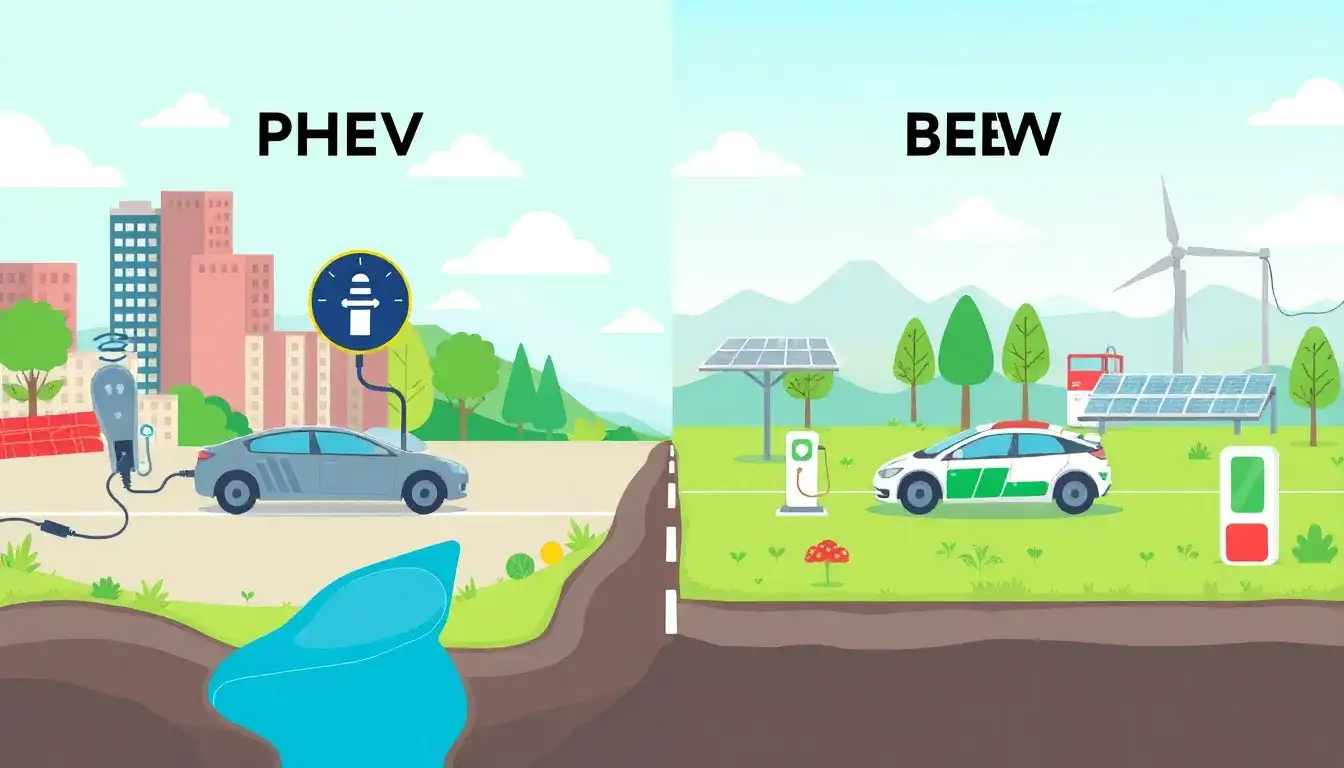
When comparing plug-in hybrid electric vehicles (PHEVs) and battery electric vehicles (BEVs) in terms of emissions reduction, the findings show nuanced results depending on lifecycle emissions, driving patterns, and energy sources.
Emissions Reduction Comparison: PHEVs vs BEVs
1. Lifecycle Greenhouse Gas Emissions
- PHEVs reduce lifetime emissions by about 46% on average in the US compared to conventional internal combustion engine vehicles (ICEVs), slightly outperforming BEVs in some cases due to their smaller battery and hybrid system reducing the environmental impact of battery production.
- BEVs typically achieve larger emissions reductions over their entire lifecycle in many assessments. For instance, a BEV’s lifecycle emissions are around 45% lower than those of a PHEV, 60% lower than a hybrid electric vehicle (HEV), and 65% lower than an ICEV in U.S. contexts. Globally, BEVs produce about 30-40% fewer emissions than PHEVs over 15 years of operation, with the gap widening as the electric grid becomes cleaner.
2. Battery Production Impact
- PHEVs have a much smaller battery pack—roughly one-sixth the size of a BEV’s—which means their battery manufacturing emissions are significantly lower. This smaller battery size reduces the dependence on critical minerals and embodied carbon from battery production.
- BEVs, on the other hand, have higher production emissions due to larger batteries, accounting for about 44-56% of their lifecycle emissions, depending on the source.
3. Use Phase and Grid Dependency
- PHEVs use both electricity and gasoline, typically running on electric power for about 70% of miles and gasoline for about 30%, which helps reduce emissions but does not eliminate fossil fuel use. This hybrid use means PHEVs still emit greenhouse gases during operation but less than conventional vehicles.
- BEVs produce zero tailpipe emissions, contributing significantly to reducing local air pollution and climate impact during the use phase.
4. Emissions Across Different Grid Emission Intensities
- PHEVs tend to have better emissions performance than BEVs across the spectrum of grid emission intensities due to their hybrid nature, which mitigates the impact of high grid emissions by relying partly on gasoline.
- BEVs become more advantageous as grids decarbonize. With increased lifetime mileage and cleaner electricity, BEVs reduce emissions further and outperform PHEVs more clearly.
Summary Table
| Aspect | PHEVs | BEVs |
|---|---|---|
| Lifetime GHG emissions reduction | ~46% reduction vs ICEV in US average; slightly better than BEVs with current grid mix | 45-65% lower than PHEVs and ICEVs depending on context; better in decarbonized grid scenarios |
| Battery size and production emissions | Smaller battery (1/6 size of BEV), lower production emissions and mineral use | Larger battery, higher embodied carbon and mineral demand |
| Tailpipe emissions | Reduced but present (gasoline use ~30% of miles) | Zero tailpipe emissions |
| Dependence on grid emissions mix | Less sensitive due to hybrid operation, better in high grid emission regions | More sensitive; improves with cleaner grid |
Conclusion
PHEVs offer significant emissions reductions over conventional vehicles with the advantage of lower battery production emissions and better performance in regions with high grid emissions, making them currently competitive or slightly better than BEVs in some U.S. analyses. However, BEVs generally provide greater long-term emissions reductions, especially as electric grids become cleaner and as vehicle mileage accumulates. The best choice depends on driving habits, access to charging, and local grid cleanliness.
Both PHEVs and BEVs contribute meaningfully to greenhouse gas reduction goals compared to traditional gasoline vehicles.
Original article by NenPower, If reposted, please credit the source: https://nenpower.com/blog/how-do-phevs-compare-to-bevs-in-terms-of-emissions-reduction/

