

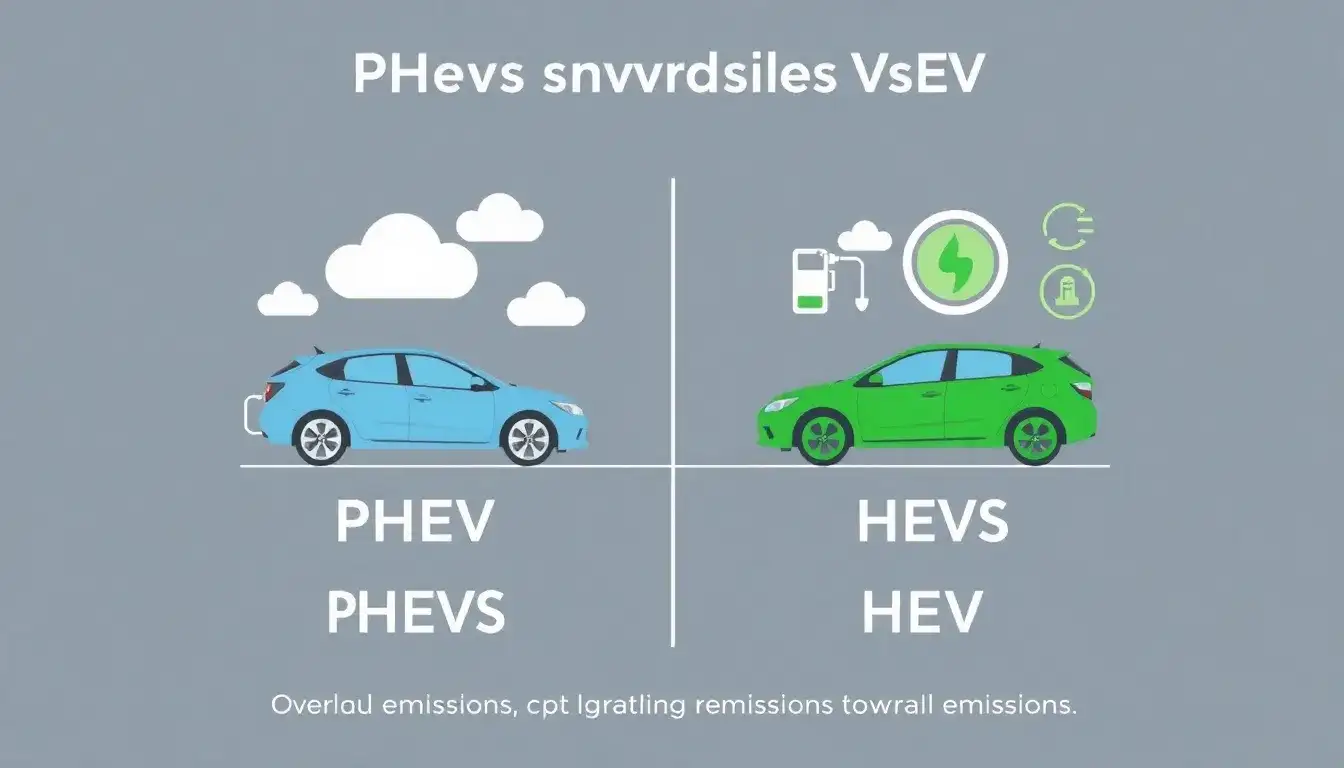
In comparing plug-in hybrid electric vehicles (PHEVs) and hybrid electric vehicles (HEVs) in terms of overall emissions reduction, several key points emerge from lifecycle analyses and emission studies:
Emissions Reduction Comparison
- PHEVs generally achieve lower lifetime greenhouse gas (GHG) emissions than HEVs. For example, PHEVs produce about 30% less emissions than internal combustion engine vehicles (ICEVs) over their lifetime, while HEVs have higher emissions than PHEVs but still lower than ICEVs. One analysis shows that battery electric vehicles (BEVs) have lifecycle emissions around 40% lower than HEVs and about 30% lower than PHEVs, but PHEVs still outperform HEVs in emission reductions when considering typical use.
- A detailed U.S.-focused study reports that PHEVs reduce lifetime emissions by approximately 46% compared to conventional vehicles, slightly outperforming BEVs in emissions savings primarily due to a much smaller battery size and less dependence on critical minerals. This smaller battery leads to lower production emissions, which is a significant factor for lifecycle emissions. Importantly, the PHEV still emits tailpipe emissions but uses grid electricity for around 70% of miles driven (assuming 30% gasoline use during operation), resulting in significant emissions savings compared to HEVs, which do not use grid power.
Utility Factor and Real-World Usage
- The emissions benefits of PHEVs strongly depend on the share of miles driven on electric power (utility factor). Real-world utility factors tend to be lower than official ratings, which can reduce the emissions advantage of PHEVs. However, when the utility factor is around 40-65%, PHEVs show clear emissions benefits over HEVs and ICEVs.
Grid Emissions and Lifecycle Considerations
- PHEVs reduce tailpipe emissions as they use grid electricity for part of their operation. The emissions during electric drive depend on the cleanliness of the electricity grid. As grids decarbonize, PHEV emissions reductions improve further. HEVs do not use grid electricity and thus have less potential for emissions reduction from cleaner grids.
- The battery production emissions are lower for PHEVs than BEVs due to smaller battery sizes. Compared to HEVs, PHEVs have additional emissions from battery production but compensate with lower fuel use and associated emissions during operation.
Summary Table
| Aspect | PHEVs | HEVs |
|---|---|---|
| Lifecycle GHG Reduction | ~30-46% lower than ICEVs; lower than HEVs | Lower than ICEVs but higher than PHEVs |
| Key Emissions Source | Tailpipe emissions (lower), grid electricity emissions | Tailpipe emissions (lower than ICEVs), no grid use |
| Dependency on Grid Cleanliness | Yes, affects emissions significantly | No grid dependency |
| Battery Size & Production Emissions | Smaller than BEVs, larger than HEVs (due to battery) | Small or no battery, lower production emissions |
| Real-World Utility Factor Impact | High impact; lower utility reduces benefits | N/A (no plug-in) |
Overall Conclusion
PHEVs generally provide greater overall emissions reductions than HEVs due to their ability to drive a significant share of miles on electricity, which is often cleaner than gasoline, especially as electricity grids become greener. The smaller battery size of PHEVs compared to BEVs means lower production emissions and quicker emissions payback. However, the actual emissions benefit depends on real-world driving patterns, especially the proportion of electric miles driven. HEVs offer emissions reductions compared to conventional vehicles but cannot leverage grid decarbonization and thus typically have higher lifetime emissions than PHEVs.
Original article by NenPower, If reposted, please credit the source: https://nenpower.com/blog/how-do-phevs-and-hevs-compare-in-terms-of-overall-emissions-reduction/

