

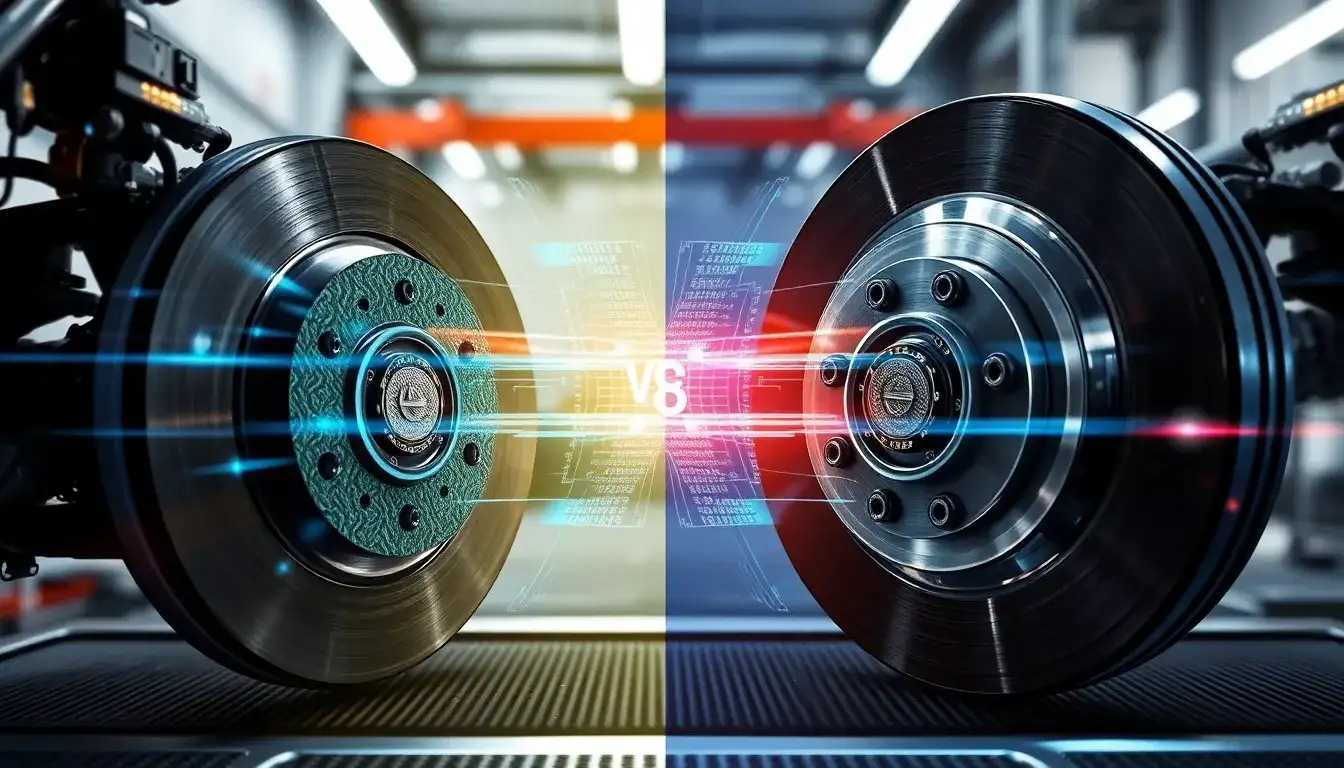
PHEV brake pads differ from traditional vehicle brake pads primarily in wear characteristics, heat management, and operating conditions, influenced by regenerative braking systems. Here’s a breakdown of key differences:
Material and Friction Requirements
- PHEVs: Often use low-dust ceramic formulations, prioritizing longevity and reduced particulate emissions. Ceramic pads may struggle with heat fade under heavy loads due to PHEVs’ weight.
- Traditional vehicles: More likely to employ semi-metallic or organic compounds for higher friction levels, especially in performance-oriented applications.
Performance Factors
- Stopping Power:
- PHEVs depend partially on regenerative braking, reducing mechanical brake use. However, their heavier weight demands strong friction materials, which some aftermarket pads struggle to deliver adequately.
- Traditional vehicles rely entirely on friction brakes, allowing aftermarket pads to improve stopping distances and fade resistance.
- Heat Management:
- PHEV pads experience less sustained heat due to regen braking but must handle peak heat spikes during hard stops. Ceramic pads may lack the fade resistance needed for repeated heavy braking.
- Traditional performance pads prioritize high-temperature stability, using reinforced materials to combat brake fade.
Wear and Durability
- PHEVs: Brake pads last longer due to reduced mechanical braking, but rotor oxidation becomes a concern from infrequent use.
- Traditional vehicles: Pads wear faster under frequent mechanical braking, necessitating more frequent replacements.
Aftermarket Considerations
- PHEV-specific upgrades:
- Low-dust ceramics improve cleanliness but may compromise stopping power.
- Slotted/dimpled rotors (paired with upgraded pads) enhance heat dissipation on heavy PHEVs.
- Traditional upgrades: Focus on higher friction coefficients and track-ready heat resistance.
Key Trade-offs
| Feature | PHEV Brake Pads | Traditional Vehicle Pads |
|---|---|---|
| Primary Focus | Longevity, low dust | Stopping power, heat resistance |
| Regen Impact | Reduced wear, rotor corrosion | N/A |
| Aftermarket Trends | Ceramic compounds, rotor upgrades | Semi-metallic, track-focused |
In summary, PHEV brake systems prioritize low maintenance and efficiency, while traditional setups emphasize raw stopping performance, necessitating different pad formulations and aftermarket approaches.
Original article by NenPower, If reposted, please credit the source: https://nenpower.com/blog/how-do-phev-brake-pads-compare-to-those-in-traditional-vehicles-in-terms-of-performance/

