

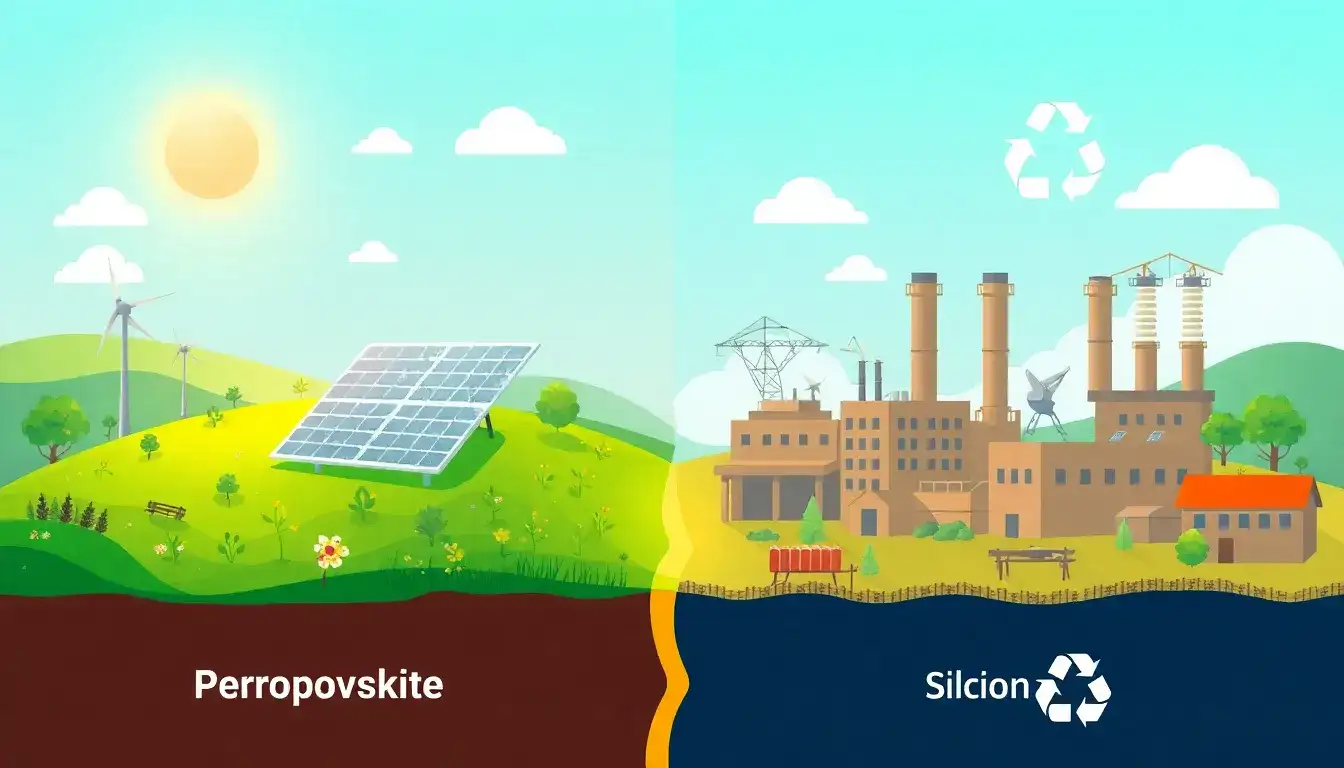
Perovskite solar panels compare favorably to traditional silicon panels in several environmental impact aspects, but there are also challenges related to toxicity and stability.
Advantages of Perovskite Solar Panels Over Silicon
- Lower Carbon Footprint and Energy Payback Time:
Perovskite solar cells generally have a lower carbon footprint compared to silicon panels because their manufacturing process requires less energy-intensive purification and processing. This results in shorter energy payback periods—meaning they recover the energy used to produce them faster than silicon panels do. - Reduced Environmental Impact in Lifecycle Assessments:
Studies assessing the full lifecycle (from material extraction to production and electricity generation) have shown that perovskite-on-silicon tandem modules can have 6% to 18% less environmental impact than conventional silicon modules when considering the additional energy generated over their lifespan. While tandem modules involving perovskite sometimes show higher impacts in certain categories (e.g., terrestrial ecotoxicity, freshwater consumption), the increased electricity generation over their operational life compensates for these extra impacts. - Lower Use of Scarce Materials and Easier Recycling:
Perovskite cells are less costly and simpler to produce, and they are easier to recycle, which can reduce resource depletion compared to silicon-based technologies.
Environmental and Health Concerns of Perovskite Panels
- Lead Toxicity and Potential Environmental Contamination:
A significant concern with perovskite solar panels is the use of lead in the perovskite layer. Lead in these panels can potentially leach into the environment, especially since the lead compounds used (like lead iodide) are water-soluble and can release toxic lead ions during degradation or improper disposal. This poses health and environmental risks that require careful mitigation strategies. - Stability and Longevity Issues:
Perovskite materials are more susceptible to environmental degradation (e.g., moisture, heat), which affects their operational stability and lifecycle. Researchers are actively working on improving their durability and developing effective recycling methods to manage end-of-life materials more sustainably.
Summary Comparison
| Factor | Perovskite Solar Panels | Traditional Silicon Solar Panels |
|---|---|---|
| Carbon footprint | Lower carbon footprint; shorter energy payback | Higher carbon footprint due to energy-intensive silicon purification |
| Environmental impact (lifecycle) | 6%-18% less impact in tandem modules considering lifetime energy generation | Higher impact, especially in wafer production |
| Resource use | Use of lead; simpler manufacturing and recycling | Large use of silicon; energy-intensive processes |
| Toxicity risk | Potential lead leaching and environmental contamination | Minimal toxic material concerns |
| Stability and lifespan | Lower stability; ongoing improvements needed | High stability and long lifespan |
In conclusion, perovskite solar panels offer potential environmental advantages such as lower carbon footprints and reduced energy use during manufacturing compared to traditional silicon panels. However, challenges remain around the use of toxic lead and the materials’ long-term stability. Advances in material engineering and recycling are crucial to fully realizing perovskite solar panels’ environmental benefits while mitigating risks.
Original article by NenPower, If reposted, please credit the source: https://nenpower.com/blog/how-do-perovskite-solar-panels-compare-to-traditional-silicon-panels-in-terms-of-environmental-impact/

