

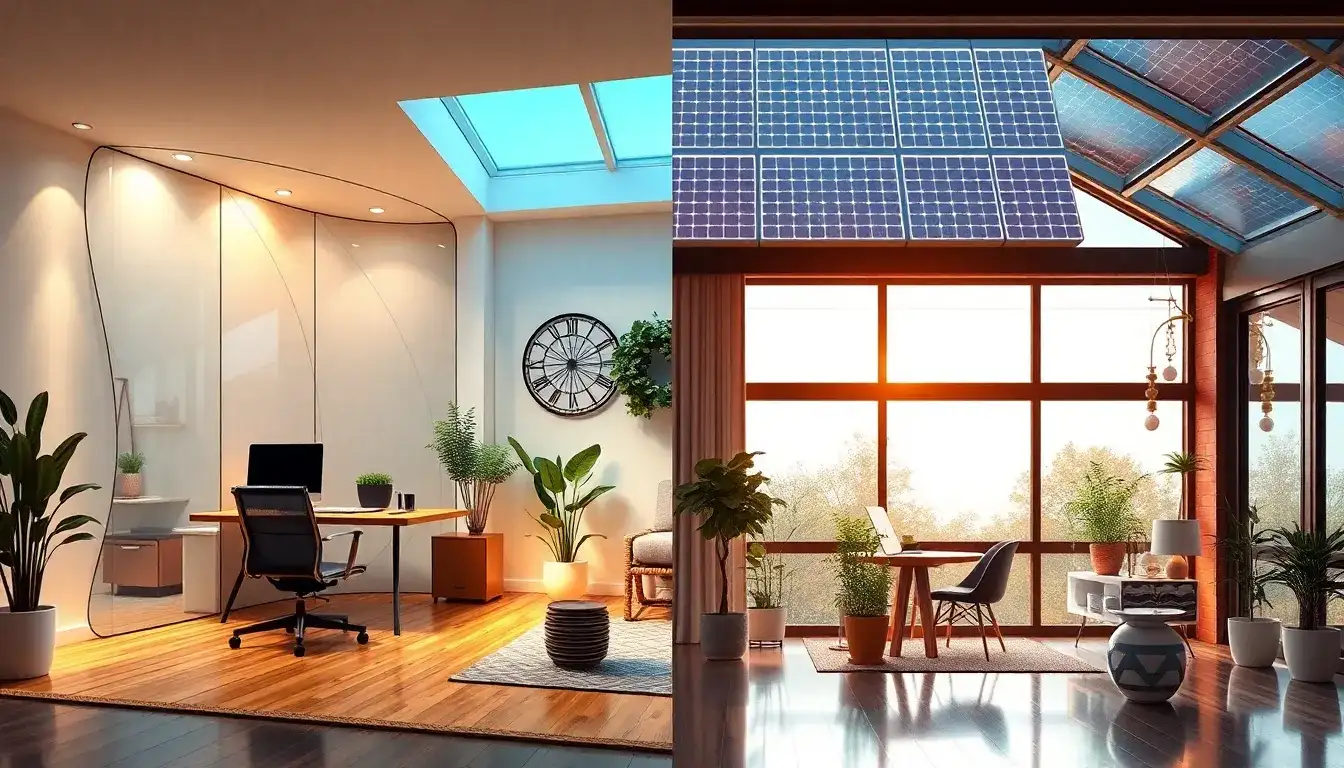
Comparison of Perovskite and Silicon Solar Cells in Indoor Applications
Perovskite solar cells and silicon solar cells are both used in indoor applications for powering devices such as those in the Internet of Things (IoT). Here’s a comparison based on key factors:
Efficiency and Performance
- Perovskite Solar Cells: Recent advancements have led to indoor power conversion efficiencies above 40%, with some achieving even higher, such as a reported 42% under specific conditions. Perovskites offer better bandgap adjustability, which can be advantageous in indoor lighting conditions that vary widely.
- Silicon Solar Cells: While silicon solar cells are well-established and reliable, they generally have lower efficiency in indoor settings. Studies show that perovskite solar cells can outperform silicon solar cells significantly in terms of energy yield per unit area under indoor conditions.
Cost and Fabrication
- Perovskite Solar Cells: They are typically less expensive to produce compared to silicon solar cells, especially on flexible substrates. This makes them more viable for large-scale, low-cost applications.
- Silicon Solar Cells: Silicon solar cells are more costly and require more complex fabrication processes compared to perovskites.
Stability and Durability
- Perovskite Solar Cells: While perovskites offer high performance, they still face challenges related to long-term stability and durability. Encapsulation techniques like edge-sealing can help maintain performance over time, but they are not as stable as silicon cells.
- Silicon Solar Cells: Silicon solar cells are known for their high stability and durability, making them a reliable choice for long-term applications.
Market Potential
- Perovskite Solar Cells: Perovskites have significant potential for powering IoT devices due to their efficiency and cost advantages. However, further development is needed to improve their stability and commercial viability.
- Silicon Solar Cells: While silicon solar cells are widely used outdoors, their application indoors is limited by their lower efficiency compared to perovskites. However, their reliability and established manufacturing infrastructure remain advantages.
Summary
Perovskite solar cells are emerging as superior choices for indoor applications due to their higher efficiency and cost-effectiveness. However, they require further development to improve stability. Silicon solar cells offer reliability and established manufacturing, but their efficiency in indoor settings is generally lower compared to perovskites.
Original article by NenPower, If reposted, please credit the source: https://nenpower.com/blog/how-do-perovskite-solar-panels-compare-to-silicon-solar-cells-in-indoor-applications/

