

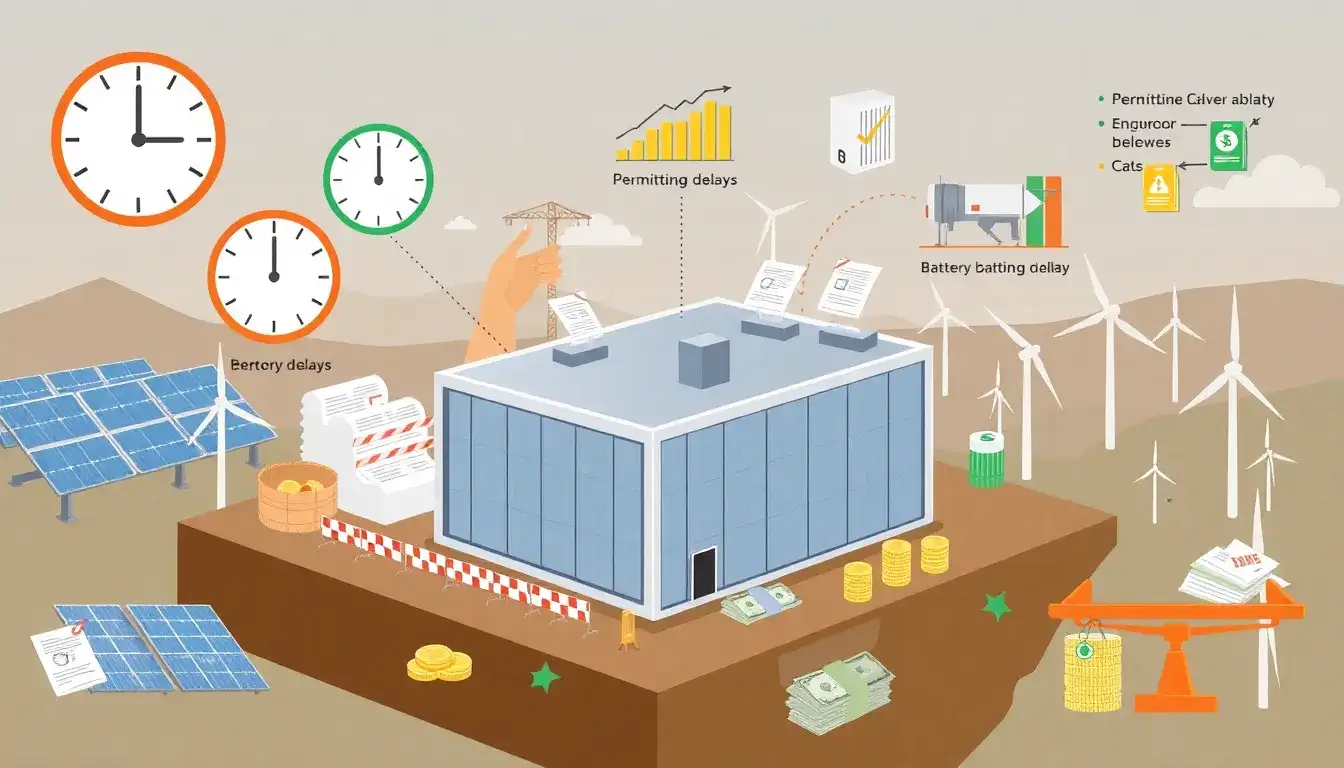
Permitting delays have significant negative impacts on the financial viability of utility-scale battery projects in several ways:
Increased Costs and Risks
- Delays and price increases caused by prolonged permitting can lead to an inability to deliver projects on time or within budget. This raises the risk of financial loss for developers due to failure to meet contractual deadlines or increased costs of materials and labor over time.
- Such delays can also lead to loss of performance security and reputational harm, as utilities and developers fail to meet regulatory or procurement requirements within the expected timeframe.
Compliance and Regulatory Challenges
- Utility-scale battery projects are often part of procurement contracts linked to regulatory mandates. Permitting delays can cause failures to comply with these mandates and delay important system improvements aimed at grid reliability and capacity.
- Local permitting and zoning issues are among the leading causes of project cancellation or delays at the state and local levels, compounded by challenges related to grid interconnection approvals.
Impact on Project Lifespan and Economics
- Battery energy storage systems degrade over time, so delays in project completion reduce the effective operational lifespan of the battery, negatively impacting the return on investment.
- Prolonged delays postpone the start of revenue generation from energy storage services, affecting project cash flows and increasing financing costs.
Permitting Complexity
- Permitting requirements for battery energy storage systems (BESS) can be complex and vary by jurisdiction, requiring careful navigation to avoid hold-ups in siting and construction approvals.
- These challenges compound project risk and necessitate thorough planning and legal compliance strategies from developers and asset owners.
Summary
Permitting delays in utility-scale battery projects translate into higher costs, increased regulatory risk, potential cancellation, shortened battery effective lifespan, and deferred revenue streams. These factors collectively threaten the financial viability of such projects, making streamlined permitting processes and early regulatory engagement critical for successful deployment.
Original article by NenPower, If reposted, please credit the source: https://nenpower.com/blog/how-do-permitting-delays-impact-the-financial-viability-of-utility-scale-battery-projects/

