

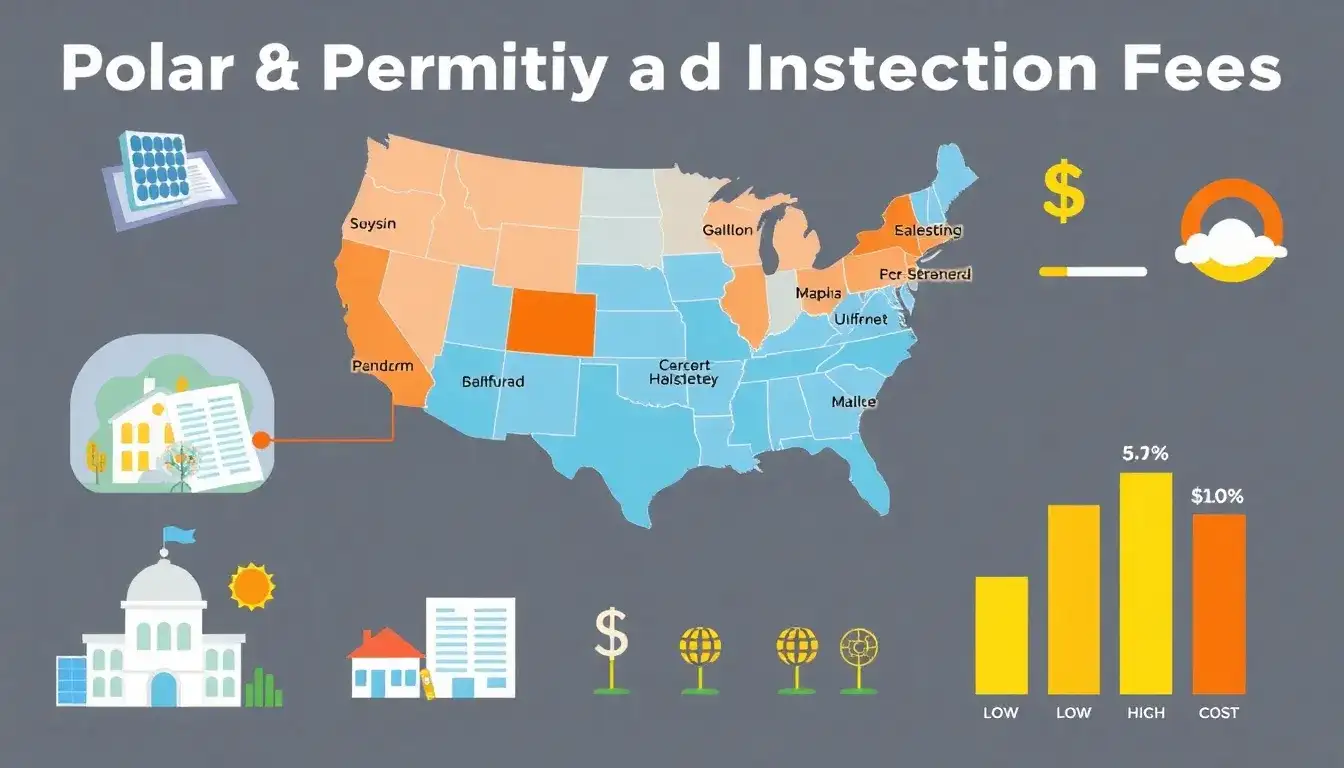
Permitting and inspection fees for solar panel installations vary significantly by location, and these variations impact the overall cost of installing solar panels. The differences depend on local government policies, regulatory complexity, and inspection requirements, which influence both the fees charged and the timeline of the installation process.
How Permitting Fees Vary by Location
- Jurisdictional Differences: Cities, counties, and states each set their own fee structures for solar permits. Urban areas and regions with complex regulatory frameworks typically have higher permit fees due to more extensive administrative processes.
- Local Authority Having Jurisdiction (AHJ): The number and complexity of AHJs involved in approving the installation can increase costs. Some locations require multiple permits for electrical, building, plumbing, or mechanical work, whereas others may issue combination permits, which can either raise or consolidate fees.
- Permit Fee Components: Fees often depend on the size and type of the solar system (residential vs commercial), with larger or commercial projects incurring higher permit costs due to more rigorous reviews and inspections.
- Additional Permits for Ground-Mounted Systems: Ground-mounted solar panels may require zoning permits and engineering reviews, which add to permitting costs compared to rooftop installations that usually have simpler requirements.
- Application Complexity and Expedited Processing: More complex applications requiring detailed engineering plans, professional certifications, or expedited review options also raise permitting fees.
- Online vs. In-Person Application: Some municipalities offer online permit application portals that reduce costs and processing times, whereas others requiring in-person submissions may increase labor and transportation costs, adding to overall expenses.
How Inspection Fees Vary by Location
- Inspection Frequency and Requirements: Local jurisdictions differ in the number of mandatory inspections during and after installation. More inspections mean higher cumulative inspection fees.
- Regional Licensing Requirements: Some areas mandate a licensed electrician or other certified professionals to be present during inspections, potentially increasing the inspection cost based on labor rates and availability.
- System Size and Complexity: The inspection cost is influenced by the size of the solar array and the type of equipment. For example, systems with microinverters, which are more complex to inspect, typically incur higher inspection fees than those with standard string inverters.
- Additional Inspection Services: Extras such as obstruction assessment, cleaning, repair, or tree trimming during inspection can add to the inspection cost. These services often depend on site-specific conditions and location-related factors like shading by trees or structures.
Impact on Solar Panel Cost
- Soft Costs Increase: Permitting and inspection fees contribute to the “soft costs” of solar installation—non-hardware costs such as administrative fees, labor for paperwork, and regulatory compliance. These soft costs can constitute a significant portion of the total project cost and vary widely by location, sometimes unexpectedly increasing the overall price of going solar.
- Delays Affecting Project Timelines: Locations with slower permit processing or multiple AHJs can cause project delays, which translate to higher labor costs and potentially increased financing costs, further elevating the total installation cost.
- Potential for Cost Savings: Some regions have streamlined permitting processes, including online applications, standardized requirements, and capped processing times, which reduce fees and speed up installations, thereby lowering costs for solar customers.
In summary, permitting and inspection fees for solar panel installations vary significantly across different locations due to local government regulations, system characteristics, and application complexity. These fees affect the total cost of solar by increasing the soft costs and influencing project timelines. Efficient permitting and inspection processes, as well as online systems and standardized regulations, can help reduce these costs and encourage broader solar adoption.
Summary Table of Variations and Impacts
| Factor | Variation by Location | Impact on Solar Panel Cost |
|---|---|---|
| Permit fee structures | Differ by city/county/state; urban higher | Can increase soft costs significantly |
| Number/types of permits | Varies by AHJ; combination vs standalone | More permits mean higher cumulative fees |
| System size/type | Larger/commercial = higher fees | Increases permit and inspection fees |
| Ground vs rooftop system | Ground may need zoning permits | Adds to permit fees and review complexity |
| Application complexity | Detailed engineering/stamps add fees | Raises permit cost due to professional services |
| Inspection requirements | Number of inspections, professional presence | More inspections increase fees |
| Inspection complexity | Microinverters cost more to inspect | Longer, costlier inspections |
| Add-on inspection services | Obstruction, cleaning, repairs vary | Additional costs depending on site specifics |
| Permit processing method | Online reduces costs, in-person adds costs | Efficiency affects overall project cost and timing |
This comprehensive variability means solar installers and customers should research local permitting and inspection requirements early in planning to better estimate total project costs and timelines.
Original article by NenPower, If reposted, please credit the source: https://nenpower.com/blog/how-do-permitting-and-inspection-fees-vary-by-location-and-impact-the-solar-panel-cost/

