

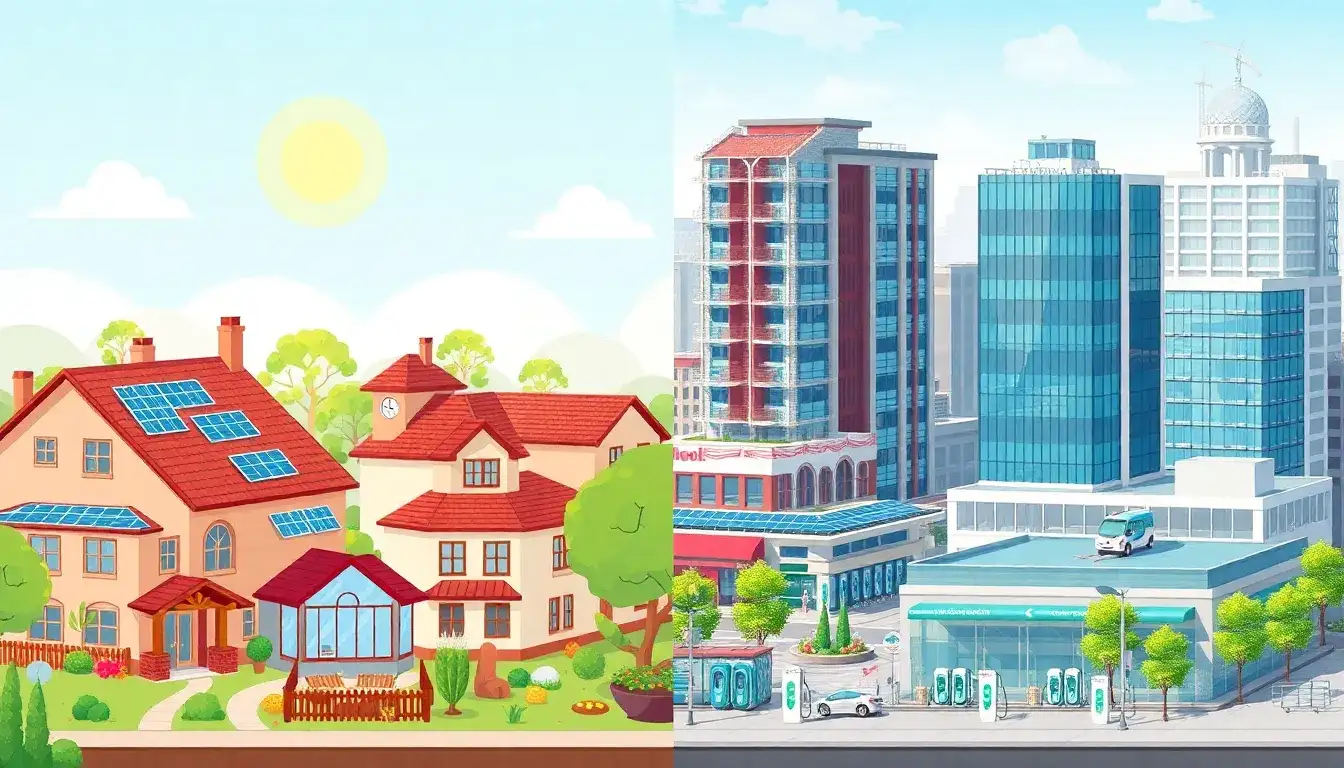
Peak shaving strategies can differ between residential and commercial buildings due to variations in energy usage patterns, available resources, and operational requirements. Here’s a comparison of peak shaving approaches in residential and commercial settings:
Residential Settings
- Energy Efficiency Measures: Residential buildings often focus on improving energy efficiency through upgrades like LED lighting, better insulation, and smart thermostats.
- Solar Energy with Storage: Residential homes can benefit from rooftop solar installations combined with battery storage systems. This setup allows homeowners to store excess energy generated during sunny hours for use during peak evening times, reducing grid dependence.
- Time-of-Use Pricing: Many utilities offer time-of-use pricing, encouraging households to shift energy-intensive activities (like laundry) to off-peak hours.
- Smart Home Technologies: IoT devices can be used to monitor and control energy usage in real-time, optimizing energy consumption patterns.
Commercial Settings
- Energy Efficiency Improvements: Like residential settings, commercial buildings can benefit from energy-efficient upgrades, but on a larger scale. This includes optimizing HVAC systems, using more efficient lighting, and improving building insulation.
- Demand Response Programs: Commercial buildings often participate in demand response programs, where they receive incentives for reducing energy usage during peak demand periods.
- On-Site Generation and Storage: Commercial facilities frequently use on-site renewable energy sources (e.g., solar, wind) paired with battery storage to mitigate peak demand charges. During peak periods, stored energy can be used to reduce grid reliance.
- Advanced Management Systems: Commercial buildings leverage advanced IoT-based management systems to monitor and adjust energy usage dynamically, often integrating with building management systems (BMS) to optimize energy consumption based on real-time conditions.
- Operational Adjustments: Large commercial operations may temporarily curtail non-essential processes or reschedule energy-intensive tasks to off-peak times, which is less feasible in residential settings.
Key Differences
- Scale and Complexity: Commercial buildings typically have more complex energy systems and larger energy demands, requiring more sophisticated management strategies.
- Operational Flexibility: Commercial facilities often have less flexibility in shifting loads, as certain operations must run continuously.
- Availability of Resources: Commercial settings are more likely to invest in on-site generation and large-scale energy storage due to economies of scale and higher energy demands.
In summary, while both residential and commercial buildings employ peak shaving strategies to reduce energy consumption during peak periods, the scale, operational requirements, and available resources can vary significantly, leading to differences in strategy implementation.
Original article by NenPower, If reposted, please credit the source: https://nenpower.com/blog/how-do-peak-shaving-strategies-differ-between-residential-and-commercial-buildings/

