

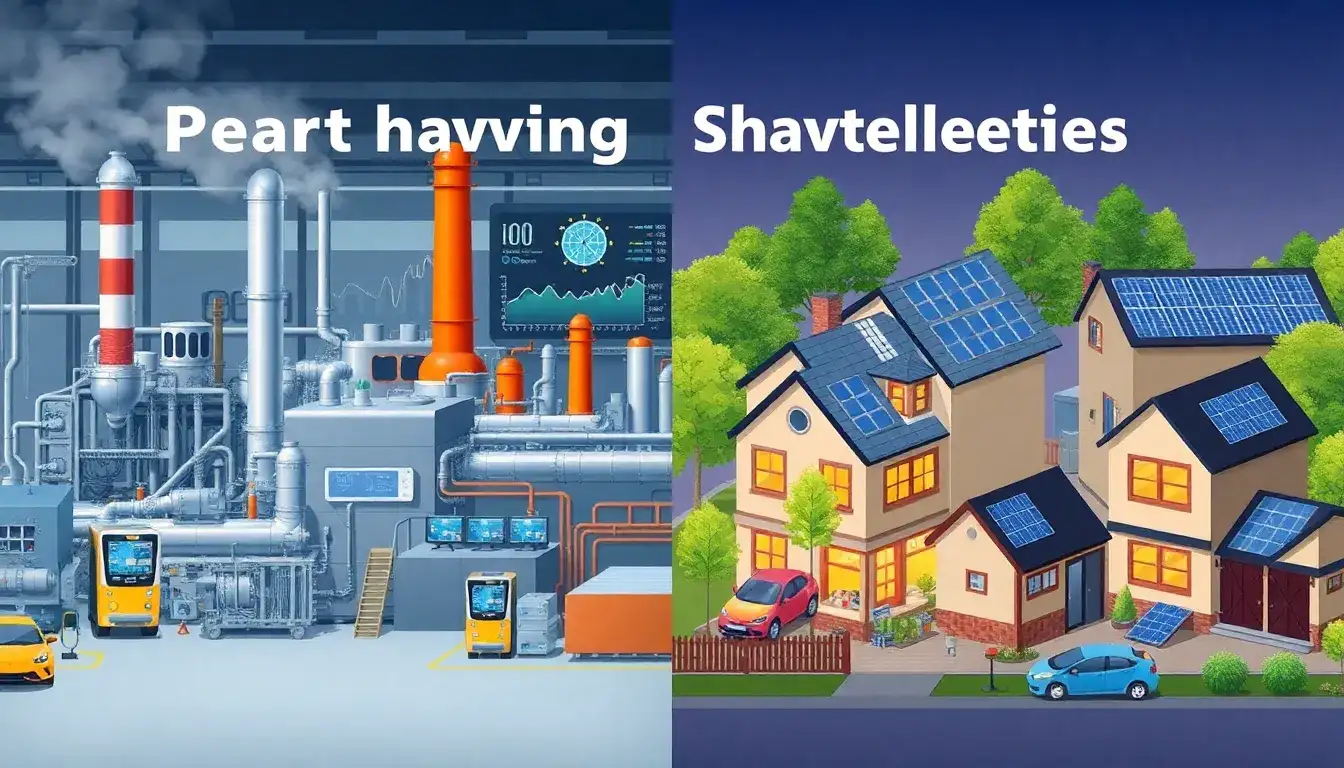
Peak shaving strategies differ significantly between industrial and residential sectors based on scale, complexity, and available technologies. Here’s a comparison of these strategies:
Industrial Sector
- Scale and Complexity: Industrial facilities have larger, more complex operations, making peak shaving more critical to reduce costly demand charges.
- Strategies:
- Curtailment: Non-essential machinery and operations are powered down during peak demand periods.
- On-site Generation: Installations like solar panels or generators provide alternative power sources during peaks.
- Battery Energy Storage Systems: Store energy during off-peak times and discharge during peaks to reduce grid reliance.
- Load Shifting: Move energy-intensive processes to off-peak hours when electricity is cheaper.
Residential Sector
- Scale and Complexity: Residential peak shaving is typically simpler and smaller-scale, focusing on household energy management.
- Strategies:
- Smart Home Automation: Utilize smart thermostats and devices to adjust consumption based on demand or pricing signals.
- Time-of-Use (TOU) Pricing: Adjust consumption patterns based on fluctuating electricity prices, often through automated systems.
- Small-Scale Renewable and Battery Systems: Deploy small solar panels or battery storage systems to reduce peak grid usage, though less common due to cost dynamics.
Key Differences
- Scale and Cost Sensitivity: Industrial facilities face significantly higher demand charges and benefit more from peak shaving due to their larger energy consumption profiles.
- Complexity of Operations: Industrial environments require more sophisticated energy management systems to optimize peak shaving benefits across multiple processes and machinery.
- Technology Adoption: While both sectors can use solar and battery systems, industrial settings typically require more advanced and integrated solutions to manage peak demand effectively.
In summary, while both sectors use peak shaving to reduce energy costs, industrial facilities have more complex operations and larger benefits from advanced strategies like on-site generation and large-scale battery storage systems. Residential settings focus more on household-level automation and price-driven adjustments.
Original article by NenPower, If reposted, please credit the source: https://nenpower.com/blog/how-do-peak-shaving-strategies-differ-between-industrial-and-residential-sectors/

