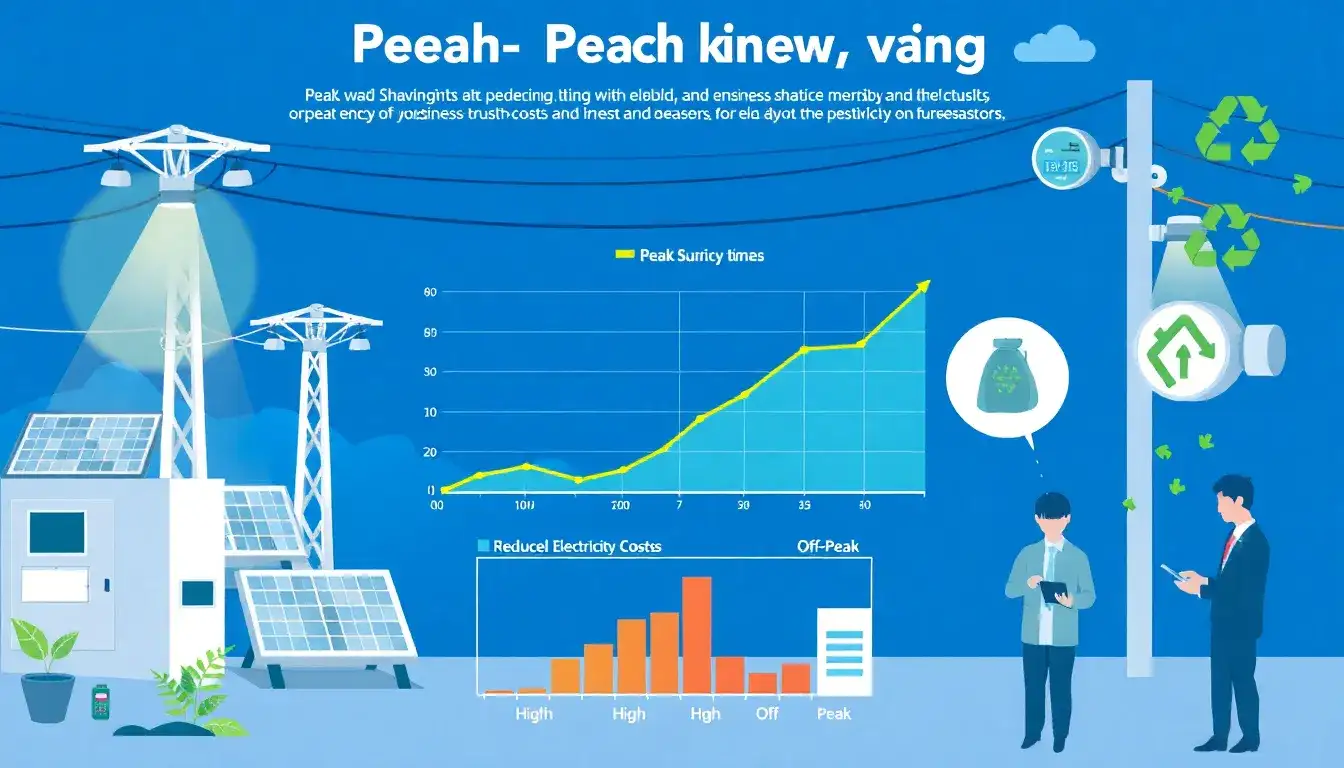
Peak shaving is a crucial strategy that significantly impacts electricity costs for businesses by reducing peak demand charges. This practice involves minimizing the maximum power drawn from the grid during peak hours through methods such as energy storage systems, on-site power generation, or reducing consumption temporarily. Here’s how peak shaving benefits businesses in terms of electricity costs:
Benefits of Peak Shaving for Businesses
- Cost Savings:
- Peak shaving leads to substantial reductions in demand charges, which are often the most expensive part of a commercial electricity bill.
- By using stored energy from batteries or on-site generation during peak times, businesses avoid higher electricity rates associated with peak periods.
- Grid Stability:
- Reducing peak demand helps maintain grid stability by preventing overloads during peak usage periods.
- Operational Flexibility:
- Peak shaving allows businesses to manage energy use without significantly altering operational schedules, ensuring continuous production in industries where load shifting is not feasible.
- Better Supply Rates:
- Lowering peak demand can qualify businesses for better electricity supply rates in deregulated energy markets, as suppliers evaluate capacity tags and annual power usage when pricing accounts.
- Renewable Energy Integration:
- Combining peak shaving with renewable energy sources like solar can further optimize energy savings and sustainability by utilizing excess solar energy for charging energy storage systems.
Strategies for Effective Peak Shaving
- Energy Storage Systems:
- Battery energy storage systems (BESS) store energy during off-peak hours and discharge it during peak times to reduce grid reliance.
- On-Site Generation:
- Commercial solar panels or generators can provide supplemental power during peak periods, reducing demand on the grid.
- Energy Audits and Management Systems:
- Conducting energy audits helps identify peak demand periods, while energy management systems can monitor and control energy use in real-time.
- Demand Response Programs:
- Participating in demand response programs allows businesses to adjust their energy use based on grid conditions and price signals, enhancing the effectiveness of peak shaving strategies.
In summary, peak shaving is an effective method for businesses to manage and reduce electricity costs by strategically mitigating peak demand charges. It not only provides cost savings but also contributes to grid stability and operational flexibility without significantly impacting production schedules.
Original article by NenPower, If reposted, please credit the source: https://nenpower.com/blog/how-do-peak-shaving-practices-impact-electricity-costs-for-businesses/