

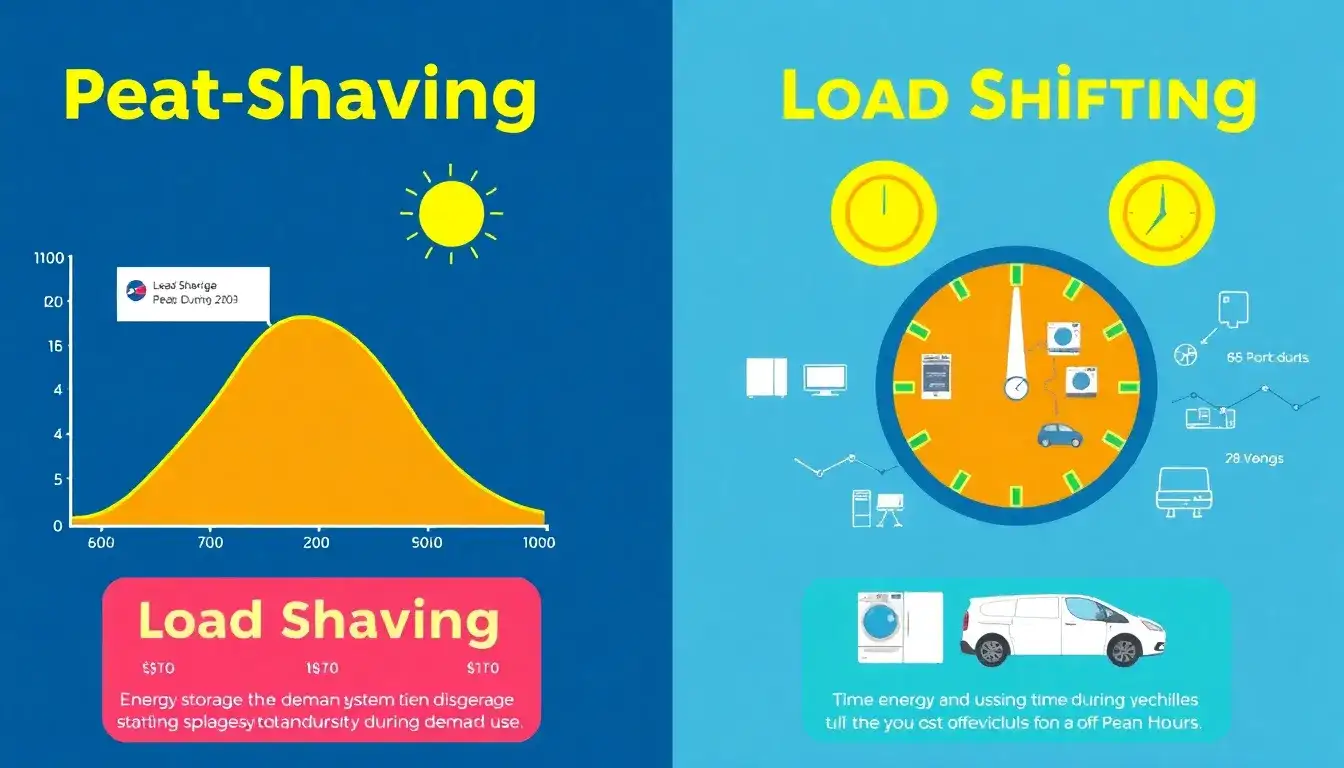
Peak Shaving vs. Load Shifting: Cost Savings Comparison
Peak shaving and load shifting are both effective energy management strategies, but they differ in how they generate cost savings for businesses and utilities.
Peak Shaving
Cost Savings Mechanisms:
- Demand Charges Reduction: Peak shaving helps reduce demand charges by minimizing the maximum energy consumption during peak periods. This is achieved through on-site generation or energy storage systems, which lower the reliance on the grid during these times.
- Grid Stability and Savings: By reducing peak demand, businesses contribute to grid stability, which indirectly supports overall grid management efficiency and reliability. This can lead to further cost savings through reduced maintenance and operational costs for utilities.
- Renewable Energy Integration: Peak shaving can facilitate better integration of renewable energy sources by utilizing them during off-peak times to charge storage systems, thereby reducing reliance on non-renewable sources during peaks.
Load Shifting
Cost Savings Mechanisms:
- Time-of-Use (TOU) Pricing: Load shifting optimizes energy consumption by moving it to off-peak hours when electricity is cheaper. This strategy is particularly effective in regions with time-of-use pricing, allowing consumers to benefit from lower rates during off-peak periods.
- Grid Balancing: By smoothing out the demand curve, load shifting reduces the need for additional peaking power plants during high-demand periods. This approach not only saves consumers money but also helps utilities manage grid stability more efficiently.
- Operational Flexibility: Load shifting requires operational flexibility, which can be challenging for certain industries. However, when possible, it allows businesses to schedule energy-intensive tasks during less expensive times, leading to direct cost savings.
Comparison of Cost Savings
- Peak Shaving: Primarily reduces demand charges by lowering peak consumption, which is beneficial for businesses with high energy demand and inflexible operations.
- Load Shifting: Offers cost savings by taking advantage of lower electricity rates during off-peak hours, suitable for businesses with flexible operational schedules that can adjust energy usage.
In summary, while both strategies reduce costs, peak shaving focuses on reducing peak demand charges, especially beneficial for high-demand industries, whereas load shifting emphasizes moving consumption to lower-cost periods, ideal for operations with scheduling flexibility.
Original article by NenPower, If reposted, please credit the source: https://nenpower.com/blog/how-do-peak-shaving-and-load-shifting-differ-in-terms-of-cost-savings/

