

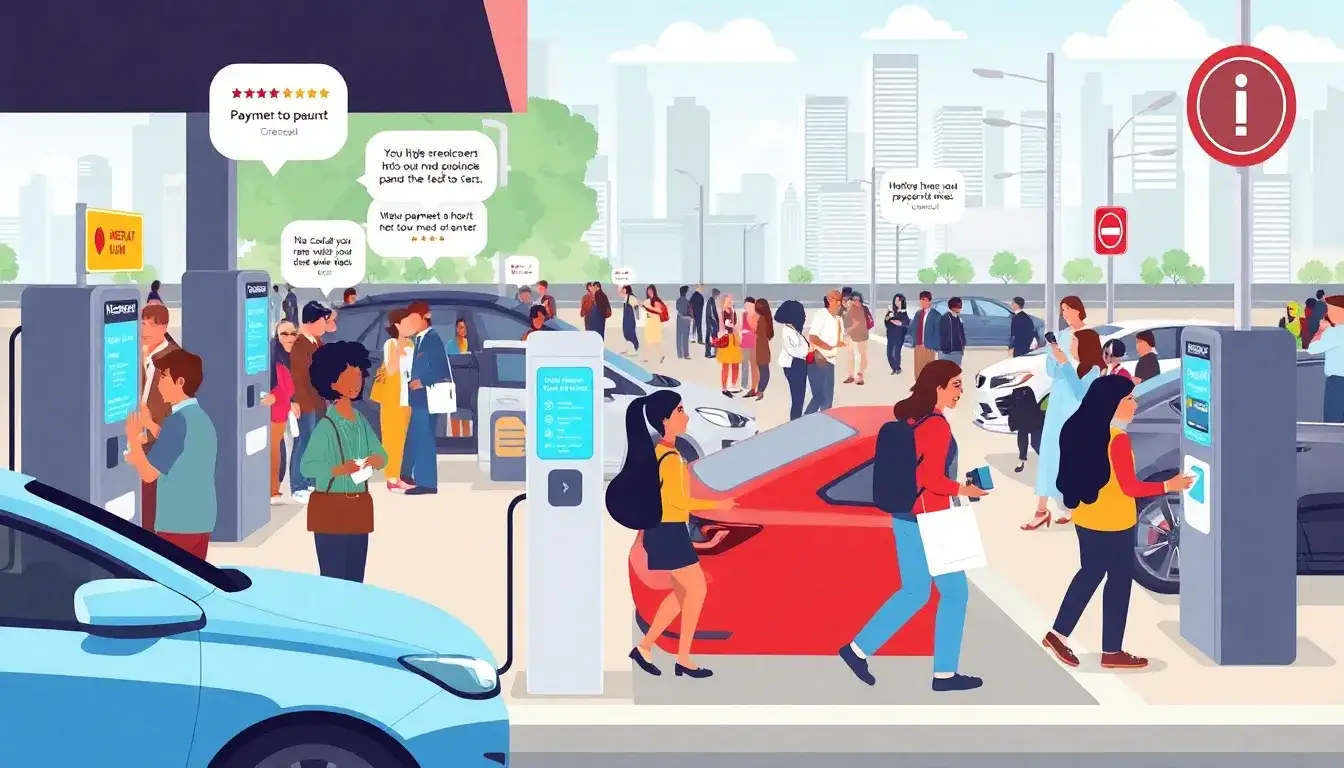
Payment issues with public electric vehicle (EV) chargers can significantly impact the overall user experience in several ways:
Impact on User Experience
- Convenience and Accessibility: Payment failures can make EV charging less convenient and accessible, as they may force drivers to seek alternative chargers, wasting time and effort. This lack of reliability can undermine consumer trust in public EV charging networks.
- Charging Session Success Rate: A notable percentage of EV drivers encounter problems during public charging sessions, with payment issues being a prominent concern. For instance, nearly a quarter of users reported that payment failed entirely, requiring them to find another charger.
- Variability Across Networks: The reliability of charging networks varies significantly. Networks like Tesla’s Superchargers and Rivian’s Adventure Network have fewer reported problems compared to other networks such as EVgo and Blink, where issues occur more frequently.
- Payment Method Complexity: Public EV charging stations often provide multiple payment methods (e.g., credit card readers, RFID, NFC, apps, Plug & Charge). While this offers flexibility, it also increases complexity and the potential for errors, especially if network connections are unreliable.
- Charger Hardware and Software Issues: Beyond payment, issues with charger hardware like broken or unresponsive screens can compound problems, leading to a frustrating experience even when payment is successful.
Addressing these payment and hardware challenges is crucial to ensure a seamless charging experience, which is essential for the widespread adoption of electric vehicles.
Original article by NenPower, If reposted, please credit the source: https://nenpower.com/blog/how-do-payment-issues-impact-the-overall-user-experience-of-public-ev-chargers/

