

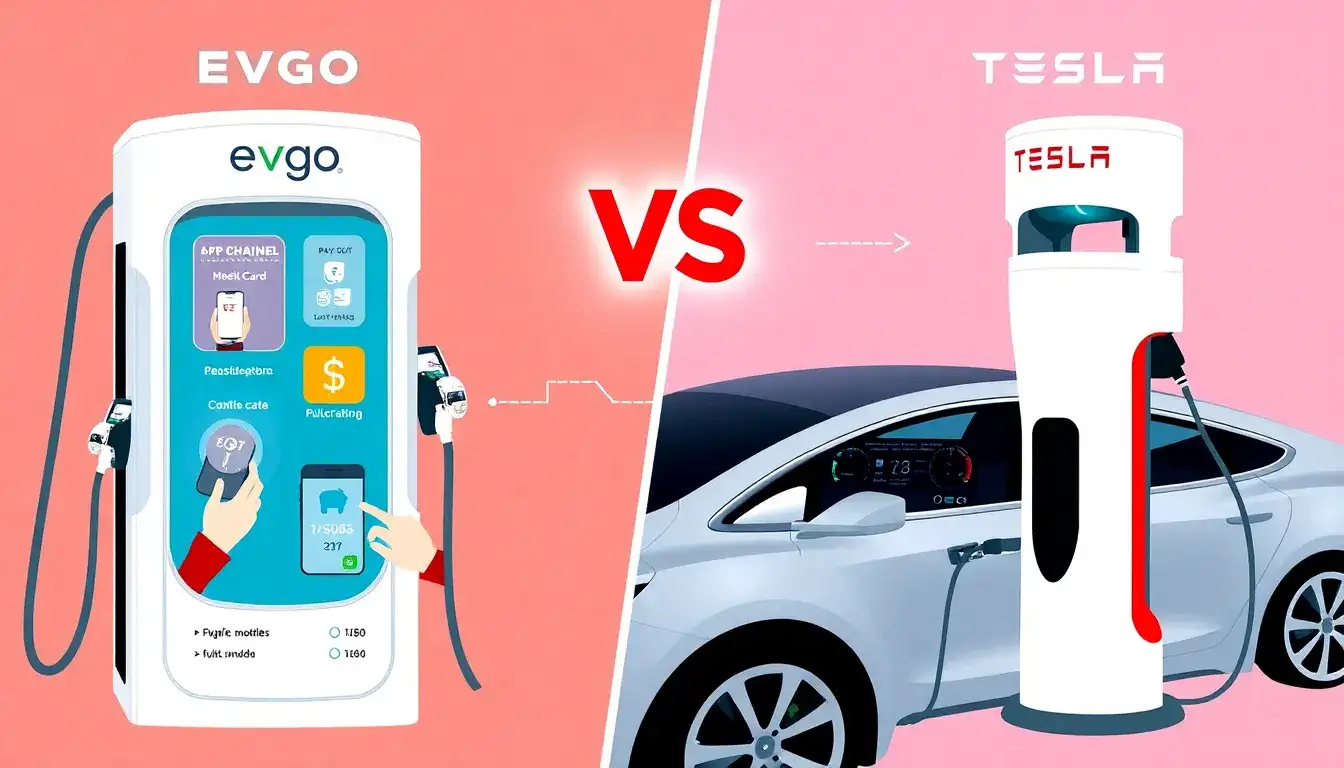
Payment issues between Tesla and EVgo differ significantly in payment methods and user experience:
Tesla Superchargers
- Seamless billing: Payments are automatic via linked Tesla accounts, eliminating card readers or manual input.
- Extended payment deadlines: Tesla sometimes allows delayed payment settlement while still enabling charging, prioritizing service continuity.
- Fewer reported issues: Recent studies indicate Tesla’s payment problems (if any) are overshadowed by hardware-related failures, with payment issues accounting for a smaller portion of overall charging challenges.
EVgo Chargers
- Hybrid payment options: Some stations accept credit cards via readers, while others require app-based payments or NFC methods like Google Pay/Apple Wallet.
- Payment friction: Users report glitches like credit card declines without clear error messages, forcing relocation to another charger (25% of payment-related cases).
- Autocharge+ feature: EVgo’s membership-based recognition system (Autocharge+) simplifies payments for registered users but remains less universally adopted than Tesla’s integrated approach.
Key distinction: Tesla minimizes payment disruptions through automated account billing, while EVgo’s reliance on multiple payment methods introduces variability in reliability. Hardware issues (e.g., broken screens) are more prevalent than payment problems across networks, but EVgo users face higher payment-specific hurdles.
Original article by NenPower, If reposted, please credit the source: https://nenpower.com/blog/how-do-payment-issues-differ-between-evgo-and-tesla/

