

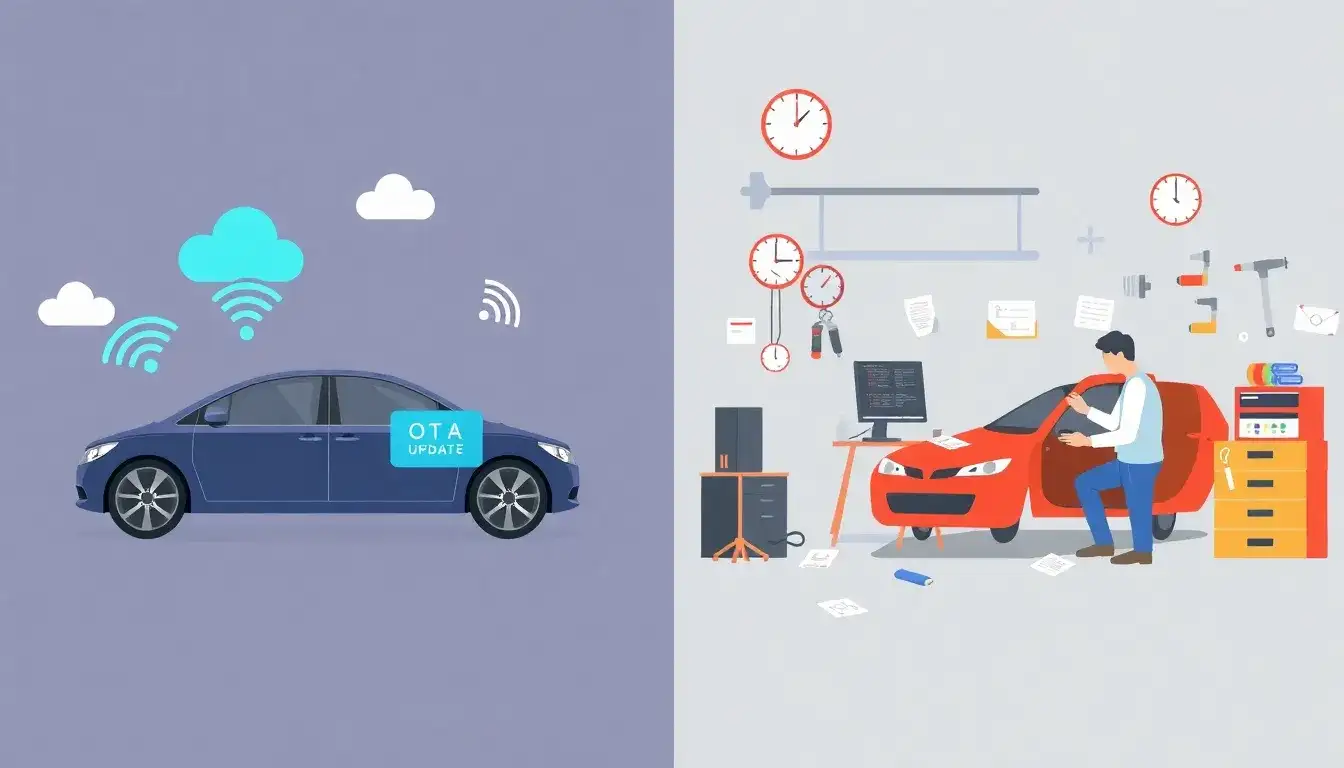
Over-the-Air (OTA) vs Traditional Software Updates in Cars
Over-the-air (OTA) updates and traditional software updates in cars each have their advantages and disadvantages. Comparing them highlights key differences in convenience, security, and functionality.
Convenience and Functionality
- OTA Updates:
- Convenience: OTA updates can be applied remotely without requiring a visit to a dealership, saving time and effort for both car owners and dealerships.
- Functionality: They allow for seamless integration of new features, improvements in navigation systems, and enhancements in safety features like cruise control.
- Examples: Updates can add new apps to infotainment systems or improve autonomous driving capabilities.
- Traditional Updates:
- Inconvenience: Owners must manually take their vehicles to a dealership for updates, which can be time-consuming.
- Limited Flexibility: Updates are typically less frequent and may not offer the same level of real-time improvements as OTA updates.
Security and Safety
- OTA Updates:
- Security Risks: There is a risk of hacking or malware infection during updates, as they are transmitted wirelessly.
- Safety Enhancements: Despite risks, OTA updates can rapidly address safety concerns or improve safety features remotely.
- Traditional Updates:
- Physical Security: Less susceptible to remote hacking since updates are done in-person.
- Reliability: While considered safer in terms of hacking risks, they may not address safety issues as quickly as OTA updates.
Economic Impact
- OTA Updates:
- Dealership Revenue Impact: Dealerships may lose business from software updates and recalls since these can be handled remotely, reducing customer visits.
- Traditional Updates:
- Dealership Revenue Preservation: Dealerships benefit from regular visits for updates and maintenance.
Conclusion
OTA updates offer greater convenience and the ability to add new features or improve existing ones remotely. However, they introduce potential security risks. Traditional updates, while safer, are less convenient and do not offer the same level of flexibility. Ultimately, the shift towards OTA updates reflects the increasing importance of connected vehicles and software-defined driving experiences.
Original article by NenPower, If reposted, please credit the source: https://nenpower.com/blog/how-do-over-the-air-updates-compare-to-traditional-software-updates-in-cars/

