

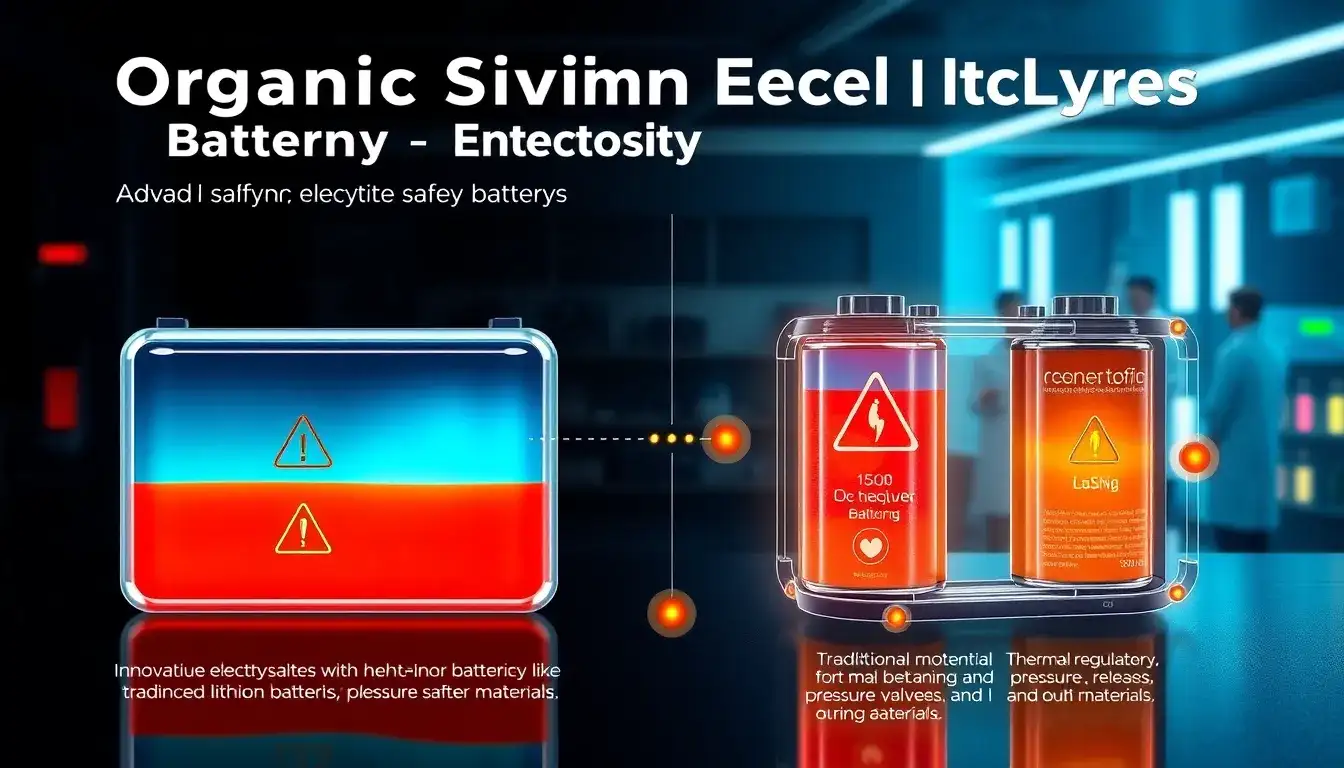
Organosilicon electrolyte batteries improve safety compared to traditional lithium-ion batteries primarily through their low flammability and reduced risk of fire or explosion. Here are the key ways organosilicon electrolytes enhance safety:
- Non-Flammable Nature: Organosilicon compounds are inherently non-flammable, unlike the volatile organic solvents used in conventional lithium-ion batteries. This reduces the risk of fire or explosion, especially under abusive conditions.
- Improved Thermal Stability: Organosilicon electrolytes have higher thermal stability compared to traditional carbonate-based electrolytes. They perform effectively at elevated temperatures without decomposing, which mitigates the risk of thermal runaway and associated safety hazards.
- Reduced Electrolyte Breakdown: Additives like OS3 enhance electrolyte stability by preventing the breakdown of lithium hexafluorophosphate (LiPF6) into harmful hydrofluoric acid (HF), which can degrade battery components and shorten battery life. This helps maintain battery integrity and safety over time.
- Better Electrode Protection: Organosilicon electrolytes can form protective layers on both the anode and cathode surfaces, reducing electrode degradation and improving overall cell stability. This reduces the risk of short circuits and other safety issues.
Overall, organosilicon electrolytes offer a safer alternative to traditional lithium-ion battery electrolytes by combining non-flammability with enhanced chemical and thermal stability.
Original article by NenPower, If reposted, please credit the source: https://nenpower.com/blog/how-do-organosilicon-electrolyte-batteries-improve-safety-compared-to-traditional-lithium-ion-batteries/

