

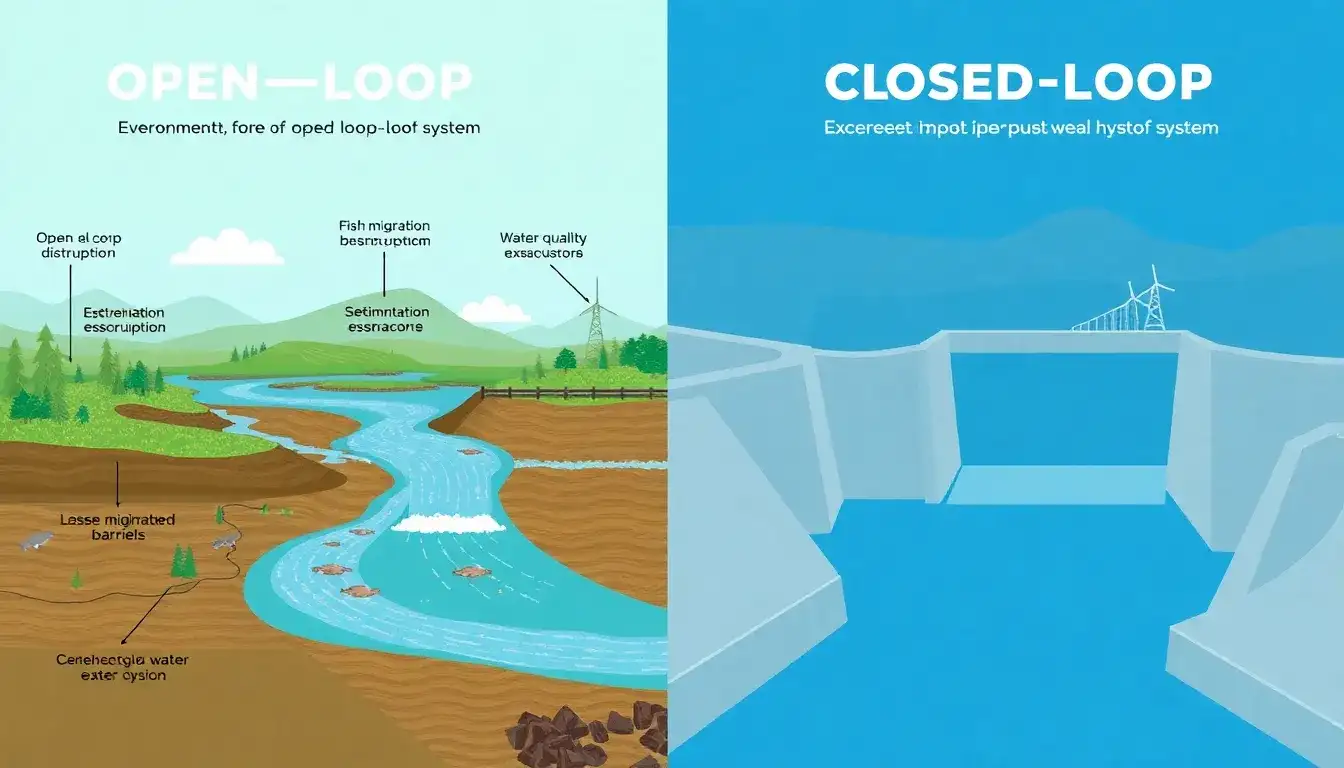
Environmental Impact Differences
- Aquatic Impacts: Open-loop systems are continuously connected to a naturally flowing water feature, such as rivers or lakes. This connection can disrupt aquatic habitats and affect aquatic life by altering natural water flows and quality. In contrast, closed-loop systems are not connected to natural water bodies, reducing their impact on aquatic ecosystems.
- Terrestrial Impacts: Open-loop systems, being tied to existing water bodies, may also affect terrestrial habitats through changes in water levels and surrounding land use. Closed-loop systems offer more flexibility in site selection and are often located away from sensitive habitats, minimizing terrestrial impacts.
- Siting Flexibility: Closed-loop systems have greater siting flexibility because they do not require a connection to a natural water source. This flexibility can help avoid areas of high environmental sensitivity and find sites with minimal environmental impact.
- Local Impact Duration: The environmental effects of closed-loop projects are generally more localized and short-term compared to open-loop systems. This is because closed-loop projects do not interact with broader ecosystems connected to rivers or lakes.
Overall, closed-loop pumped hydroelectric systems are considered to have fewer and less widespread environmental impacts than open-loop systems, making them an attractive option for areas with limited environmental tolerance.
Original article by NenPower, If reposted, please credit the source: https://nenpower.com/blog/how-do-open-loop-and-closed-loop-pumped-hydroelectric-systems-differ-in-their-environmental-impacts/

