

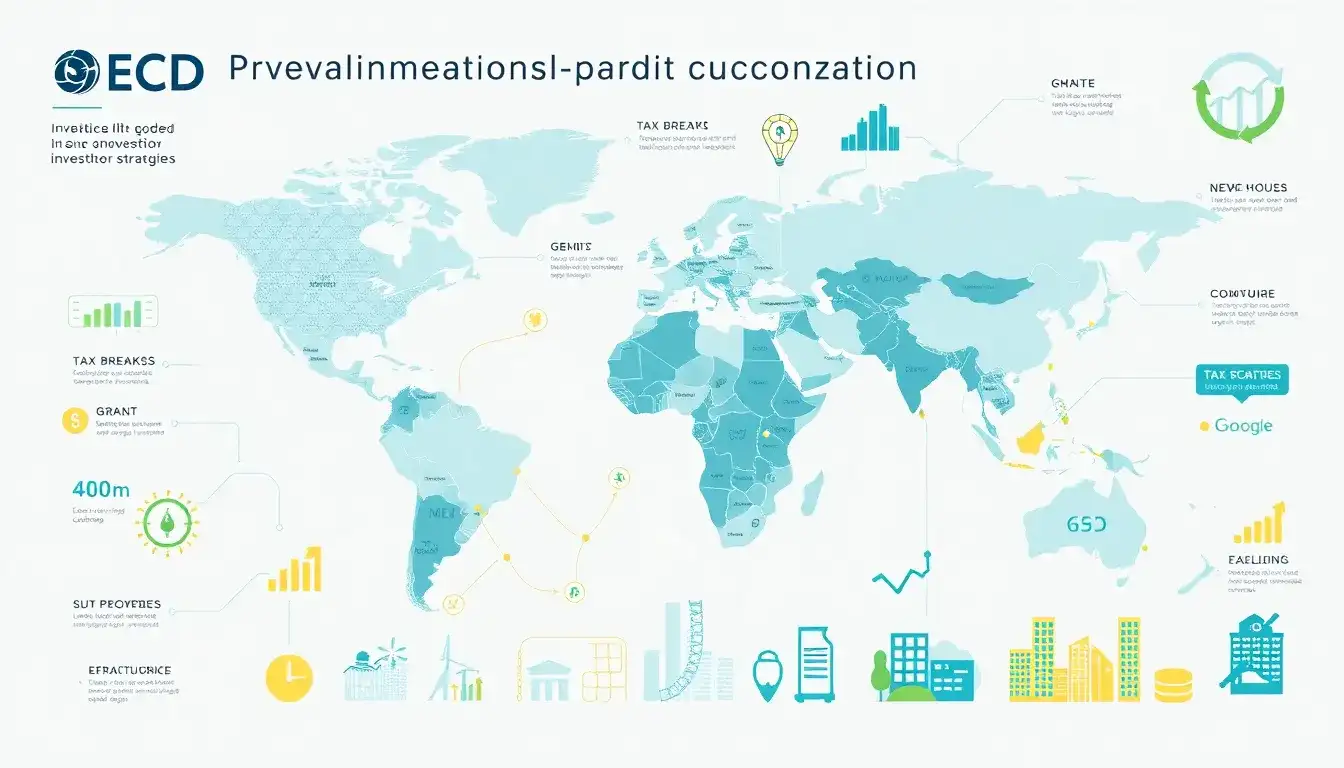
OECD countries design their investment incentives with a focus on advancing sustainable objectives, enhancing productivity, and facilitating investment by using both tax and non-tax measures. Here’s a breakdown of how these incentives are typically structured:
Policy Objectives
- Sustainable Development: Incentives are designed to align with broader policy goals such as sustainable development, job creation, and regional development.
- Productivity and Innovation: Three-quarters of OECD countries prioritize enhancing productivity and innovation through their incentive systems.
Types of Incentives
- Tax Incentives: These are the most common type, with 97% of OECD countries using them. Corporate income tax (CIT) incentives are prevalent, offered by 86% of OECD countries.
- The OECD Investment Tax Incentives Database tracks these incentives, focusing on targeted CIT provisions that provide favorable tax treatment to specific sectors, activities, or locations.
- Non-Tax Incentives: Financial incentives such as grants, subsidies, and loans are also widespread, used by 86% of OECD jurisdictions. Regulatory incentives and in-kind benefits are less common.
Design Process
- Targeting: Incentives are often targeted towards specific industries, regions, or types of investors to maximize effectiveness. This targeting can lead to complex designs but helps in limiting revenue loss and ensuring incentives meet policy objectives.
- Involvement of Investment Promotion Agencies (IPAs): IPAs play a crucial role in the design, governance, and management of investment incentives. They help ensure that incentives are aligned with national development goals and are effective in attracting investment.
Governance and Evaluation
The OECD emphasizes the importance of good governance and continuous evaluation of incentives to ensure they achieve their intended objectives and contribute to sustainable development.
In summary, OECD countries design investment incentives with a strategic focus on both economic growth and societal objectives, using a mix of tax and non-tax measures tailored to specific policy goals.
Original article by NenPower, If reposted, please credit the source: https://nenpower.com/blog/how-do-oecd-countries-design-their-investment-incentives/

