

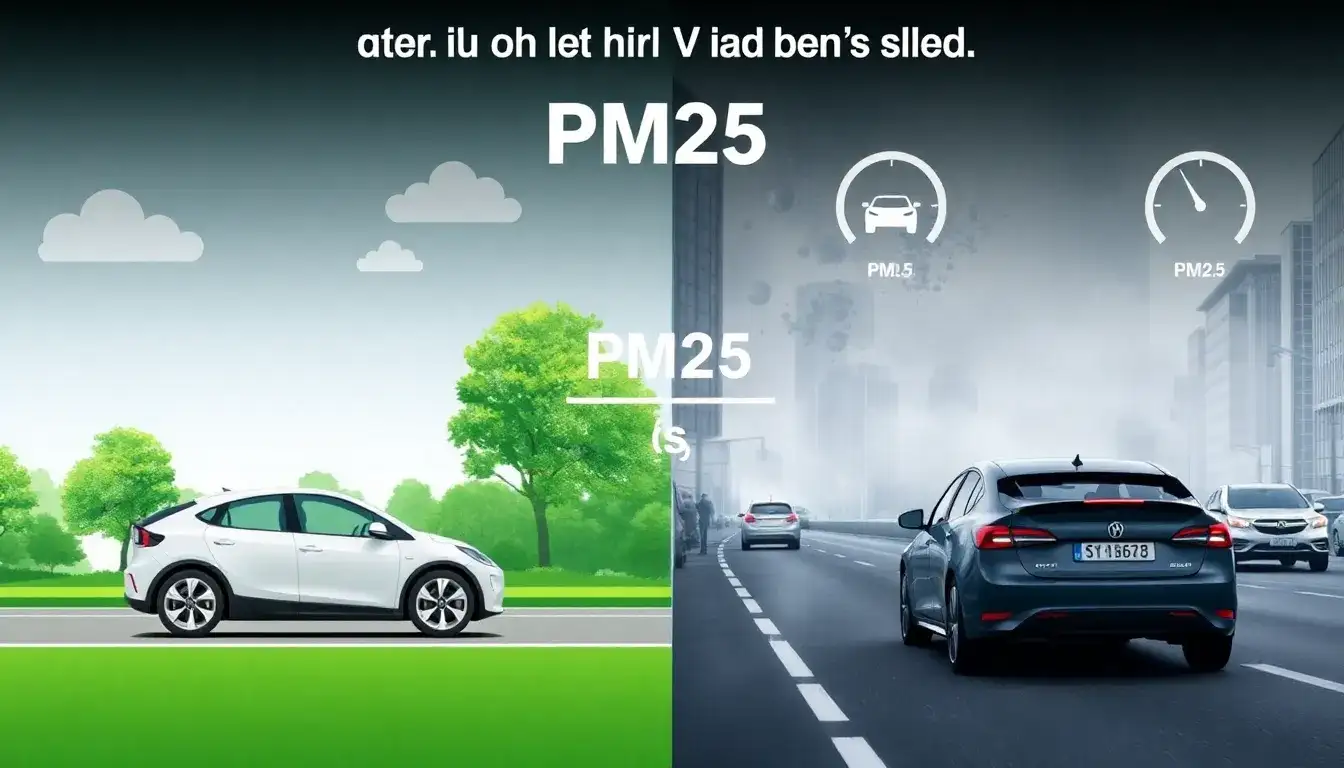
Non-exhaust PM2.5 emissions from EVs and gasoline vehicles show context-dependent differences. While some studies suggest comparable or slightly lower emissions for EVs, others indicate higher emissions depending on vehicle weight and component choices:
-
Direct comparisons in a 2022 study found similar PM2.5 levels:
- Gasoline: 14.5 mg/km
- EV: 13.9 mg/km
These results reflect modern internal combustion engines with advanced emission controls, where non-exhaust sources dominate (>90% of total PM emissions).
- Weight-driven increases were observed in another 2022 analysis, where a 20%-heavier EV produced higher non-exhaust PM2.5 than its gasoline counterpart due to increased brake/tire wear. However, differences diminished when:
- Regenerative braking was optimized (50% → 90% usage reduced EV emissions relative to gasoline).
- Low-metallic brake pads (common in replacements) were used on gasoline vehicles, exceeding EV emissions.
- Critical context: EVs eliminate exhaust emissions but shift PM generation to tire/road wear, resuspension, and brake dust (though regenerative braking reduces brake wear). Recent data underscores that non-exhaust PM now dominates total emissions for all vehicle types.
For policy decisions, focusing solely on EV adoption without addressing tire/brake technologies or urban dust management would yield limited air quality improvements.
Original article by NenPower, If reposted, please credit the source: https://nenpower.com/blog/how-do-non-exhaust-pm2-5-emissions-from-evs-compare-to-those-from-gasoline-vehicles/

