

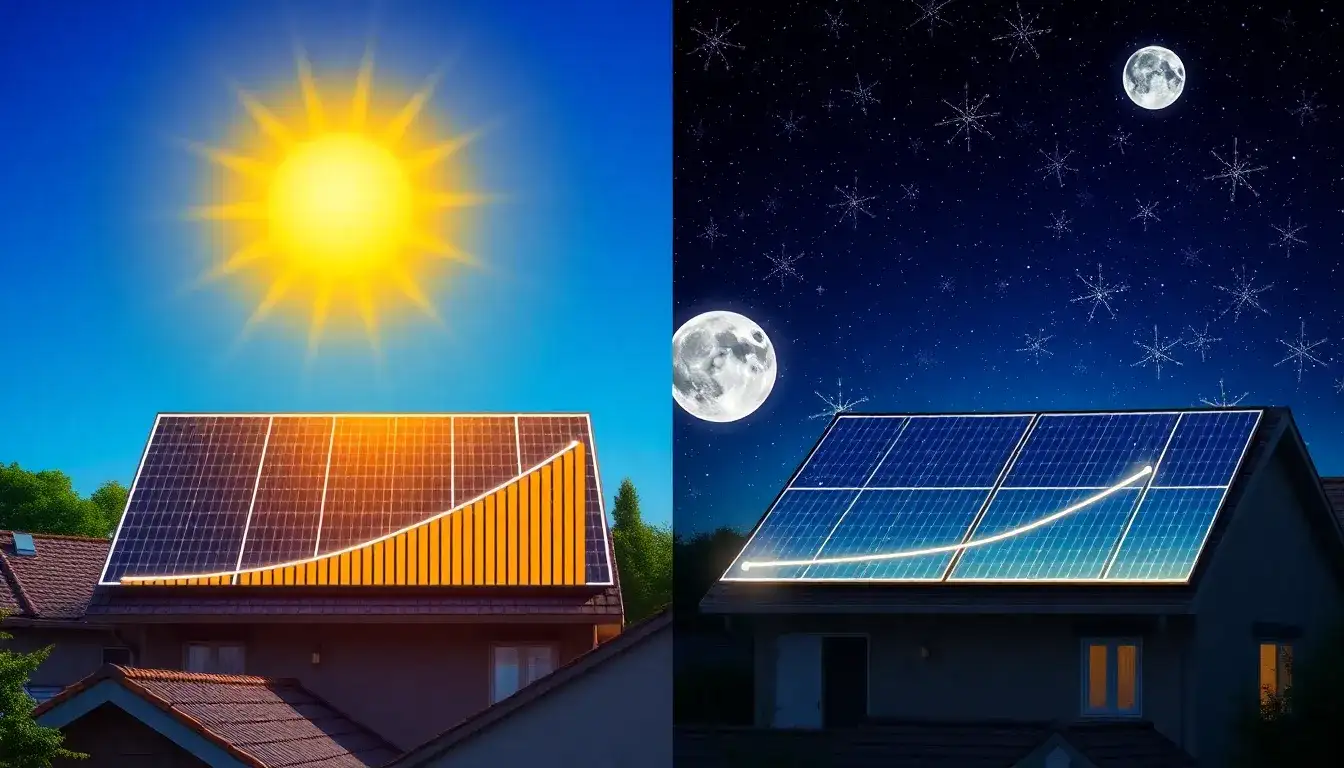
Energy Output Comparison
- Traditional solar panels
Generate 200 watts per square meter during peak daylight hours by converting sunlight into electricity via photovoltaic cells. - Night solar panels
Produce 50 milliwatts per square meter (0.05 watts) at night using radiative cooling and thermoelectric generators to harness heat dissipation into space.
| Feature | Traditional Solar Panels | Night Solar Panels |
|---|---|---|
| Energy Source | Sunlight | Radiative cooling |
| Daytime Output | 200 W/m² | N/A (standard mode) |
| Nighttime Output | 0 W/m² | 0.05 W/m² (50 mW/m²) |
| Efficiency | 15–22% commercial models | Extremely low (prototype) |
| Use Case | Grid-scale power | Low-power devices (LEDs, sensors) |
Operational Differences
- Mechanism
Traditional panels rely on photovoltaic conversion, while night panels use thermoelectric generators to exploit temperature differences between the panel and ambient air. - Scalability
Night panels currently produce ~0.025% of traditional panels’ daytime output, limiting them to niche applications like IoT sensors or emergency lighting. - Weather Sensitivity
Night panels require clear skies (clouds reflect infrared radiation, reducing efficiency), whereas traditional panels work best in direct sunlight but still function on cloudy days (10–25% output).
Advantages and Limitations
- Night Panels
- Pros: Operate 24/7 without batteries, retrofittable to existing panels, and useful for off-grid areas.
- Cons: Minimal energy output, weather-dependent, and unproven at scale.
- Traditional Panels
- Pros: High output, mature technology, and compatible with storage/battery systems.
- Cons: Inactive at night, reliant on daylight and weather conditions.
In summary, night solar panels complement traditional systems by addressing nighttime gaps but remain experimental with negligible output compared to daytime solar generation.
Original article by NenPower, If reposted, please credit the source: https://nenpower.com/blog/how-do-night-solar-panels-compare-to-traditional-solar-panels-in-terms-of-energy-output/

