

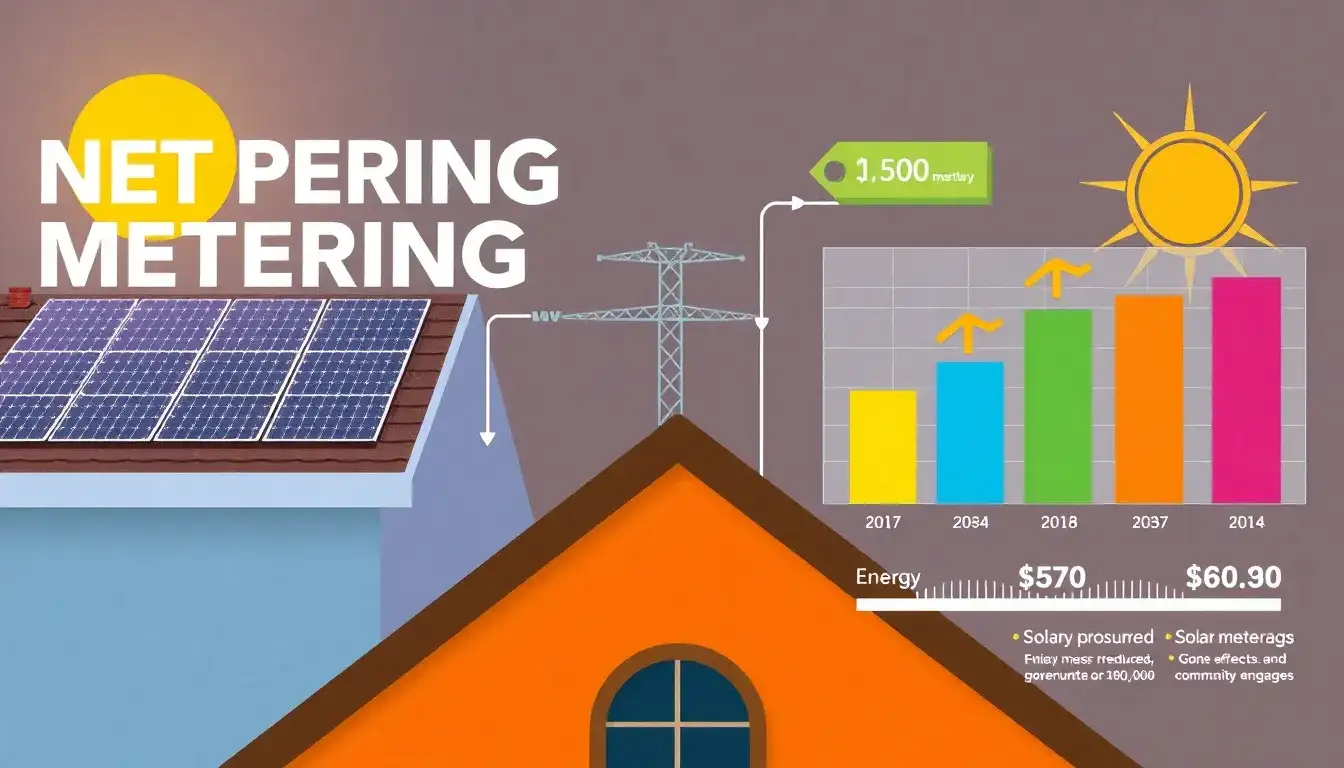
Net metering policies significantly impact the cost of solar energy by directly influencing the financial benefits that solar energy system owners receive, thus affecting the overall affordability and attractiveness of solar installations.
How Net Metering Works and Its Cost Impact
Net metering allows solar panel owners to send excess electricity they generate back to the grid and earn credits for that energy. Those credits can then offset their electricity consumption when their system is not producing enough power, such as at night or on cloudy days. Essentially, it lets customers “store” surplus solar energy virtually, using the grid as an energy bank, and pay only for their net electricity usage over time.
This arrangement lowers electricity bills by crediting solar owners for surplus generation at rates often equal to the retail price of electricity, thereby providing a direct economic incentive. The credits help solar customers recoup the upfront costs of their photovoltaic systems more quickly—typically in eight years or less—making solar energy a more cost-effective investment.
Benefits of Net Metering on Solar Cost
- Improves Financial Viability: By allowing one-to-one retail rate credits for excess solar power, net metering guarantees a significant reduction in electric bills, improving the return on investment for solar system owners.
- Encourages Solar Adoption: The cost savings facilitated by net metering incentivize more homeowners and businesses to install solar panels, accelerating renewable energy deployment.
- Reduces Grid Costs: Solar energy fed back into the grid during peak demand times can reduce the need for utilities to invest in expensive power plants and transmission infrastructure, which can help stabilize or reduce overall electricity rates.
Variations and Challenges Impacting Cost Savings
However, net metering policies vary widely by state and utility, which affects how much solar owners save:
- Different Credit Rates: Some states or utilities credit solar energy at full retail rates, while others use reduced rates or wholesale pricing for excess generation, decreasing the value of net metering credits and hence the cost-effectiveness of solar.
- Caps and Limits: Many states impose caps on the total amount of net metered solar capacity, limiting growth and potentially reducing the benefits to new solar customers as programs fill up.
- Policy Changes: Several states have modified or ended traditional net metering programs, sometimes replacing them with less favorable net billing structures that pay lower compensation rates, thereby increasing the effective cost of solar ownership.
- Additional Fees and Barriers: Utilities may impose interconnection fees, lengthy approval processes, or restrictions designed to reduce net metering participation, which can increase solar installation costs or reduce savings.
Summary
Net metering policies reduce the effective cost of solar energy by allowing owners to offset their electricity bills with credits for excess solar power sent to the grid. This incentive accelerates payback periods for solar investments and makes solar more affordable. The value and impact of net metering depend heavily on the specific policy design, including credit rates, program caps, and regulatory environment. Where net metering offers full retail credits and favorable terms, solar energy becomes markedly cheaper for consumers; where policies are less generous or restrictive, the cost benefits are diminished.
Original article by NenPower, If reposted, please credit the source: https://nenpower.com/blog/how-do-net-metering-policies-impact-the-cost-of-solar-energy/

