

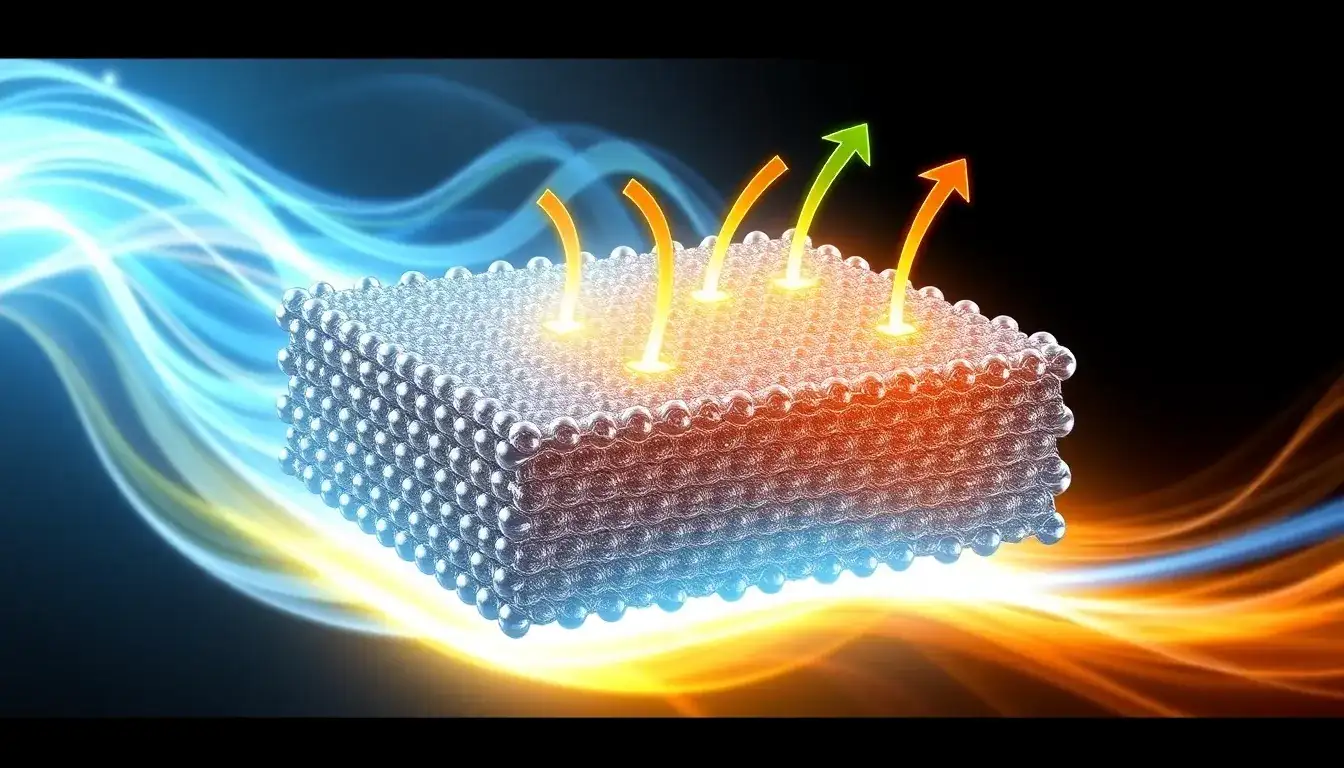
Nanoparticles in Thermal Conductivity Enhancement
Mechanism of Action
- Interfacial Interaction: Nanoparticles, such as graphene, metal oxides, and carbon nanotubes, interact with the base fluid at the atomic level, enhancing thermal conductivity by facilitating quicker energy transfer.
- Brownian Motion: The random movement of nanoparticles within the fluid (Brownian motion) increases interactions between nanoparticles and fluid molecules, improving heat transfer efficiency.
- Thermal Bridges: Nanoparticles can act as thermal bridges, creating preferential paths for heat flow, which improves the overall thermal conductivity of the fluid.
Advantages
- Significant Enhancement: Studies have shown significant enhancements in thermal conductivity, with increases up to 43.9% and 67.8% in certain nanofluids.
- Customizable: Different types of nanoparticles can be used depending on the application, allowing for tailored improvements in thermal conductivity.
Metallic Foams in Thermal Conductivity Enhancement
Mechanism of Action
- High Surface Area: Metallic foams have a high surface area, which allows for effective heat exchange between the foam and the fluid flowing through it.
- Improved Heat Transfer Paths: The porous structure of metallic foams creates multiple pathways for heat to distribute, enhancing thermal conductivity by efficiently transferring heat from one point to another.
Advantages
- Efficient Heat Transfer: Metallic foams can significantly improve heat transfer rates due to their high thermal conductivity and porous structure.
- Lightweight: Compared to solid materials, metallic foams are lighter, making them suitable for applications where weight minimization is important.
Combined Application
Using both nanoparticles and metallic foams in thermal energy storage systems can potentially maximize thermal conductivity by benefiting from the enhanced fluid thermal properties and improved heat transfer pathways, respectively. This combination could result in highly efficient thermal energy storage and release systems.
Original article by NenPower, If reposted, please credit the source: https://nenpower.com/blog/how-do-nanoparticles-and-metallic-foams-enhance-thermal-conductivity-in-thermal-energy-storage-systems/

