

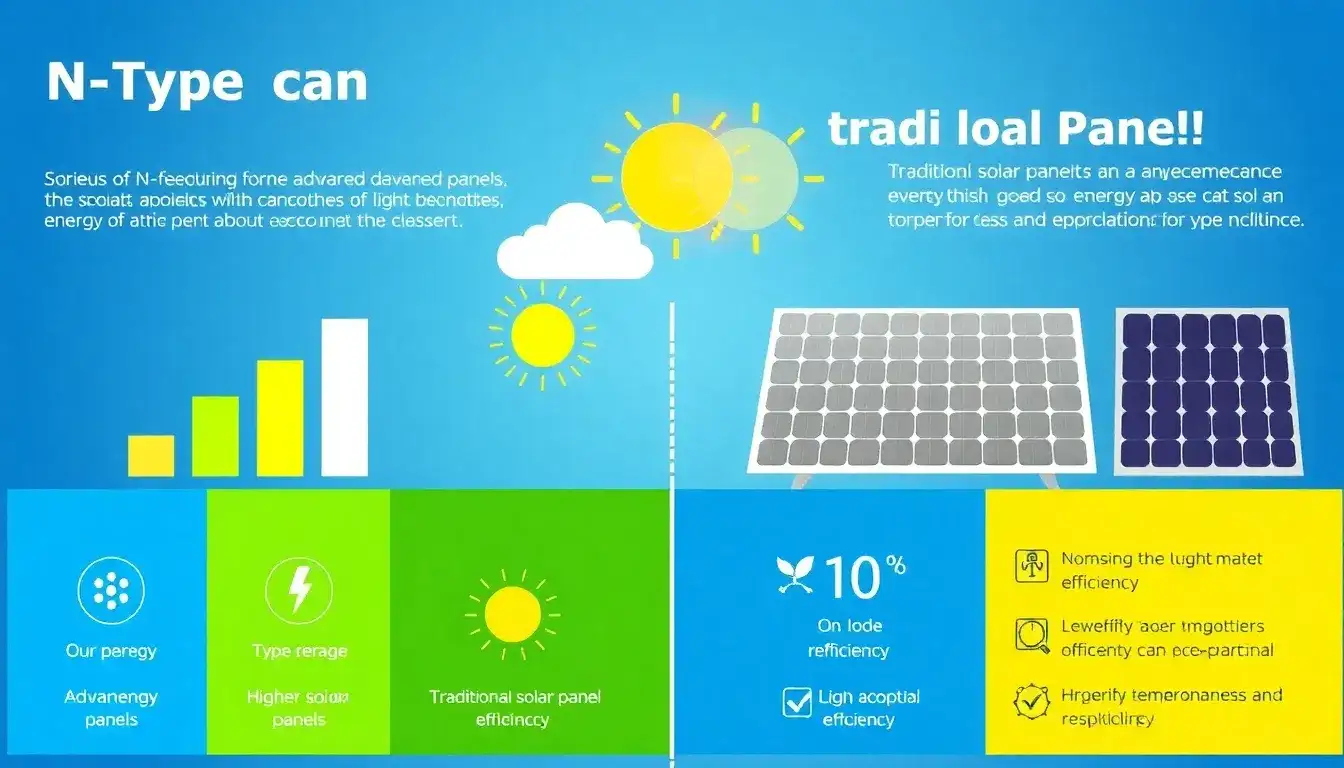
Efficiency Comparison: N-Type vs. Traditional (P-Type) Solar Panels
Overview
N-type solar panels have gained attention due to their superior efficiency and performance compared to traditional P-type solar panels.
Efficiency
- N-Type Panels: These panels have achieved an efficiency of approximately 25.7%, making them more efficient than their P-type counterparts.
- P-Type Panels: P-type panels typically have an efficiency around 23.6%.
Factors Contributing to Higher Efficiency of N-Type Panels
- Doping Material: N-type panels use phosphorus instead of boron (used in P-type panels), which avoids the boron-oxygen defect. This defect causes light-induced degradation (LID) in P-type panels, reducing their efficiency over time.
- Electron Mobility: Silicon in N-type panels has higher electron mobility, allowing electrons to move more quickly and increasing overall efficiency.
- Recombination Losses: The thinner emitter layer in N-type cells reduces recombination losses, resulting in more collected current.
Other Performance Factors
- Temperature Coefficient: N-type panels typically have a lower temperature coefficient (around -0.30%/°C) compared to P-type panels (-0.50%/°C), meaning they maintain higher efficiency in both hot and cold conditions.
- Durability: N-type panels are less susceptible to degradation and have longer lifespans due to their immunity to LID and better resistance to potential-induced degradation (PID).
Conclusion
While N-type solar panels offer higher efficiency and longer durability at a higher cost, P-type panels are more affordable and widely available, making them a budget-friendly option for many users.
Original article by NenPower, If reposted, please credit the source: https://nenpower.com/blog/how-do-n-type-solar-panels-compare-to-traditional-solar-panels-in-terms-of-efficiency/

