

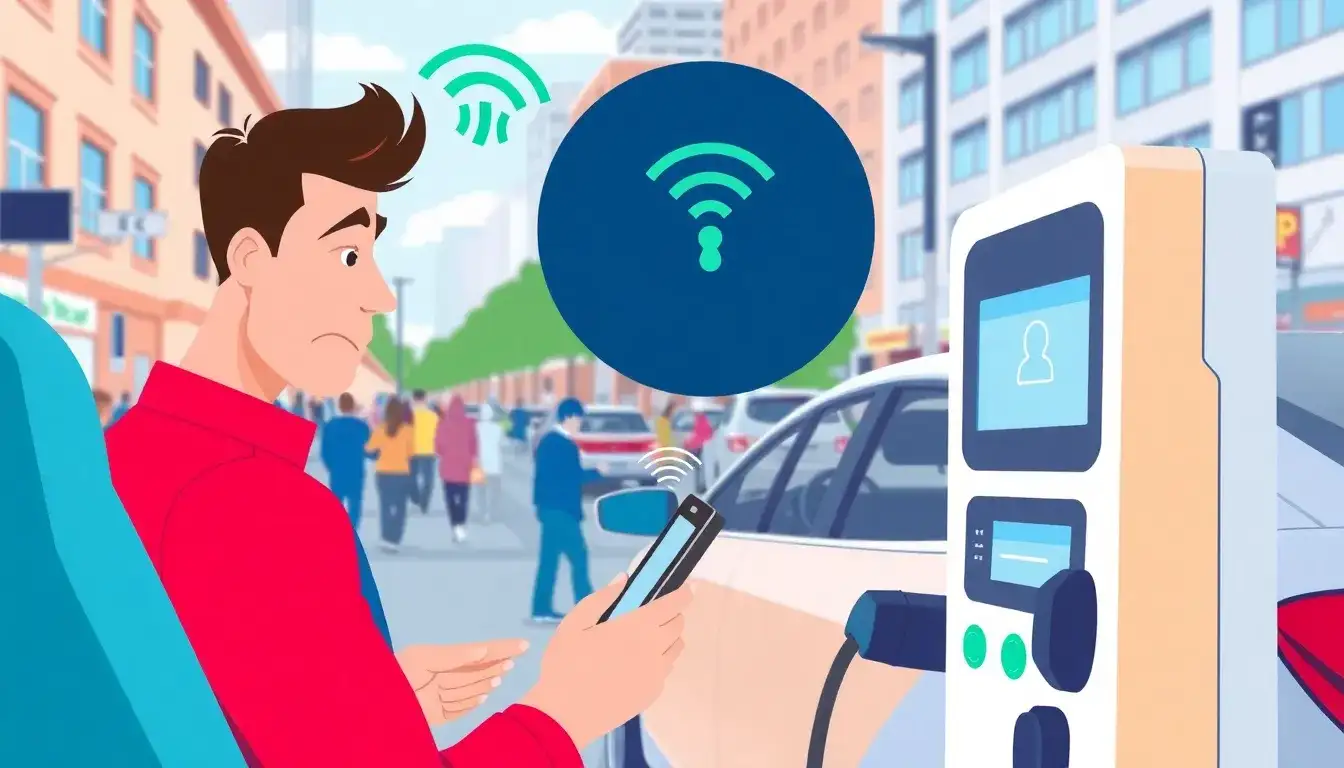
Mobile connectivity issues significantly impact EV charging payments, causing a range of problems for drivers and operators alike.
Impact of Mobile Connectivity Issues on EV Charging Payments
- Payment Failures and Frustrations: A survey of EV drivers found that 80% encountered app payment problems specifically due to mobile connectivity issues when trying to pay at charging points. This can lead to frustration, delays, and even abandonment of the charging attempt.
- Multiple Payment Methods Needed: Due to unreliable connectivity, drivers often have to juggle multiple payment options, such as contactless cards, various apps, and sometimes even phone payments. Over 87% of drivers reported having to download a new app at the charging point at least once, and 45% had to make payments by phoning the service provider directly. This complexity is largely driven by connectivity problems that prevent seamless payment processing.
- Charge Point Abandonment: Poor connectivity and unacceptable payment options cause some drivers—61% according to the survey—to leave charge points without charging, reducing the effectiveness and utilization of the charging infrastructure.
- Card Rejections and Pre-authorization Issues: Over half of drivers (56%) experienced rejected cards, and 90% faced pre-authorization holds on their cards. Mobile connectivity failures exacerbate these issues by interrupting the communication needed to authorize or confirm payments. Network problems can cause delays or failures in these authorization steps, making the payment process unreliable.
- Operational and Maintenance Challenges: For charging network operators, inconsistent cellular or Wi-Fi connectivity can disrupt payment systems, remote monitoring, and overall charger functionality. Cellular SIM cards embedded in chargers are crucial to maintain reliable connections, but managing these SIM cards and ensuring good network coverage remains a technical challenge.
- Diverse Payment Technologies Increase Complexity: The wide array of payment technologies—credit cards, NFC, RFID, smartphone apps, Plug & Charge, SMS—magnifies the impact of connectivity problems because all require reliable network access to function properly. Hardware robustness and user interface design also affect how well payments go through during connectivity issues.
Solutions and Recommendations
- Conducting site surveys to ensure strong cellular coverage and including connectivity checks in maintenance schedules can minimize payment failures.
- Embedding contactless card readers directly into charging equipment and testing payment software thoroughly before deployment help reduce operational payment issues.
- For large or fleet charging setups, combining cellular SIM cards with routers connected to fiber or cable internet can improve uptime and reliability, using cellular as a backup to maintain continuous service.
- Ensuring payment systems handle connectivity faults gracefully, such as by caching transactions or providing offline fallback options, can mitigate user frustrations.
Summary
Mobile connectivity issues disrupt the EV charging payment process by causing app failures, forcing multiple payment methods, increasing card rejections, necessitating phone payments, and causing drivers to abandon charge points. These connectivity challenges heighten complexity in payment handling and reduce user satisfaction. Addressing them requires robust network planning, reliable hardware, and streamlined payment systems that can operate smoothly in varying connectivity conditions.
Original article by NenPower, If reposted, please credit the source: https://nenpower.com/blog/how-do-mobile-connectivity-issues-impact-ev-charging-payments/

