

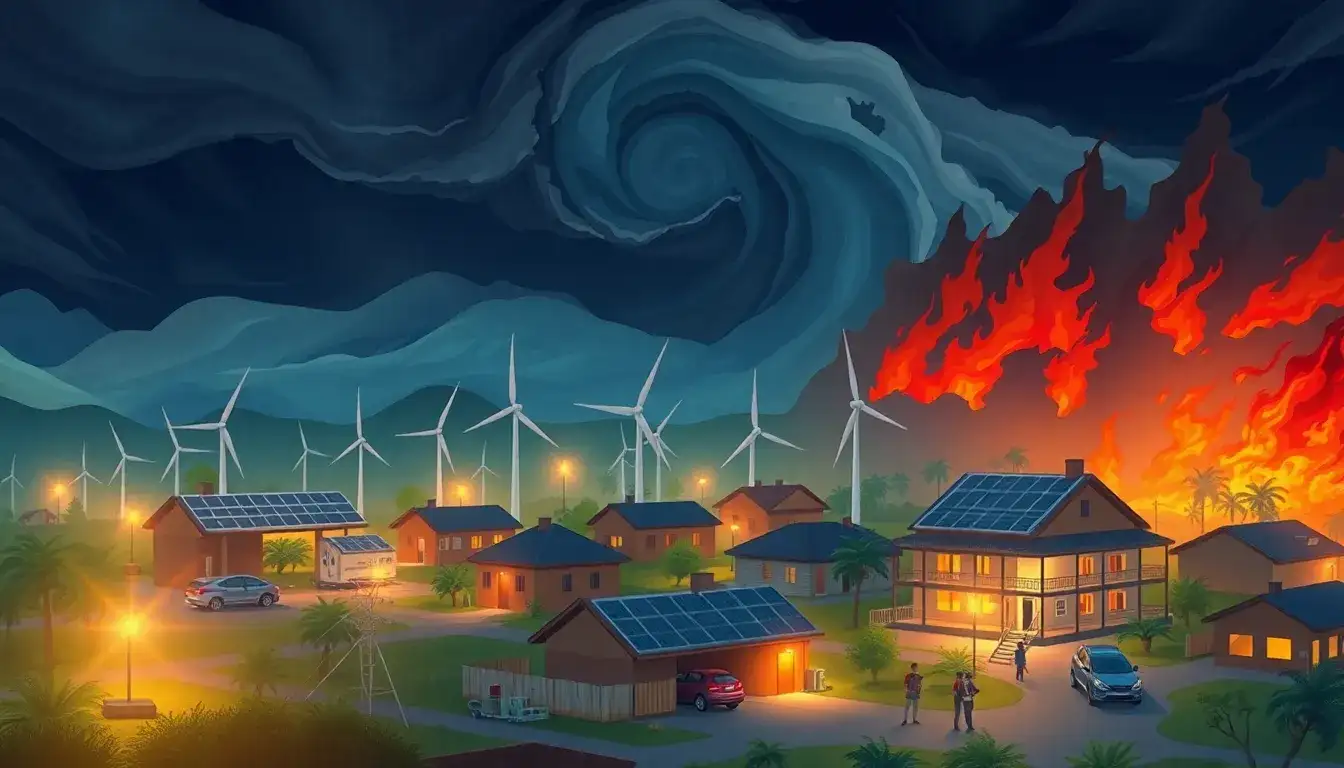
Microgrids significantly enhance resilience during natural disasters by providing localized, reliable, and flexible power supply independent of the main utility grid. Here are key ways microgrids improve disaster resilience:
1. Localized Power Supply During Grid Failures
Microgrids can operate independently—or “island”—from the larger utility grid when it fails due to natural disasters like hurricanes, earthquakes, floods, or wildfires. This allows essential community services such as hospitals, emergency shelters, water treatment, communication centers, and refrigeration for food and medical supplies to continue operating without interruption.
2. Rapid Restoration and Continuity of Critical Infrastructure
Microgrids restore power more quickly than centralized grids after outages. For example, the Ocracoke Island microgrid restored power within three days after Hurricane Dorian. Similarly, microgrids serving military bases and universities ensure mission-critical operations can continue even in disasters.
3. Integration with Renewable Energy and Storage
Microgrids often incorporate renewable energy sources (solar, wind) paired with battery storage, reducing dependence on vulnerable fuel supply chains and increasing resilience against fuel delivery disruptions caused by disasters. This clean energy integration also supports sustainability goals while enhancing reliability.
4. Flexibility and Energy Management
Microgrids have intelligent management systems that can prioritize loads and adjust power use based on availability and critical need. For instance, expansions in tribal microgrids enable operators to prioritize essential services and shut off non-essential loads during extended emergencies, allowing the system to operate indefinitely.
5. Reduced Fire Hazards and Hardened Infrastructure
As part of resilience strategies, microgrids contribute to infrastructure hardening by reducing reliance on vulnerable long-distance transmission lines. By localizing power generation and distribution, they mitigate risks associated with downed power lines and related fire hazards during storms.
6. Support for Disaster Relief and Emergency Response
By providing a stable energy source, microgrids enable first responders to coordinate relief efforts effectively and support rapid deployment of temporary facilities such as field hospitals and mobile command centers.
Summary Table of Microgrid Benefits in Natural Disasters
| Benefit | Description |
|---|---|
| Independent Operation (“Islanded”) | Keeps power flowing locally when the main grid fails |
| Critical Infrastructure Support | Ensures hospitals, shelters, communication stay online |
| Renewable Energy & Storage | Integrates solar/wind with batteries for resilient, clean power |
| Rapid Power Restoration | Restores power quickly to communities after outages |
| Load Prioritization | Manages energy use to prioritize essential services |
| Infrastructure Hardening | Reduces fire risk by avoiding damaged long-distance lines and reinforcing local grids |
| Enables Disaster Relief Efforts | Powers emergency response coordination and temporary relief facilities |
In conclusion, microgrids enhance resilience during natural disasters by providing communities with stable, flexible, and local power resources. This capability helps maintain critical services, speeds recovery, integrates sustainable energy, and strengthens overall energy security in an era of increasingly frequent and severe natural events.
Original article by NenPower, If reposted, please credit the source: https://nenpower.com/blog/how-do-microgrids-enhance-resilience-during-natural-disasters/

