

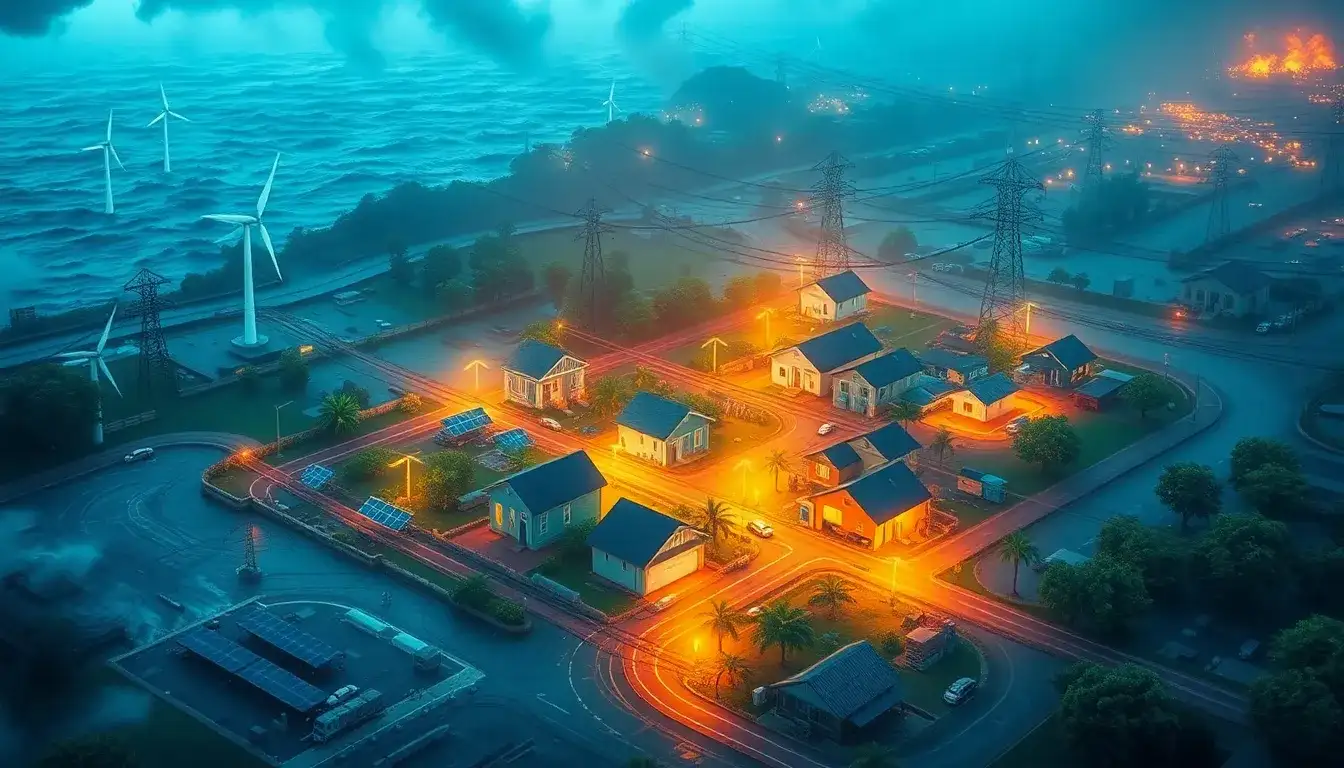
Microgrids play a crucial role in enhancing grid resilience during natural disasters by providing several key benefits:
Key Benefits of Microgrids
- Reliability and Continuity of Service:
- Independent Operation: Microgrids can disconnect from the main grid and operate independently, allowing them to provide continuous power to critical facilities like hospitals, emergency shelters, and communication centers during widespread outages.
- Renewable Energy Integration: They can incorporate renewable sources such as solar and wind power, along with battery storage, to ensure a stable and sustainable energy supply.
- Enhanced Flexibility and Adaptability:
- Islanding Capability: Microgrids can function in “island mode” when the main grid fails, ensuring localized areas maintain power.
- Distributed Energy Resources (DERs): They facilitate the integration of DERs, which reduce reliance on central power plants and enhance resilience in disaster-prone areas.
- Cybersecurity and Reduced Vulnerability:
- Reduced Grid Exposure: By providing local power generation and distribution, microgrids reduce the need to rely on the larger grid, which may be vulnerable to cyberattacks or disruptions.
- Economic and Environmental Benefits:
- Cost-Effectiveness: Microgrids can reduce costs associated with grid failures and energy losses, while also promoting the use of cleaner energy sources.
- Community Resilience: They can serve as community resilience hubs during disasters, supporting emergency responders and providing necessary services to affected populations.
Practical Applications
- Case Example: The U.S. Marine Corps Recruit Depot (MCRD) in South Carolina is a notable example where microgrids have enhanced resilience through integrated solar, battery storage, and on-site power generation, ensuring mission-critical operations during potential grid outages.
- Community Deployment: Projects like those by the Footprint Project have deployed emergency microgrids in disaster-affected areas, providing essential power to communities and supporting disaster relief efforts.
In summary, microgrids enhance grid resilience by providing reliable, flexible, and adaptable energy solutions that support essential services during natural disasters while promoting a cleaner and more sustainable energy future.
Original article by NenPower, If reposted, please credit the source: https://nenpower.com/blog/how-do-microgrids-enhance-grid-resilience-during-natural-disasters/

