

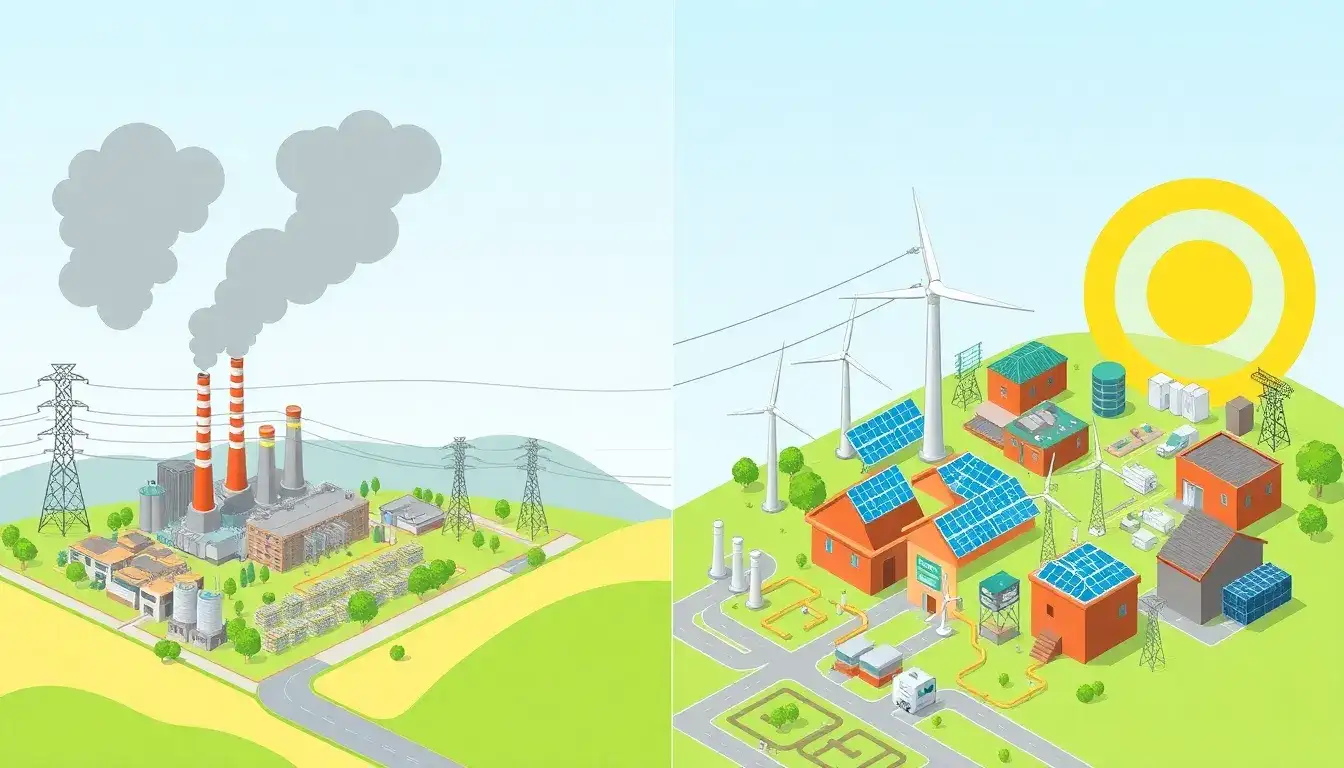
Microgrids and traditional grid systems differ significantly in terms of efficiency. Here are some key points of comparison:
Efficiency Comparison
- Energy Losses During Transmission:
- Traditional Grids: These systems experience significant energy losses, typically around 6%, during transmission over long distances.
- Microgrids: Microgrids reduce such losses by generating power locally, minimizing the need for long-distance transmission.
- Local Power Generation and Use:
- Traditional Grids: They rely on centralized power plants, often far from end-users, leading to inefficiencies due to distance.
- Microgrids: By generating power close to the point of consumption, microgrids enhance overall efficiency and reduce energy waste.
- Integration of Renewable Energy:
- Traditional Grids: While capable of incorporating renewables, traditional grids struggle with the intermittent nature of these sources.
- Microgrids: Better suited for renewable energy integration, microgrids use advanced control systems and energy storage to manage variability.
- Combined Heat and Power (CHP):
- Traditional Grids: Less likely to utilize CHP systems due to their centralized nature.
- Microgrids: Often employ CHP to capture waste heat, improving overall energy efficiency and reducing emissions.
- Control and Management:
- Traditional Grids: Use complex, hierarchical systems managed by utility companies.
- Microgrids: Employ local, advanced control technologies to optimize energy use and distribution, enhancing efficiency and responsiveness.
Conclusion
Microgrids generally offer superior efficiency compared to traditional grids due to reduced transmission losses, better renewable energy integration, and improved local power management capabilities. Their ability to operate independently and utilize CHP systems further enhances their efficiency advantages.
Original article by NenPower, If reposted, please credit the source: https://nenpower.com/blog/how-do-microgrids-compare-to-traditional-grid-systems-in-terms-of-efficiency/

