

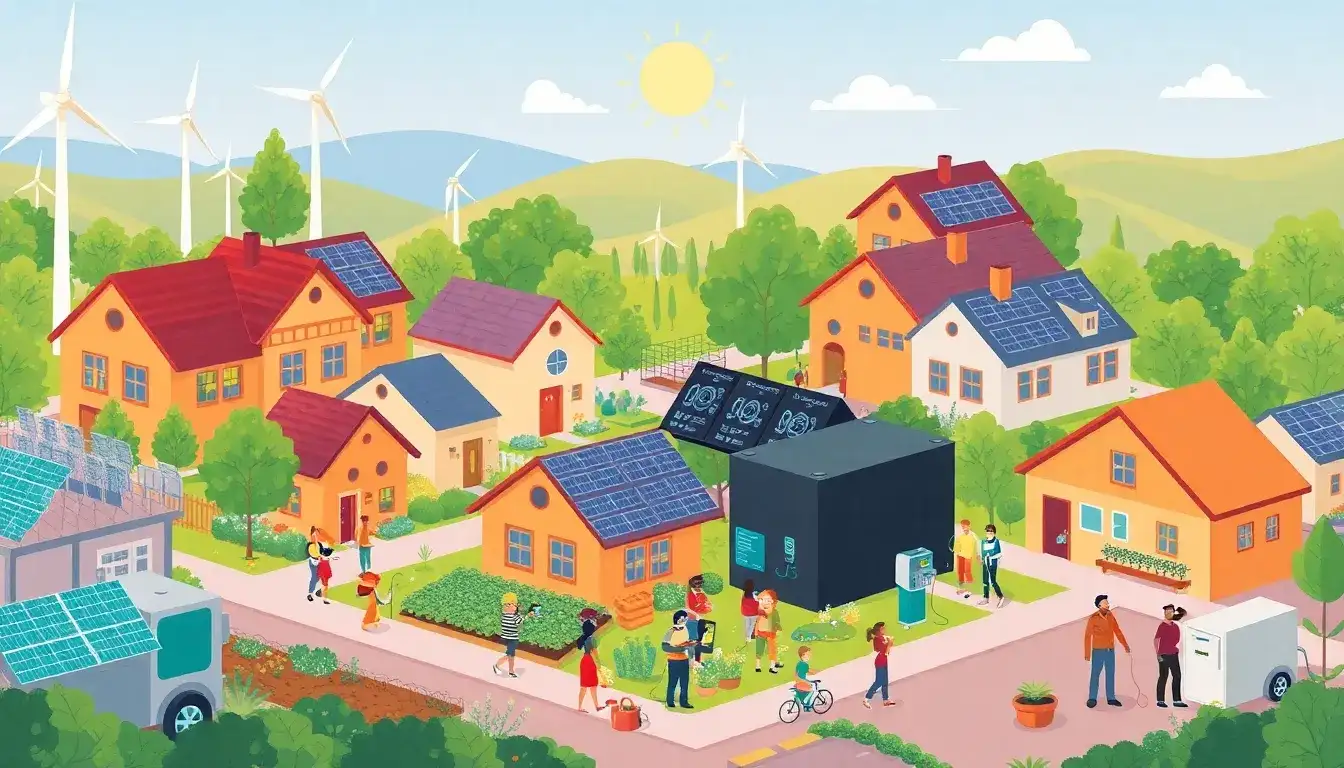
Microgrids and battery storage systems play a crucial role in enhancing community resilience by providing reliable, sustainable energy during natural disasters or grid outages. Here are the key ways they enhance resilience:
Key Enhancements of Community Resilience
- Reliable Energy Supply:
- Islanding Capability: Microgrids can disconnect from the main grid and operate independently, ensuring continuous power supply to essential facilities such as hospitals, emergency centers, and communication services.
- Renewable Energy Integration: They often use solar, wind, or other renewable sources, reducing dependence on traditional power infrastructure and mitigating carbon emissions.
- Battery Storage:
- Energy Buffering: Batteries store excess energy generated from renewable sources, allowing microgrids to provide power during periods of low energy production (e.g., at night) or when the main grid is down.
- Load Management: Batteries can manage peak demand, stabilize the grid, and prevent power failures by supplying energy during peak hours or when the main grid is overloaded.
- Economic and Social Benefits:
- Job Creation: Microgrids can create local jobs in installation, maintenance, and operation, boosting local economies.
- Energy Equity: They ensure that vulnerable populations have access to power during emergencies, reducing inequities in energy access.
- Reduced Energy Costs: By optimizing energy use and reducing reliance on external power sources, microgrids can lower energy costs for communities.
- Resilience to Disasters:
- Rapid Recovery: Communities with microgrids can recover more quickly from natural disasters, as they maintain essential services even when the main grid is down.
- Enhanced Public Health: By maintaining access to electricity for refrigeration, medical facilities, and communication services, microgrids help preserve public health during crises.
- Governance and Community Engagement:
- Community Ownership: Microgrids can be owned and managed by communities, fostering participation and providing greater control over energy resources.
- Public-Private Partnerships: Collaboration between public entities, private companies, and community organizations can facilitate microgrid development and operation.
In summary, microgrids with battery storage enhance community resilience by ensuring a reliable energy supply, promoting economic and social benefits, supporting quick recovery from disasters, and fostering community engagement and ownership.
Original article by NenPower, If reposted, please credit the source: https://nenpower.com/blog/how-do-microgrids-and-battery-storage-systems-enhance-community-resilience/

