

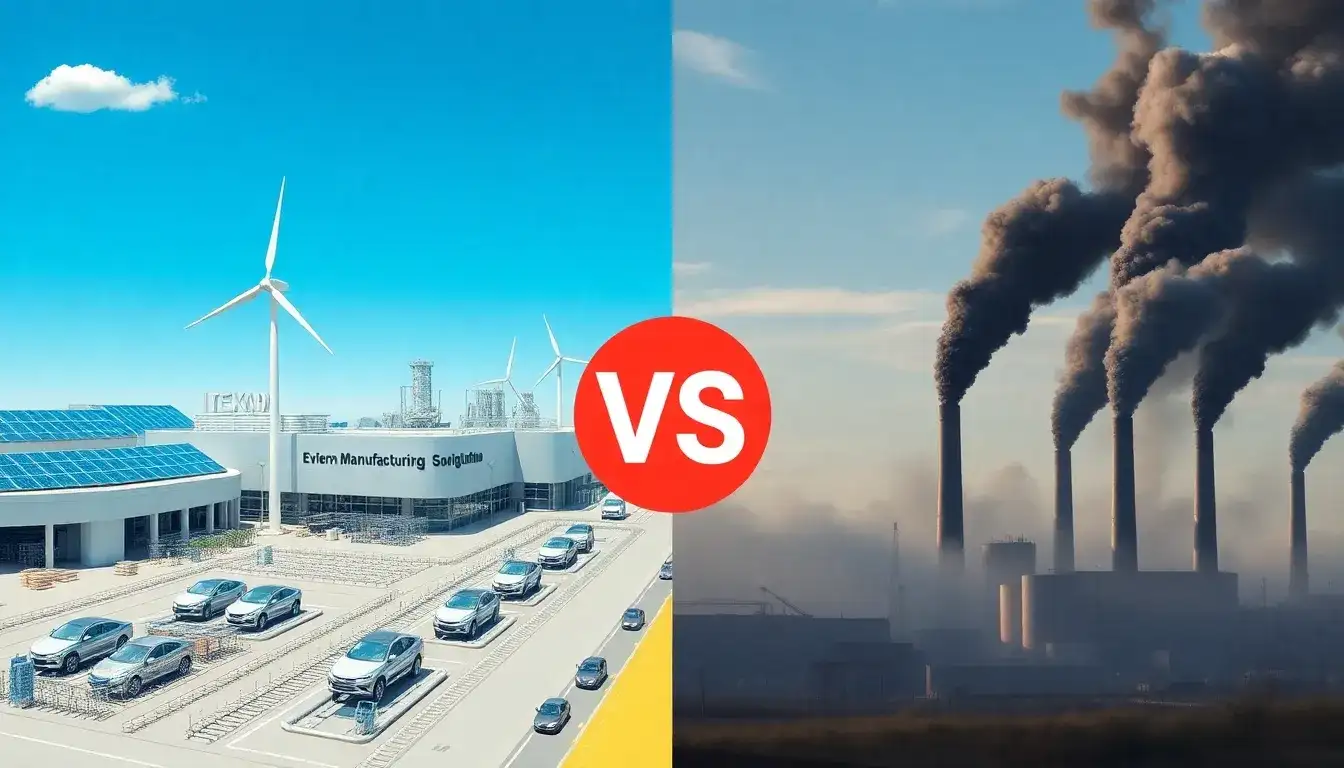
Manufacturing emissions of electric vehicles (EVs) are generally higher than those of gasoline cars due to the production of their batteries, which contain materials like lithium, nickel, and cobalt. Here’s a comparison of their emissions:
Manufacturing Emissions
- Electric Vehicles (EVs):
- The production of an electric vehicle, particularly the battery, results in higher emissions compared to gasoline cars. A typical EV emits around 4 tonnes of CO2 during production, and the battery alone can account for over 7 tonnes of CO2e emissions.
- About 46% of EV carbon emissions come from production, which is higher than the 26% for internal combustion engine (ICE) vehicles.
- Gasoline Cars:
- The production emissions for gasoline cars are lower than those of EVs but still significant. Both types of vehicles have similar production emissions for parts like engines and bodies, which are between 5 and 10 tonnes of CO2e depending on size and production location.
Operational Emissions and Break-Even Point
- Electric Vehicles:
- EVs produce no tailpipe emissions, reducing their operational carbon footprint significantly.
- Due to the high manufacturing emissions, EVs typically need to operate for about 1.4 to 1.9 years to have lower total emissions than gasoline cars over their lifetimes.
- Gasoline Cars:
- Gasoline cars continuously emit carbon dioxide during operation, with significant tailpipe emissions.
- They produce an average of 410 grams of CO2 per mile, while EVs produce about 110 grams, including the emissions from electricity generation.
Overall, while EVs have higher manufacturing emissions, their operational efficiency and zero tailpipe emissions allow them to become environmentally advantageous over their lifetimes compared to gasoline vehicles.
Original article by NenPower, If reposted, please credit the source: https://nenpower.com/blog/how-do-manufacturing-emissions-of-evs-compare-to-those-of-gasoline-cars/

