

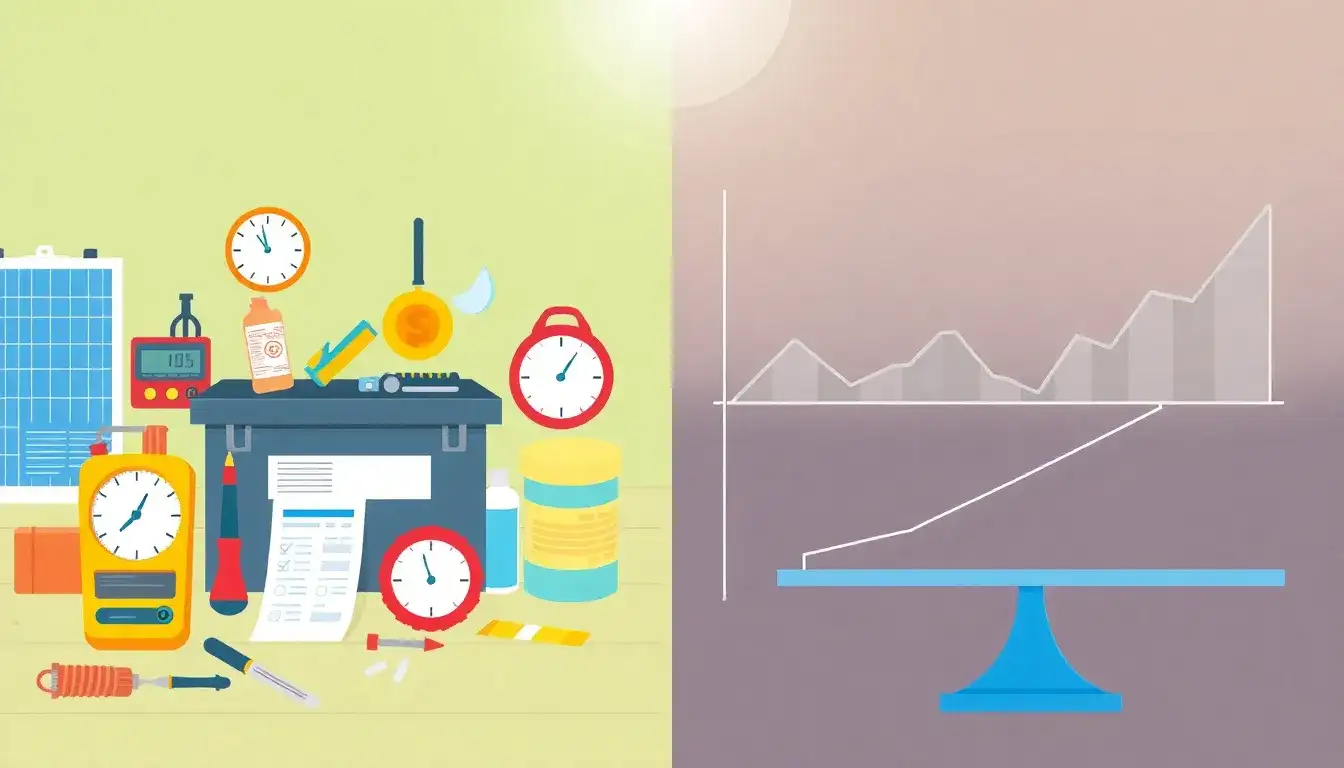
Impact of Maintenance Requirements on Solar Battery Cost-Effectiveness
Maintenance requirements for solar batteries significantly impact their overall cost-effectiveness by affecting their lifespan, efficiency, and reliability. Understanding these factors is crucial for homeowners to maximize their investment in solar battery systems.
Key Maintenance Considerations and Their Impact
-
Battery Type and Lifespan:
- Lead-Acid Batteries: These require more frequent maintenance, such as checking electrolyte levels and preventing sulfation. They have a shorter lifespan (typically 3-7 years) compared to lithium-ion batteries.
- Lithium-Ion Batteries: They are less maintenance-intensive but require careful management of depth of discharge and temperature to ensure longevity (often up to 15,000 cycles).
-
Environmental Conditions:
- Extreme temperatures (either hot or cold) can degrade battery performance and lifespan. Ensuring batteries operate within recommended temperature ranges is crucial for maintaining efficiency.
- High-quality installations in well-ventilated areas help mitigate environmental impacts.
-
Depth of Discharge (DoD) and Cycling:
- Frequent deep discharges can shorten a battery’s lifespan. Managing DoD and cycling frequency is essential for extending battery life.
- Some systems have built-in limits to prevent excessive discharge, which helps maintain battery health.
-
Monitoring and Cleaning:
- Regular monitoring of battery performance and cleaning of terminals can prevent issues like corrosion and sulfation, improving overall efficiency.
Cost-Effectiveness Considerations
- Initial Cost vs. Long-Term Cost: While lead-acid batteries might be cheaper initially, their maintenance needs and shorter lifespan make them less cost-effective over time compared to lithium-ion batteries.
- Maintenance Costs: Regular maintenance tasks can add to the overall cost, but they are critical for prolonging the battery’s lifespan and ensuring optimal performance.
- Energy Efficiency and Reliability: Effective maintenance directly impacts the battery’s ability to store and supply energy efficiently, which is essential for its cost-effectiveness in offsetting electricity bills.
Conclusion
The cost-effectiveness of solar batteries is significantly influenced by their maintenance requirements. Proper care and adherence to manufacturer guidelines are essential for maximizing lifespan, efficiency, and reliability. While certain types of batteries like lithium-ion offer longer durability with less maintenance, the cost savings from increased efficiency and lifespan can justify their higher upfront costs over time.
Original article by NenPower, If reposted, please credit the source: https://nenpower.com/blog/how-do-maintenance-requirements-for-solar-batteries-impact-their-overall-cost-effectiveness/

