

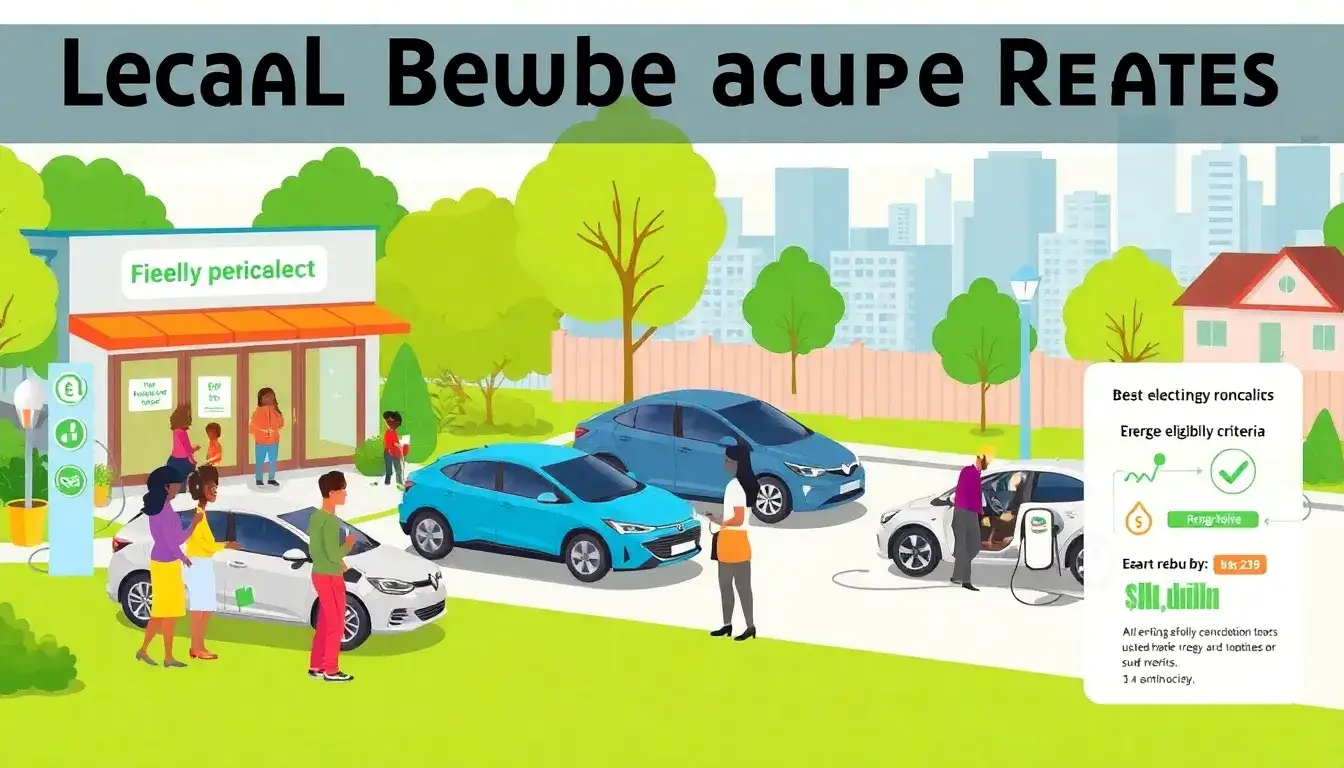
Local utility company rebates for used electric vehicles (EVs) typically complement federal tax credits and are designed to incentivize EV adoption, often targeting lower-income households. Here’s how they generally operate:
Rebate Structures
- Two-tiered rebates: Most programs offer $1,000 for standard applicants and $4,000 for income-qualified households (e.g., SCE and PG&E programs).
- Federal credit alignment: The IRS offers a 30% credit on sale price (up to $4,000), which utilities may supplement or mirror in their rebate amounts.
Eligibility Requirements
- Residence and service area: Applicants must be customers of the specific utility (e.g., PG&E or SCE customers in California).
- Income verification: Rebate Plus options ($4,000) require proof of household income below predefined thresholds (exact figures vary by utility).
- Vehicle criteria: Pre-owned EVs must meet age, battery capacity, and original sale price requirements.
Additional Incentives
- Charging equipment rebates: Income-qualified applicants often qualify for extra rebates (e.g., PG&E offers $700 for EV chargers).
- Panel upgrades: Some programs include rebates for electrical panel upgrades (up to $4,200) to support home charging.
Application Process
- Purchase/lease: Buy or lease an eligible pre-owned EV.
- Documentation: Submit proof of purchase, utility account, and income (if required).
- Submission: Apply online through the utility’s portal (e.g., SCE or PG&E’s dedicated rebate pages).
Programs like Colton Electric Utility also offer localized rebates (e.g., $1,500), emphasizing regional accessibility.
Original article by NenPower, If reposted, please credit the source: https://nenpower.com/blog/how-do-local-utility-company-rebates-for-used-electric-vehicles-work/

