

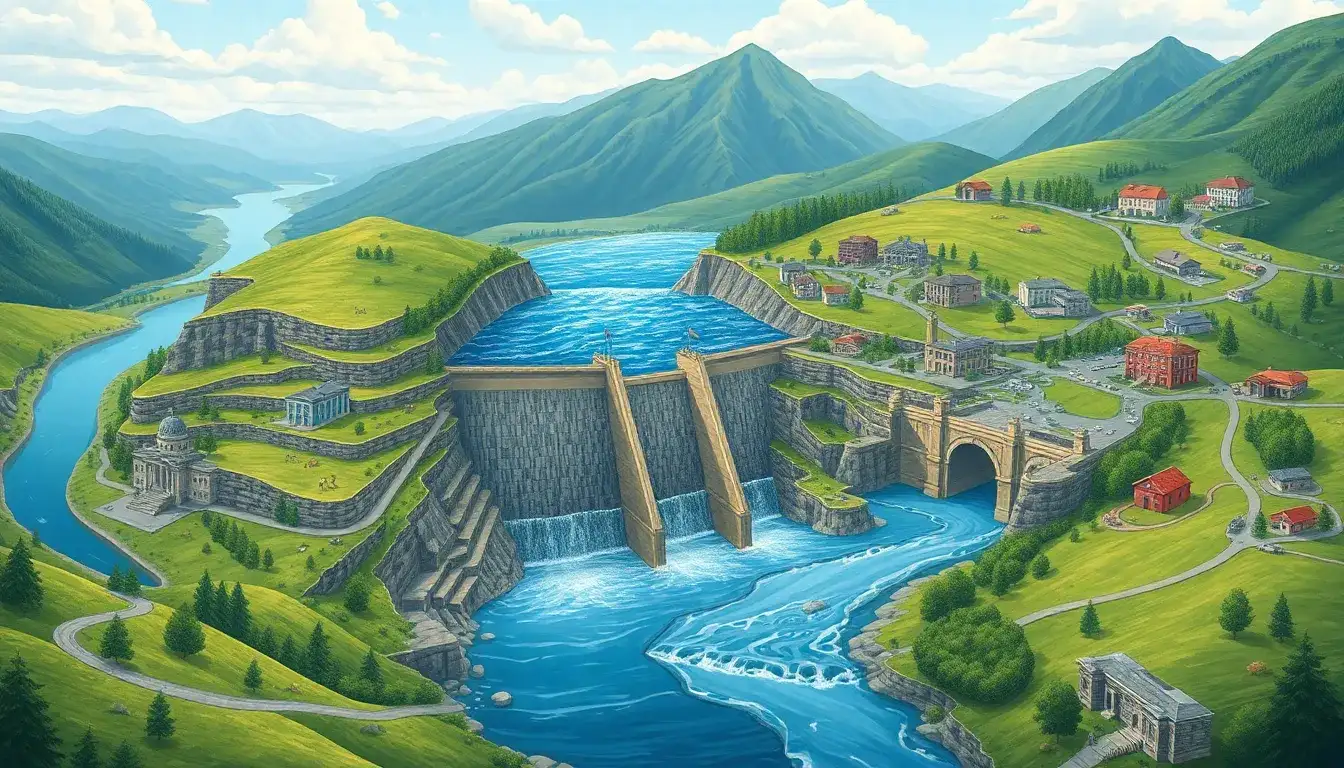
Local regulations vary significantly in their treatment of water rights for pumped hydro projects depending on factors such as the water source, project location, and state-specific rules.
Federal vs. State Jurisdiction and Water Source
- FERC Licensing and Water Source: The Federal Energy Regulatory Commission (FERC) licensing requirement depends largely on the source of water used in the pumped hydro project. Projects using surface water or water from navigable waters, federal lands, or federal dams generally require a FERC license. However, projects that use only groundwater (closed-loop systems) have been recently clarified by FERC staff as not subject to mandatory FERC licensing because groundwater is not considered a navigable Commerce Clause stream under the Federal Power Act (FPA).
- Closed-loop vs. Open-loop Systems: Closed-loop pumped storage projects, which use groundwater or isolated reservoirs without natural inflows or outflows, often face fewer regulatory hurdles compared to open-loop projects connected to natural waterways, which are more likely to require FERC licensing and comply with additional environmental regulations.
State-Level Variation in Water Rights and Environmental Requirements
- State Renewable Portfolio Standards (RPS) and Eligibility: Many states include pumped storage hydropower in their renewable energy standards but impose varying environmental and operational requirements. A common condition across states that allow pumped storage is that the energy used for pumping must come from renewable sources. California is one example where pumped storage is allowed but typically must meet such renewable energy requirements.
- Restrictions on New Hydropower Development: About 23 states allow new hydropower projects, including pumped storage, while others prohibit new dams or impose capacity limits. Some states allow small-scale or run-of-river projects but restrict large new impoundments or require projects to meet stringent environmental standards before approval.
- Water Rights Issues: States have different approaches to water rights which affect pumped hydro projects. Some states regulate groundwater export or use stringently, as seen in the striking down of state laws that restricted groundwater export because they discriminated against interstate commerce. Thus, the ability to secure water rights, especially groundwater, can be moderated by state-specific water laws and court rulings.
Summary Table: Key Regulatory Factors for Pumped Hydro Water Rights
| Factor | Federal (FERC) | State Level |
|---|---|---|
| Water source | Surface water, navigable waters → licensing required Groundwater only → no licensing required if no other triggers apply |
Varies widely; groundwater use subject to state water rights laws and export restrictions |
| Project location | Federal lands or dams → Licensing required | States may restrict new dams or impose capacity limits |
| Environmental requirements | Federal environmental reviews as part of licensing | States may require pumping to be powered by renewable energy and have RPS eligibility criteria |
| Licensing complexity | FERC licensing can take 5–8 years with significant costs | State permits vary; some states have streamlined processes, others impose heavy restrictions |
In conclusion, local regulations on water rights for pumped hydro projects are shaped by the interplay of federal licensing requirements, which hinge mainly on water source and project location, and state-level rules governing water use, environmental standards, and renewable energy policies. Closed-loop groundwater projects generally face fewer federal licensing hurdles but must navigate varying state water rights regimes and environmental rules. Open-loop projects connected to surface waters encounter more stringent and complex regulatory oversight at both federal and state levels.
Original article by NenPower, If reposted, please credit the source: https://nenpower.com/blog/how-do-local-regulations-vary-in-their-treatment-of-water-rights-for-pumped-hydro-projects/

