

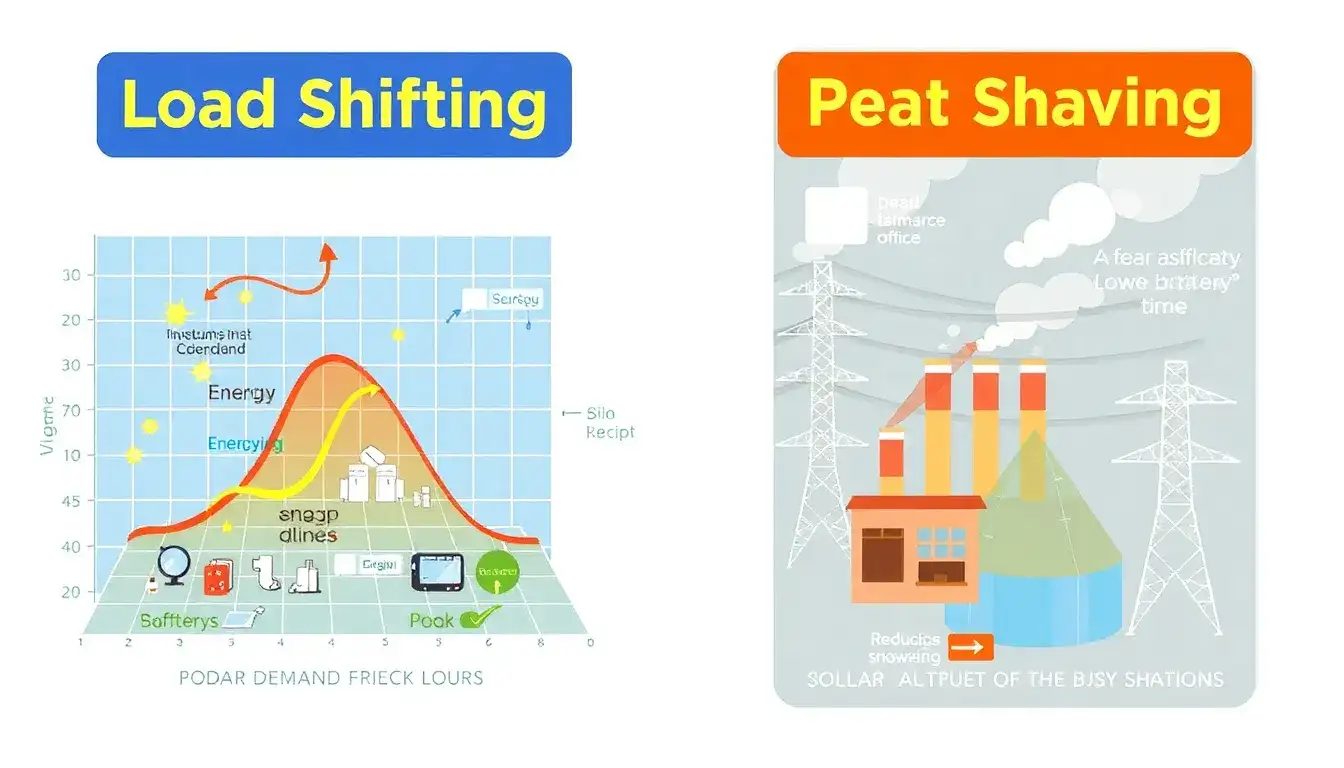
Load shifting and peak shaving are two distinct strategies used to manage energy consumption and reduce costs, particularly during periods of high demand. Both approaches aim to alleviate stress on the electrical grid, but they do so through different methods and with different objectives.
Peak Shaving
Definition and Approach
Peak shaving focuses on reducing total energy consumption during peak demand periods. This technique aims to “shave” off the peaks of energy use, typically by utilizing alternative energy sources or energy storage to limit the amount of electricity drawn from the grid during these peak times. Common methods include:
- Using On-Site Generation: Facilities might deploy diesel generators or solar panels to generate power during peak demand.
- Energy Storage Systems: Batteries can be employed to store energy during off-peak hours, then provide power when demand peaks, reducing reliance on the grid.
Benefits and Goals
The primary goal of peak shaving is to lower demand charges imposed by utility companies, which are often based on the highest energy draw during a billing cycle. By reducing this peak consumption, businesses can significantly lower their electricity bills. Additionally, peak shaving contributes to grid stability by preventing overloads that can lead to blackouts.
Load Shifting
Definition and Approach
Load shifting involves moving energy consumption from high-demand periods (peak hours) to lower-demand times (off-peak hours). This is achieved by rescheduling energy-intensive activities, such as machinery operations or air conditioning, to when energy prices are lower.
- Time of Use Strategy: Businesses take advantage of lower rates during off-peak hours by shifting their operational schedules accordingly. For example, industrial facilities might run their heavy machinery at night when electricity is cheaper.
Benefits and Goals
The primary goal of load shifting is to optimize energy usage based on price fluctuations while maintaining overall energy consumption levels. This approach helps users save money on energy bills without necessarily reducing the total amount of energy used. Load shifting also aids in stabilizing the grid by flattening the demand curve, making it easier for renewable energy sources to be integrated into the supply mix.
Key Differences
| Feature | Peak Shaving | Load Shifting |
|---|---|---|
| Objective | Reduce peak demand during high usage periods | Change timing of energy use to off-peak hours |
| Method | Utilizes on-site generation and storage to decrease energy drawn from the grid | Reschedules operations to shift energy consumption |
| Impact on Usage | Reduces overall energy consumption during peak times | Total energy consumption remains constant |
| Best For | Facilities with inflexible loads that can’t change operation times | Facilities that can reschedule operations without constraints |
| Cost Savings | Direct reduction in demand charges | Savings through lower energy prices during off-peak times |
In summary, while both strategies share the goal of improving energy management and reducing costs, peak shaving focuses on immediate reductions in peak consumption, whereas load shifting reorganizes when energy is used without changing total consumption. Businesses often choose one approach over the other based on their operational flexibility and energy usage patterns.
Original article by NenPower, If reposted, please credit the source: https://nenpower.com/blog/how-do-load-shifting-and-peak-shaving-differ-in-their-approach-to-managing-peak-demand/

