

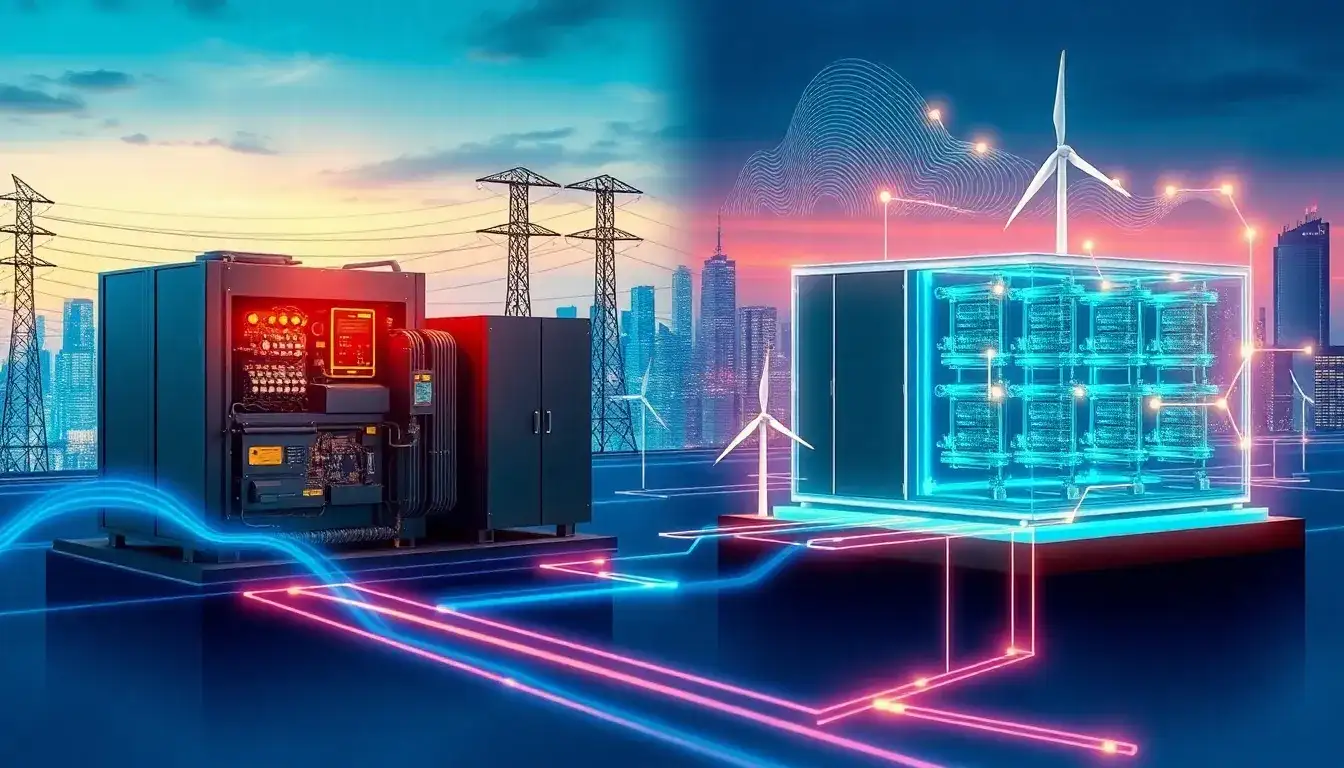
Load banks and energy storage systems (ESS) both contribute to grid stability, but they operate in different ways and serve distinct purposes.
Load Banks
- Function: Load banks simulate an electrical load to test and maintain the performance of power sources, such as generators and microgrids. They absorb excess energy by converting it into heat, helping to stabilize power output and prevent overloading during high production periods.
- Role in Grid Stability: Load banks can stabilize grids supplied by variable power sources like wind or solar by absorbing excess energy. This helps maintain a stable frequency and voltage, preventing destabilization during periods of high renewable output.
- Key Feature: Load banks provide immediate absorption capabilities, making them useful for managing power fluctuations in real-time.
Energy Storage Systems (ESS)
- Function: ESS, particularly battery energy storage systems (BESS), store excess energy generated during periods of low demand and release it during peak demand. This helps balance the grid by mitigating the variability of renewable energy sources.
- Role in Grid Stability: BESS plays a crucial role in grid balancing by charging when there is excess power (e.g., during high wind or solar output) and discharging during low generation periods. This stabilizes the grid by maintaining consistent power supply levels and frequency.
- Key Feature: ESS provides flexibility through its ability to absorb and release energy over a range of durations, from short-term to long-term storage, aiding in grid resilience and stability.
Comparison
| Aspect | Load Banks | Energy Storage Systems (ESS) |
|---|---|---|
| Function | Simulate load to test power sources; stabilize by absorbing excess power in real-time. | Store excess energy and release during peak demand. |
| Stability Role | Immediate stabilization via power absorption. | Balances supply and demand over longer durations. |
| Longevity | Can operate continuously but primarily used for testing and stabilization. | Designed for long-term operation and storage of energy. |
In summary, load banks are more focused on immediate stabilization by absorbing excess power, while ESS provides both short-term and long-term storage solutions to balance supply and demand across the grid. Both technologies are essential but serve different roles in maintaining grid stability.
Original article by NenPower, If reposted, please credit the source: https://nenpower.com/blog/how-do-load-banks-compare-to-energy-storage-systems-in-terms-of-grid-stability/

