

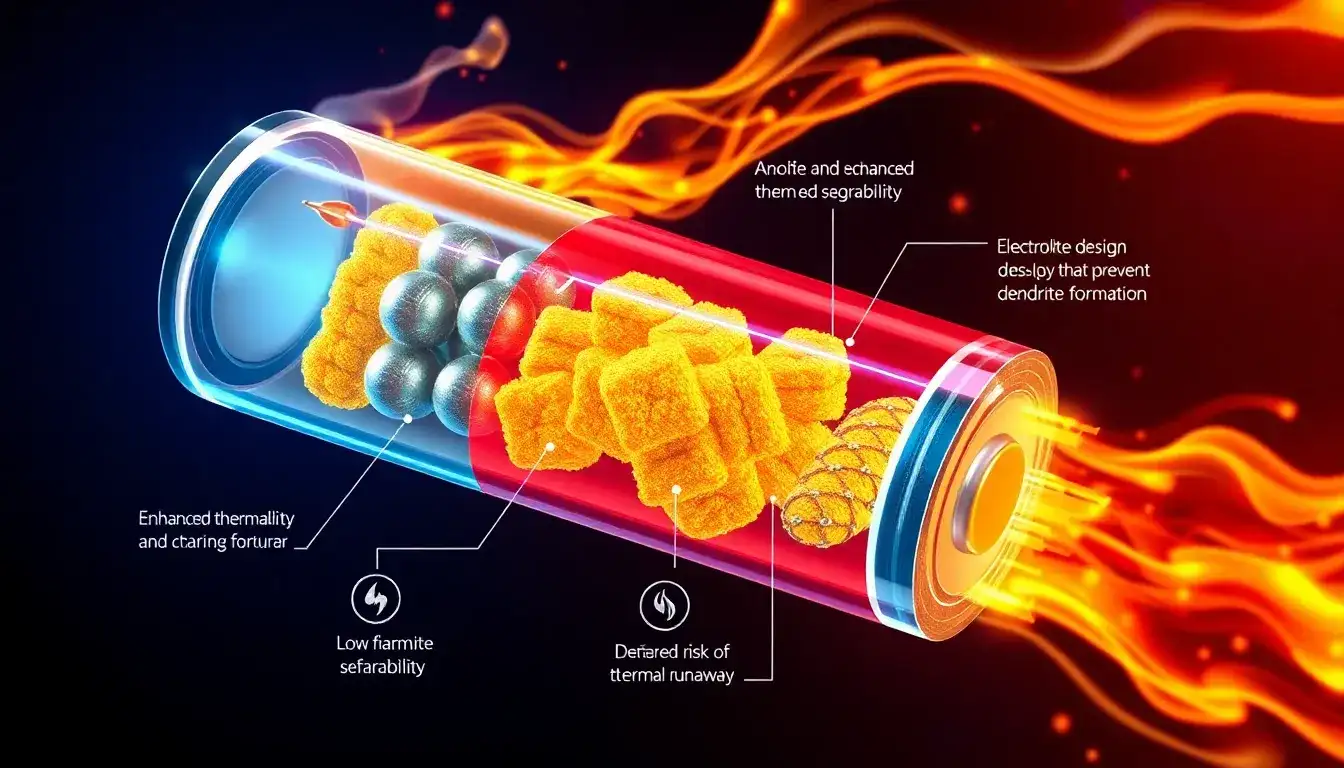
Lithium-sulfur (Li-S) batteries reduce the risk of catastrophic failure through several mechanisms:
- Conversion Reaction: Unlike lithium-ion batteries, where lithium ions are intercalated in materials, Li-S batteries undergo a conversion reaction during charge and discharge. This process eliminates the need to host lithium ions in materials, reducing the risk of catastrophic failure associated with lithium-ion batteries.
- Passivation of Lithium Metal Anode: The highly reactive lithium metal anode in Li-S batteries is passivated with sulphide materials during operation. This passivation lowers the risk of dangerous failure by reducing the reactivity of the anode.
- Lower Thermal Runaway Risk: Although thermal runaway can still occur due to the presence of lithium, the magnitude of such failures is significantly lower in Li-S batteries compared to lithium-ion batteries.
- Control of Polysulfides: By using interlayers or stabilizing materials like sugar, polysulfides are prevented from moving across the battery. This helps prevent interference with the anode, thereby extending the battery life and reducing the risk of premature failure.
These features make Li-S batteries safer and potentially more reliable than traditional lithium-ion batteries.
Original article by NenPower, If reposted, please credit the source: https://nenpower.com/blog/how-do-lithium-sulfur-batteries-reduce-the-risk-of-catastrophic-failure/

